



































The Central Paradox of Religion: Unity in Creation, Division in Faith

In a world teeming with diverse beliefs and spiritual traditions, one question stands out as a profound paradox at the heart of nearly every religion: If your God created everything—the stars, the planets, the air we breathe, and every human soul—then how can hatred or division arise from differences in faith? This conundrum challenges the very foundations of religious exclusivity and calls for a deeper reflection on tolerance, unity, and the human tendency toward tribalism. Drawing from timeless philosophical inquiries, let's unpack this paradox and explore why it persists across cultures and eras.
The Universal Creator and the Illusion of Separation
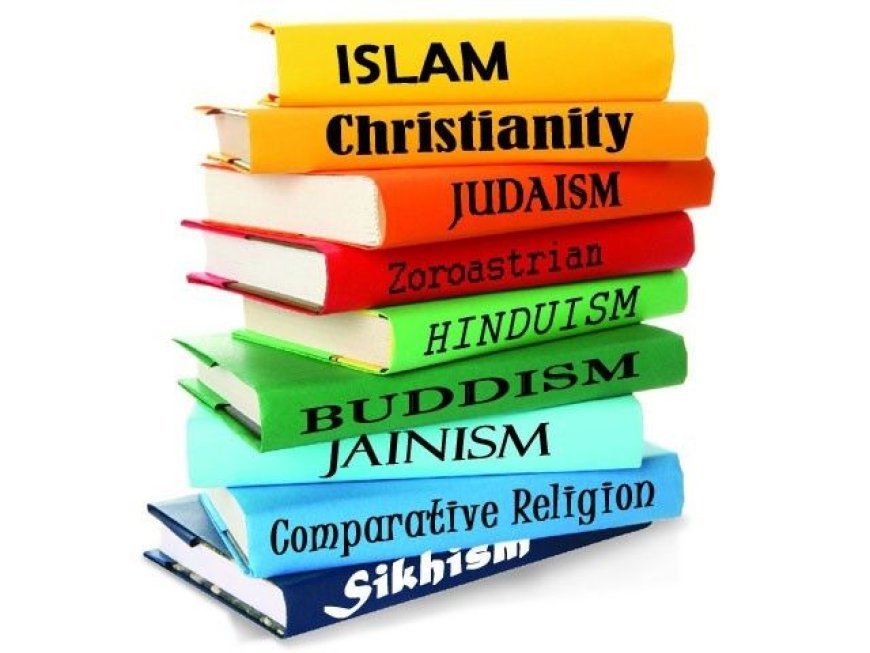
At the core of most major religions—be it Christianity, Islam, Hinduism, Judaism, or others—lies the assertion of a supreme creator. This divine force is often described as omnipotent and omnipresent, responsible for every atom in the universe. From the intricate veins of a leaf to the vast expanses of galaxies, nothing escapes the hand of this creator. Scriptures and teachings emphasize this totality: In the Bible, Genesis declares that God created the heavens and the earth; the Quran affirms Allah as the originator of all things; Hindu texts speak of Brahman as the ultimate reality permeating everything.
Yet, herein lies the paradox. If this God made everything, including every person on Earth, then no individual can be excluded from divine creation. The believer in another faith—the atheist, the agnostic, or the adherent of a rival tradition—is not some aberrant anomaly but a deliberate part of the same grand design. To hate or ostracize them on religious grounds is to question the creator's wisdom. As the user's query poignantly asks: "Even that other person is made by your god." This realization forces us to confront an uncomfortable truth: Religious intolerance isn't just a social issue; it's a logical inconsistency within the framework of monotheistic or universalistic beliefs.
Consider the alternative interpretation some might cling to—that God only created those who follow a specific path. This view implies a fragmented divinity, where creation is selective and tied to human allegiance. But if that's the case, we must entertain the existence of multiple gods, each overseeing different groups, regions, or even neighborhoods. Such a notion echoes ancient polytheistic systems, like the Greek pantheon or Roman gods, where deities held sway over specific domains. In a modern context, it might suggest a cosmic division of labor: One god for the mountains, another for the seas, and yet others for urban malls or rural villages. This balkanization of the divine not only contradicts the monotheistic emphasis on a singular, all-encompassing creator but also reduces spirituality to territorial disputes, akin to geopolitical rivalries.
The Roots of Religious Division: Fear, Identity, and Misinterpretation
Why, then, does this paradox manifest in real-world conflicts? History is rife with examples—from the Crusades to contemporary sectarian violence—where religious differences fuel hatred, conversion efforts, and even violence. The answer lies not in the doctrines themselves but in human interpretation and societal influences.
First, there's the role of identity and belonging. Religion often serves as a cornerstone of cultural and personal identity, providing community, purpose, and moral guidance. In an uncertain world, this can foster an "us versus them" mentality, where outsiders are viewed as threats to one's way of life. This tribalism is exacerbated by misinformation and fake news, which prey on biases. As the query notes, people "readily believe that anything paints the other person in a bad light, even if it's fake news." Social media amplifies this, turning nuanced beliefs into caricatures and stoking fear of the "other."
Second, conversion and superiority claims stem from a misreading of religious missions. Many faiths encourage spreading their teachings, interpreting it as a divine mandate to "save" others. However, this often overlooks the paradox: If God created all, including diverse paths to worship, then forcing conformity undermines the creator's diversity. The user's insight here is key—"It's just that they're using another method to worship God." Pluralism isn't a flaw; it's a feature of a multifaceted universe. Think of it as different languages expressing the same truth: A rose by any other name is still a rose, and prayer in any form is still communion with the divine.
Finally, power dynamics play a insidious role. Religious leaders and institutions sometimes wield faith as a tool for control, emphasizing exclusivity to maintain influence. This leads to claims that "we are better than other religions" or that it's "our job to fix them," as the query describes. Such attitudes ignore the shared human experience: Joy, suffering, love, and mortality bind us all, regardless of creed.
Toward a Resolution: Embracing Unity in Diversity
Respecting beliefs doesn't mean abandoning one's own; it means acknowledging the paradox and choosing empathy over enmity. If we truly believe in a universal creator, we must extend that belief to include all creations—even those who worship differently. This calls for interfaith dialogue, education to combat misinformation, and a reevaluation of conversion practices. Why hurt or hate when the very act contradicts the compassion many religions preach?
In the end, this central paradox invites us to evolve. Religions, at their best, are guides to transcendence, not barriers to connection. By recognizing that every soul is part of the same divine tapestry, we can move beyond division toward a shared humanity. As the world grows more interconnected, resolving this paradox isn't just philosophical—it's essential for peace. After all, if God made everything, then perhaps the greatest act of faith is to love it all.
Sanjay Pattnayak
Sundargarh