

































Astrology: Between Cosmos and Consciousness

By | Acharya Dr. Satyabrata
Astrology has endured for thousands of years—not as a passing superstition, but as a symbolic language through which humanity has tried to understand its place in the universe. From ancient civilizations observing planetary movements to modern individuals checking daily horoscopes, astrology continues to occupy a curious space between science, psychology, culture, and spirituality. The question is not merely whether astrology predicts events, but why it persists so powerfully in human consciousness.
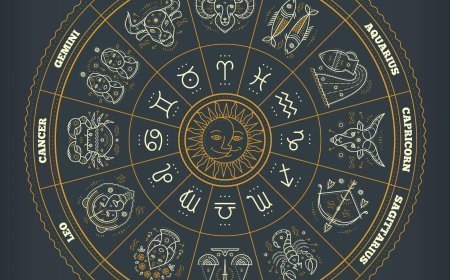
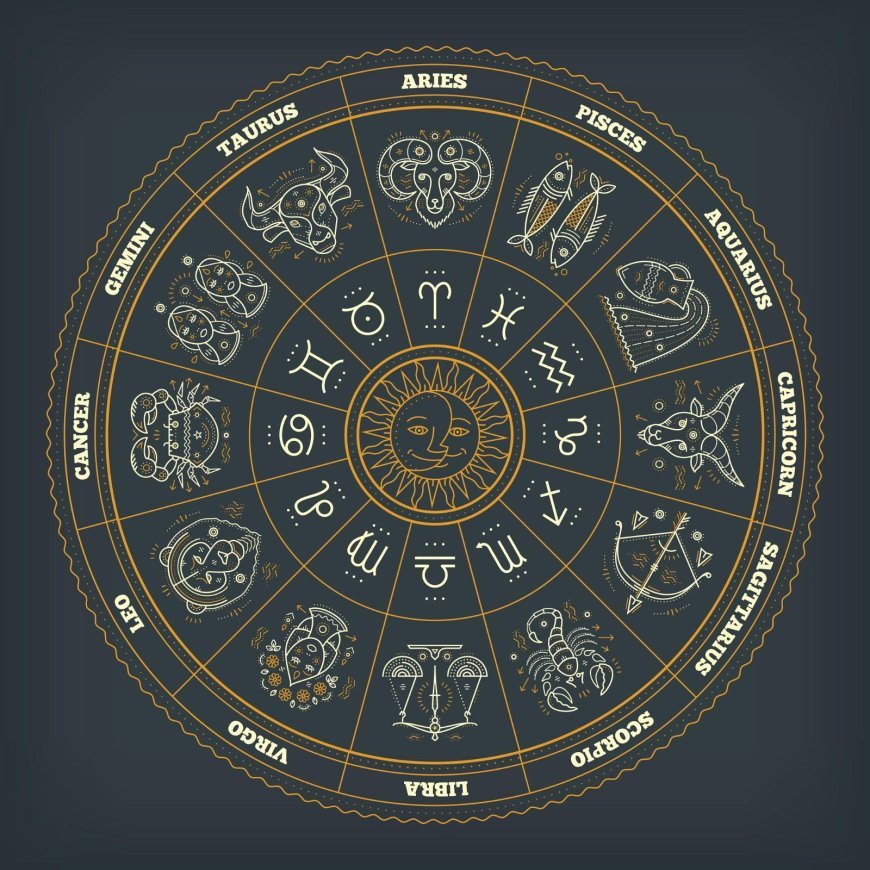
At its core, astrology is based on the belief that celestial bodies influence earthly life. The positions of the Sun, Moon, and planets at the time of one’s birth are mapped into a birth chart, forming a symbolic blueprint of personality and potential. Each zodiac sign represents archetypal qualities—Aries courage, Taurus stability, Gemini communication, Cancer nurturing, and so on—offering a framework for interpreting temperament and behavior.
Critics often dismiss astrology as unscientific, citing the absence of empirical proof that planetary alignments directly cause human events. Indeed, modern astronomy and physics do not support a causal mechanism by which distant planets shape individual destiny. Yet astrology’s defenders argue that it functions not as a mechanical science but as a symbolic system. It is less about physical force and more about pattern recognition—finding meaning in cycles, seasons, and archetypes.
Historically, astrology and astronomy were once intertwined. Ancient scholars did not sharply divide the measurable from the meaningful. Observing planetary movements helped develop calendars, agricultural planning, and navigation. Over time, as scientific methodology evolved, astrology separated from astronomy, becoming more philosophical and interpretive. However, its persistence suggests it fulfills a need that purely empirical systems do not address: the human longing for narrative.
Astrology offers language for self-reflection. When someone reads their horoscope or studies their birth chart, they are not merely seeking prediction; they are seeking insight. The chart becomes a mirror, reflecting strengths, weaknesses, and recurring themes. Even skeptics may admit that the symbolic descriptions often prompt introspection. In this way, astrology overlaps with psychology, providing archetypes that help individuals understand their own patterns of behavior.
The rise of astrology in digital culture further illustrates its adaptive power. Social media platforms teem with zodiac memes, compatibility discussions, and planetary transit analyses. For many young people, astrology has become a cultural shorthand for personality traits and relational dynamics. While some of this engagement is playful, it also reveals a deeper search for identity in an era marked by rapid change and uncertainty.
However, astrology’s appeal can become problematic when it replaces personal accountability. Attributing failures solely to Mercury retrograde or blaming conflict on incompatible signs risks reducing complex human behavior to celestial determinism. Astrology, when used rigidly, may reinforce fatalism rather than empowerment. A mature engagement requires balance—seeing planetary patterns as tendencies, not verdicts.
Another important dimension of astrology is timing. Planetary cycles—such as Saturn’s return or lunar phases—are often interpreted as markers of growth, challenge, or transition. Even if one does not accept literal planetary influence, the concept of cycles resonates psychologically. Life itself unfolds in phases. Recognizing these rhythms can provide comfort during hardship and perspective during success.
Ultimately, astrology’s enduring presence reflects humanity’s desire to connect the personal with the cosmic. It bridges inner life and outer space, suggesting that individual existence is not isolated but woven into a larger pattern. Whether viewed as mystical truth, symbolic art, or cultural tradition, astrology invites contemplation of the universe’s vastness and our small yet meaningful place within it.
In a world increasingly defined by data and algorithms, astrology offers narrative and metaphor. It does not replace science, nor should it attempt to. Instead, it occupies a parallel space—one that speaks to emotion, imagination, and existential curiosity. The challenge lies not in choosing between belief and skepticism, but in engaging astrology thoughtfully, neither surrendering reason nor dismissing symbolism.
Astrology endures because it addresses a timeless question: Are we random, or are we connected? Even if the answer remains debated, the conversation itself reveals something profound about human nature—we are creatures who look up at the sky and search for meaning.