



























*The Deadly Toll of Unrealistic Expectations: Inferences from the Lucknow NEET Pressure Tragedy*

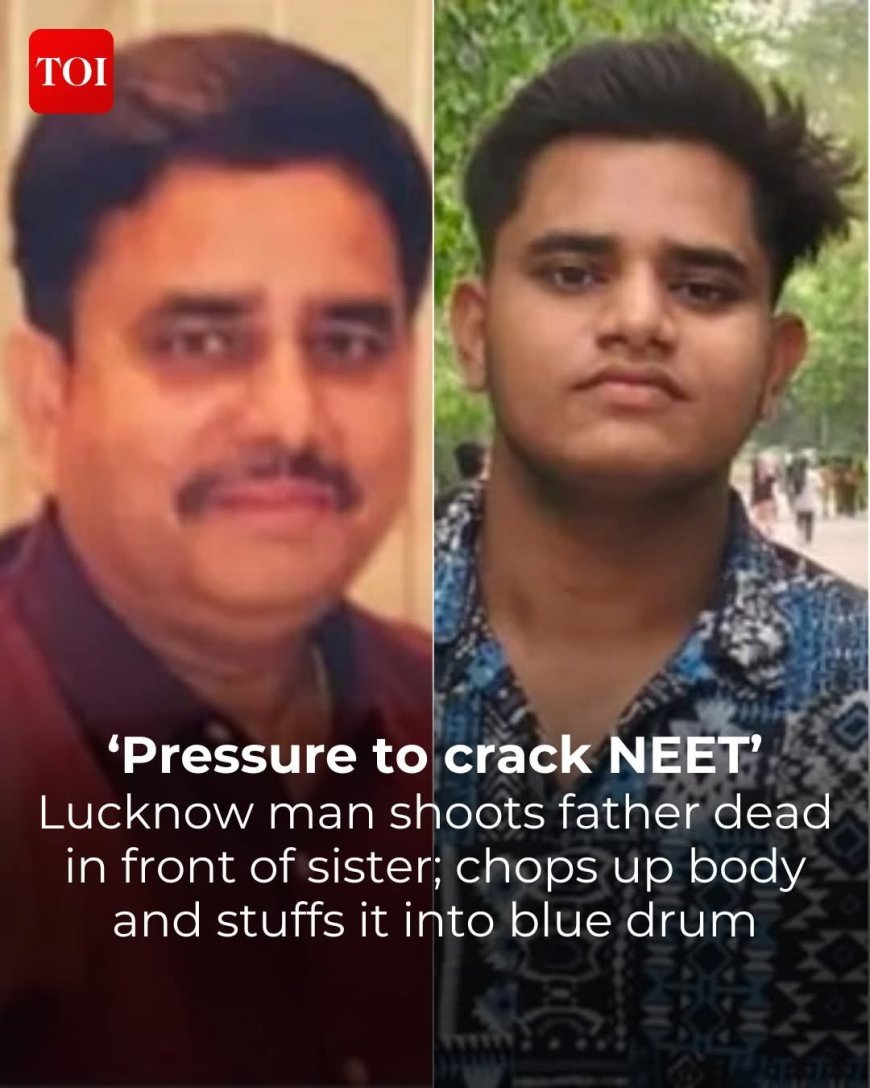
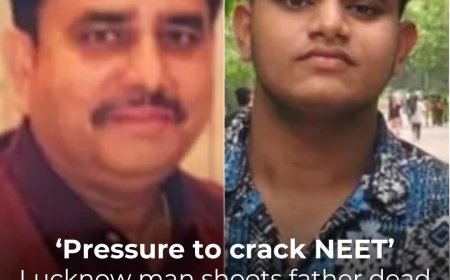
In the early hours of February 20, 2026, in Lucknow’s upscale Aashiana locality, a family home became the scene of unimaginable horror. Twenty-one-year-old Akshat Pratap Singh allegedly shot his 50-year-old father, Manvendra Singh — a successful pathology lab owner and liquor businessman — with a licensed rifle in front of his younger sister. What followed was even more gruesome: the son dismembered the body, drove parts (including the head) nearly 21 km to a remote spot in Sadrauna to dump them, stuffed the torso into a blue plastic drum hidden at home, buried the weapon, and filed a missing-person complaint himself. He was caught that Monday evening (February 24) while trying to dispose of the remaining remains, when patrolling police noticed suspicious activity, leading to his confession after interrogation.
This is not the plot of a crime thriller. It is a real incident, widely reported by Times of India, Hindustan Times, and other outlets, that has sent shockwaves across India. The motive, according to Akshat’s own confession and police statements: repeated, unrelenting pressure from his father to “crack NEET” — the National Eligibility cum Entrance Test for medical seats — despite Akshat managing the family’s liquor shop (on a ₹17,000 monthly salary he disliked) and having shown no strong inclination toward medicine. He had even run away from home once before over similar conflicts. His Class XII performance was good, but the family’s dream was MBBS or nothing.
*What Inferences Can We Draw?*
*1. Exam pressure in India has crossed from “stress” into a full-blown public health and social emergency.*
NEET is one of the world’s toughest entrance exams — over 24 lakh candidates in 2024 competing for roughly 1.1 lakh seats (success rate under 5%). The coaching industry, parental ambition, and societal prestige attached to “doctor = success” create a pressure cooker. NCRB data shows student suicides in India crossed 13,900 in 2023 (a 65% rise in a decade), accounting for 7–8% of all suicides — one every hour. Kota’s coaching hub alone saw dozens annually. Most cases end in self-harm; this one ended in patricide. The inference is clear: when a young person feels trapped with no escape, no validation for alternative paths (like commerce or entrepreneurship, which Akshat seemed drawn to), the outcome can turn outward in rage.
*2. Poor family communication and rigid parenting are silent accelerators.*
Manvendra Singh was a self-made man from Jalaun, with a retired policeman father and a deceased wife. He wanted the best for his son — a doctor. But “best” was defined only by his vision. Akshat’s dissatisfaction with the liquor shop job, his previous runaway episode, and the frequent arguments were warning signs ignored. The sister (a Class 11 student) witnessed the shooting and was threatened into silence — a tragic snapshot of fear replacing dialogue. Inference: Indian middle-class families often equate love with achievement. When the child’s aptitude or mental bandwidth doesn’t match, resentment festers. This case screams for mandatory family counseling sessions in competitive-exam households.
*3. Easy access to firearms in homes turns arguments lethal.*
The weapon was a licensed rifle belonging to the family. In a moment of rage at 4:30 am, it became the instrument of irreversible violence. India has strict gun laws, yet licensed arms in affluent homes (especially among those with police connections in the family) are not uncommon. The chilling efficiency with which Akshat dismembered and transported the body suggests a calculated (if panicked) cover-up, but the trigger was instant. Inference: Even one licensed weapon in a high-stress household is a risk factor that deserves stricter storage norms and psychological evaluation for license holders.
*4. The education system itself needs urgent reform.*
NEET’s single-exam, make-or-break format amplifies anxiety. Coaching centres push 14–16 hour study days. Alternative careers (skills, vocational streams, entrepreneurship) are still stigmatised as “second-class.” Akshat was handling a business responsibly yet was berated for not studying medicine. Inference: We must move toward multiple entry points, more attempts without age caps, normalised gap years, and aptitude-based guidance from Class 9 onwards. States like Tamil Nadu and others have experimented with reforms; the centre must scale mental-health support in all coaching hubs.
*5. Mental health is still treated as an afterthought.*
No reports mention Akshat receiving professional help despite clear distress signals. India’s mental-health infrastructure remains woefully inadequate — especially for adolescents in Tier-2 cities. The inference is stark: we cannot keep saying “pressure builds character” while bodies (or in this case, dismembered remains in a blue drum) pile up. Schools, colleges, and coaching institutes must have on-site counsellors; parents need workshops on recognising burnout, anxiety, and depression.
*A Wake-Up Call, Not Just Another Headline*
This is not the first NEET-related tragedy, but the brutality forces us to confront uncomfortable truths. Society celebrates “ toppers” and mocks “failures.” Parents mortgage homes for coaching fees, pinning entire family honour on one exam. Youngsters internalise that their worth equals their rank. When the system fails to provide outlets — emotional, academic, or career-wise — the consequences are no longer abstract statistics.
Akshat’s act is indefensible. Murder is never a solution. But dismissing this as one “psychopath” son misses the point. The real pathology lies in a culture that normalises crushing pressure on 17–22-year-olds while offering almost no safety net.
As a nation racing toward economic superpower status, we cannot afford to keep losing — or turning violent — our brightest and most ambitious youth. The blue drum in Aashiana is not just evidence in a murder case. It is a gruesome symbol of what happens when ambition outpaces empathy, and pressure replaces parenting.
It is time for concrete action:
- Integrate mandatory mental-health modules in all competitive-exam preparation.
- Launch nationwide parental awareness campaigns on career flexibility.
- Reform NEET into a less high-stakes, multi-attempt system with parallel pathways.
- Strengthen gun-licensing with family psychological checks.
The alternative? More headlines like this one. More families destroyed. More young lives — and the lives they destroy — lost to a system that forgot its children are human first, rank-holders second.
May this horror be the last. And may Manvendra Singh’s family, especially the young sister and brother in uniform, find the strength to heal in the midst of unimaginable grief.
Sanjay Pattnayak
Sundargarh