























The New Tribal Question


By | Sashi Sekhar Samanta |
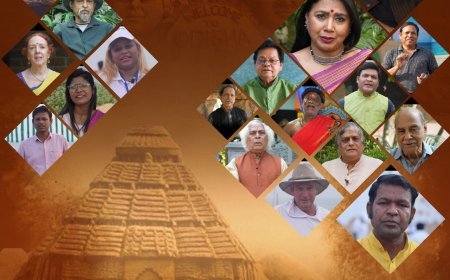
For decades, India’s tribal communities—Adivasis, the earliest custodians of the subcontinent—have been spoken of in political manifestos, academic research, and development reports. Their issues have been framed in familiar language: displacement, poverty, malnutrition, and exclusion. Yet modern India stands at a new threshold, where the challenges faced by tribal communities are no longer just remnants of colonial exploitation or post-independence neglect. They are now shaped by rapid economic expansion, aggressive resource extraction, shrinking habitats, cultural erosion, and political invisibility.
This is what we call “The New Tribal Question.”
It is not the question of land alone.
It is not the question of welfare alone.
It is not even the question of identity alone.
It is a question of survival, representation, and justice in a rapidly changing India.
A New India, But Not for All
India is transforming faster than ever—metros expanding skyward, highways slicing through forests, minerals mined at unprecedented scale, and digital networks reaching the remotest corners. But for millions of tribal citizens, this transformation has not brought empowerment. Instead, it has brought uncertainty.
Adivasis make up nearly 9% of India’s population, but their share in national discourse remains disproportionately small. The tribal heartlands of Odisha, Jharkhand, Chhattisgarh, MP, Rajasthan, and the Northeast continue to show some of the worst Human Development Index indicators, despite being rich in minerals, forests, and water resources.
The contradiction is painful: Communities richest in natural resources remain poorest in economic outcomes.
Displacement: India’s Unending Tragedy
The new tribal question emerges sharply in the context of displacement. Development projects—dams, mines, highways, and industrial corridors—continue to uproot tribal communities at a pace faster than any other demographic group.
In Odisha alone, mining belts like Keonjhar, Sundargarh, and Koraput have witnessed thousands displaced in the last decade. Compensation mechanisms remain inefficient or corrupted. Rehabilitation is often incomplete. The emotional trauma of losing ancestral land—something central to Adivasi spirituality—cannot be compensated by financial packages.
For many tribal families, displacement means losing not just property, but: social structure,
cultural memory , community safety nets , access to forests ,traditional livelihoods
The new tribal question demands a new approach: development that does not sacrifice the identity and dignity of indigenous communities.
Cultural Erosion: A Silent Emergency
India celebrates tribal festivals, arts, and dances on cultural days, but the lived realities of tribal cultures are fading. Globalisation and technological exposure have brought benefits, but also disruptions. Younger generations, influenced by digital lifestyles, often drift away from native languages and traditional knowledge systems. But tribal culture is not merely decorative or symbolic—it is a repository of environmental wisdom. For centuries, Adivasi communities have practiced sustainable agriculture, water conservation, herbal medicine, and forest management. When tribal cultures weaken, India loses a part of its ecological intelligence.
The new tribal question asks: Can a nation modernise without erasing its oldest knowledge keepers?
Representation: Numbers Without Voice ,Tribal representation in Parliament and state assemblies exists through reserved seats. Yet, political empowerment is limited. Many tribal leaders, once elected, become absorbed into party structures dominated by non-tribal elites. As a result, genuinely tribal-centric policies seldom reach the mainstream. Even in regions where Adivasis form a majority, such as certain districts of Odisha and Jharkhand, policies rarely reflect tribal priorities. Decisions about forests, land, mining, and community rights are often taken without consultation.
This exposes a fundamental gap: Representation has not translated into agency. The new tribal question demands a political rethinking—one in which tribal voices are not symbolic, but central.
Forest Rights: A Promise Still on Paper , The Forest Rights Act (FRA) of 2006 was hailed as a revolutionary legislation, recognising the rights of forest-dwelling communities. Yet its implementation remains inconsistent and sluggish.
Common issues include: Rejection of claims without explanation , Encroachment cases against tribal families living on ancestral land ,Bureaucratic hurdles in issuing land titles ,Conflicts between forest departments and communities ,Violent evictions in protected areas
The question we must ask is painful but necessary: Has India truly honoured the rights it promised to its indigenous people? The Clash Between Conservation and Livelihood Protected areas—tiger reserves, wildlife sanctuaries, national parks—are essential for biodiversity. But frequently, conservation policies treat tribal communities as obstacles, not partners. Forced relocations from core areas, restriction of traditional forest use, and eviction notices disrupt lives.
This approach ignores a historical truth: Tribal communities have preserved forests for centuries—long before modern conservation existed. The new tribal question asks for inclusive conservation, where Adivasis are treated not as encroachers but as environmental allies.
The Digital Divide and Aspirational Gap : As India becomes digitally driven, tribal youth face new pressures. Smartphones bring aspirations—urban lifestyles, education ambitions, job dreams—but these aspirations collide with limited opportunities. Schools are often understaffed, colleges inaccessible, and job markets distant. Tribal youth want to move forward, but systemic barriers hold them back. This frustration creates a psychological gap between generations—elders rooted in tradition, youth caught between worlds.
The new tribal question asks: Can India create a development model where tribal youth do not have to choose between identity and opportunity? The Way Forward: A New Framework for Tribal Justice. The old policy frameworks are no longer enough. India needs a fresh, courageous model for tribal development—one that respects autonomy, honours culture, and provides opportunity.
This framework must include: Participatory Development , Development projects must involve tribal communities from the planning stage—not as afterthoughts.
Cultural Protection Zones , Just as we protect wildlife habitats, India must protect indigenous cultural ecosystems.
Genuine Political Empowerment , Tribal leaders should not be mere vote-gatherers for dominant parties.
Technology with Sensitivity , Digital literacy must grow without eroding community identity.
Sustainable Resource Management , Mining and industrial projects must follow strict environmental and ethical standards.
Education Rooted in Identity ,Mother-tongue education, tribal history, and ecological knowledge must be central in school curricula.
The “Tribal Question” is not new. But the challenges are new, the pressures are new, and the consequences—if ignored—will be devastating. India’s development cannot come at the cost of its most ancient citizens. Nor can tribal communities remain frozen in time while the world evolves around them. The new tribal question demands vision, compassion, and political courage. If India answers it wisely, the future will be inclusive.
If not, the country risks losing not just its forests, but the wisdom of its first people.