





























A Turning Point in Odisha’s Political Imagination: The Strategic Mind of Dr. Debendra Pradhan

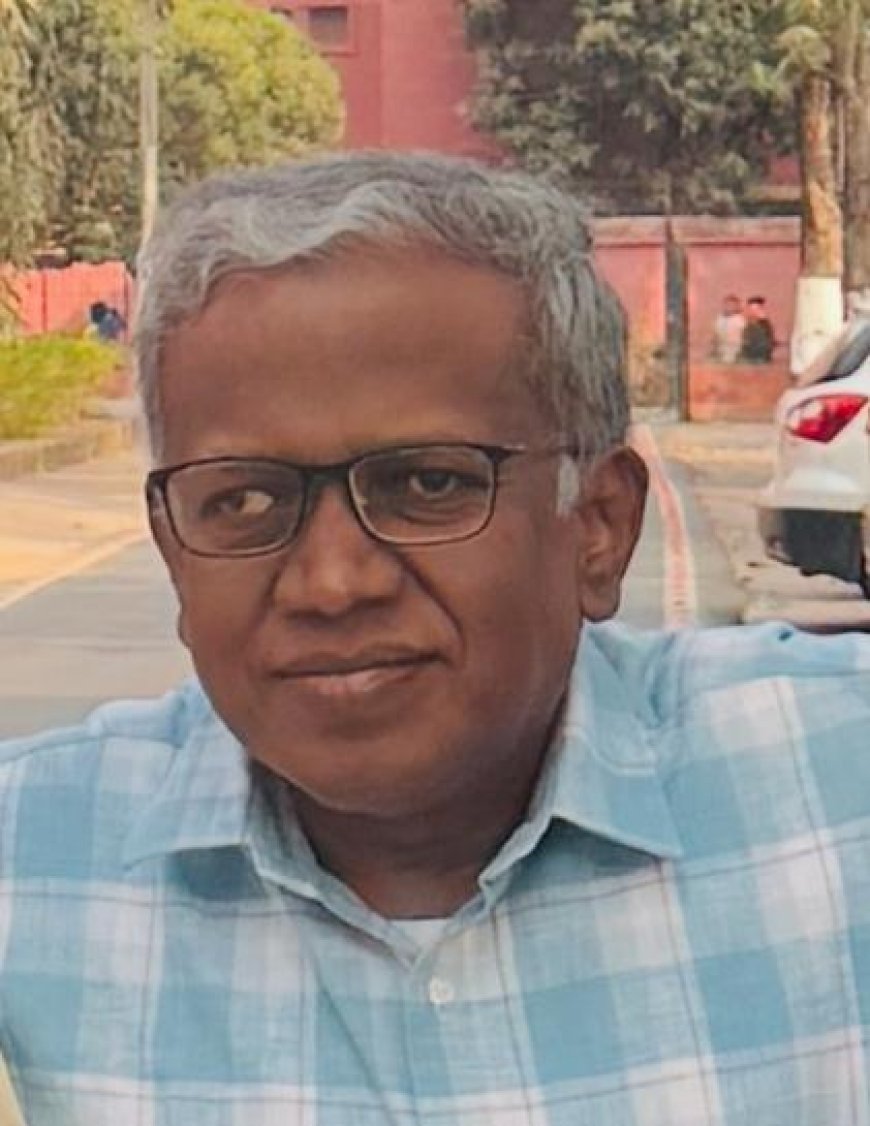
By Arun Patnaik
Former Professor, Political Science
University of Hyderabad
The evolution of political movements is rarely sudden. It grows slowly through ideas, organisation, and the conviction of individuals who believe that history can be redirected through patient effort. In Odisha’s democratic journey, few leaders embodied that quiet determination more deeply than Debendra Pradhan. His role in shaping the early growth of the Bharatiya Janata Party in Odisha reflects not merely political ambition but a thoughtful engagement with the sociology and philosophy of power in a regional context.
During the late 1980s and early 1990s, Odisha’s political structure was largely defined by dominant personalities and established party systems. The political imagination of the electorate was deeply influenced by figures such as Biju Patnaik and Janaki Ballabh Patnaik. In such an environment, the BJP was perceived by many as a distant national formation with limited grassroots resonance in the state. Yet Dr. Pradhan recognised an important sociological reality: beneath the visible stability of the existing political order, there was a quiet search for ideological alternatives.
The most revealing demonstration of this emerging possibility came through the by-election in Malkangiri. This contest may appear today as a routine electoral event, but in the political climate of that time it represented a profound test of whether the BJP could genuinely connect with the aspirations of Odisha’s electorate. The region itself, situated within the tribal belt, had long remained distant from the central theatre of the state’s political debates.
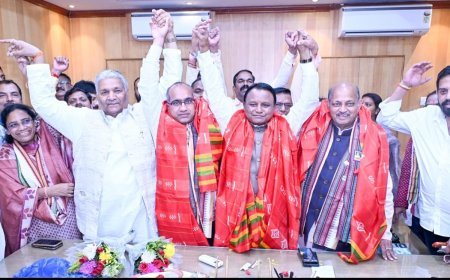
It was here that the candidature of Aravinda Dhali emerged as a significant development. Dhali’s victory in the by-election became one of the earliest signals that the BJP was beginning to find authentic acceptance among sections of the Odia electorate. While the public narrative rightly celebrated Dhali as the face of that success, those who closely observed the internal functioning of the party recognised the intellectual and organisational influence of Dr. Debendra Pradhan behind the moment.
At that time Dr. Pradhan was serving as the state president of the BJP. His leadership style was markedly different from the conventional political culture of personal projection. He preferred to remain in the background, allowing younger leaders and regional representatives to emerge as visible actors. The Malkangiri result therefore carried what may be described as a “silent credit” to his leadership, a strategic success achieved without overt personal claim.
From a political science perspective, this episode reveals an important principle of democratic expansion. Political legitimacy does not arise merely from electoral arithmetic; it emerges from the gradual recognition of a party’s ideological sincerity by both the political class and the wider electorate. The Malkangiri victory occurred within a year of a state assembly election in which the BJP had still been regarded as a marginal force. The speed with which public perception began to shift after that by-election is therefore historically significant.
What changed was not only the party’s numerical presence but also the psychological landscape of Odisha’s politics. Sections of the state’s political class began to acknowledge that the BJP could no longer be dismissed as an external formation. Instead, it was evolving into a credible participant in the state’s democratic competition. Dr. Pradhan’s political philosophy played a decisive role in this transformation. He consistently argued that a party must first cultivate trust before it seeks power. Electoral victories, in his view, were not ends in themselves but indicators that a deeper dialogue between political ideas and social aspirations had begun to take place.
His approach emphasised three interconnected principles: organisational discipline, ideological clarity, and social outreach. By encouraging young activists to work within villages, tribal regions, and urban neighbourhoods, he attempted to embed the BJP within the everyday experiences of Odia society. Politics, he often suggested in conversations with colleagues, must be rooted in lived realities rather than abstract rhetoric. The Malkangiri by-election thus became more than a localised contest. It symbolised the first moment when many ordinary citizens began to consider the BJP as a genuine alternative in Odisha’s political future. Such a shift cannot be explained solely through campaign strategies; it reflects the cumulative impact of organisational work carried out patiently over years.
In retrospect, the significance of that moment becomes clearer. The BJP’s later expansion in Odisha, culminating in its emergence as a major political force did not occur spontaneously. It was the result of groundwork laid by leaders who believed that democratic transformation begins with credibility at the grassroots.
Among those leaders, Dr. Debendra Pradhan stands out for his ability to combine ideological commitment with strategic foresight. He understood that the success of a political movement depends not only on charismatic leadership but also on the slow construction of trust among citizens who are willing to reconsider their political loyalties. For scholars examining the political development of Odisha, the Malkangiri episode therefore represents an early indicator of structural change within the state’s party system. And at the centre of that moment stands the thoughtful and understated leadership of Debendra Pradhan. His legacy reminds us that in politics, the most enduring transformations are often guided by individuals who work quietly, planting ideas, nurturing organisations, and believing in possibilities long before they become visible to the world.