


























A Quiet Strategist of Alternative Politics in Odisha A Reflection on the Life of Debendra Pradhan

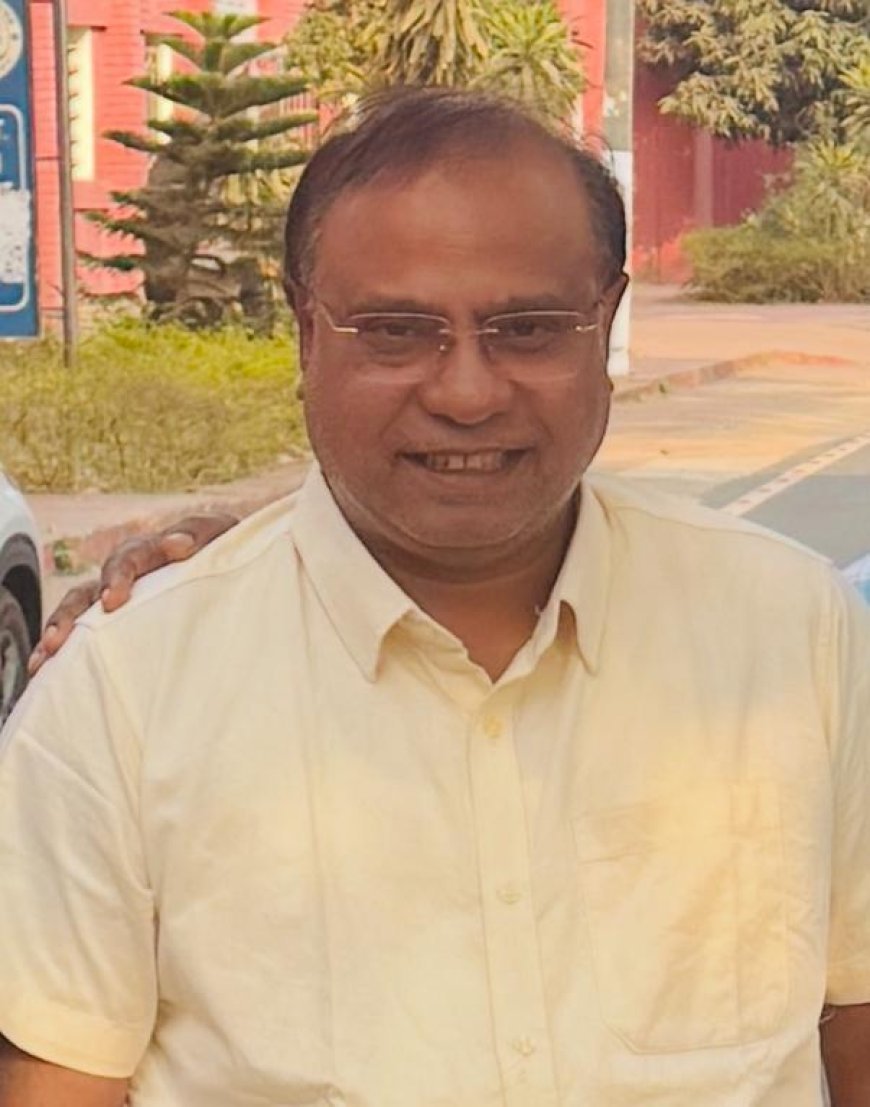
Prof. Umakanta Mishra
Department of History, Ravenshaw University
The passing of Dr. Debendra Pradhan marked the end of a remarkable chapter in the political history of Odisha. For many of us who knew him closely not only as a leader but also as a mentor and friend, his absence is deeply felt. As someone who has been associated with the intellectual and political circles surrounding him, and as a colleague who has long admired his vision while serving today as a professor of history at Ravenshaw University, I believe that his life deserves to be remembered not only emotionally but also historically.
Dr. Pradhan belonged to that rare generation of political leaders who viewed politics as a long civilisational effort rather than a series of short electoral contests. His association with the Bharatiya Janata Party came at a time when the party was still struggling to establish its ideological and organisational roots in Odisha. Resources were scarce, public recognition was limited, and the political arena was dominated by towering figures such as Biju Patnaik and Janaki Ballabh Patnaik. Yet Dr. Pradhan believed that a determined political movement could gradually reshape public imagination.
He first entered the national political stage through his electoral victory from Deogarh, where he was elected to the Lok Sabha. This victory was not merely a personal milestone; it symbolised the emergence of a new political voice in Odisha. His success from Deogarh demonstrated that the BJP’s message could resonate even in regions traditionally dominated by established parties. As a Member of Parliament and later a Union Minister during the government led by Atal Bihari Vajpayee, Dr. Pradhan continued to carry the aspirations of Odisha to the national stage. Yet his greatest contribution perhaps lay not in the offices he held but in the strategic vision he brought to the growth of the BJP in the state.
He possessed a remarkable ability to recognise opportunity within adversity. Where others saw political setbacks, he saw the possibility of organisational renewal. This quality became particularly visible during the turbulent political phase of the mid-1990s, when Odisha was experiencing intense competition among parties and shifting public sentiments. One significant episode from that period illustrates his political foresight. During the 1996 by-election in Bhubaneswar, Dr. Pradhan played a decisive role in shaping the BJP’s strategy. Rather than seeking the candidature for himself, he invited the senior leader Biswabhusan Harichandan and encouraged him to contest the seat. The constituency had previously been won by the formidable Biju Patnaik, making it a challenging political battleground.
Dr. Pradhan’s decision reflected a larger principle that guided his career. He believed that the strength of a political party must always remain above individual ambition. For him, leadership meant creating space for capable colleagues and building collective confidence within the organisation. That by-election became an important moment in Odisha’s political evolution. At a time when the Congress government in the state was barely a year old and the influence of established leaders remained strong, the BJP’s victory demonstrated that an alternative political narrative was gaining ground. The result showed that through hard work, disciplined organisation, and ideological clarity, the party could challenge long-standing political structures.
Dr. Pradhan interpreted that victory not as a temporary electoral gain but as evidence of a deeper transformation in public consciousness. He often said that Odisha’s people were ready to consider new political possibilities if they encountered sincerity and determination among leaders. His understanding of politics therefore extended beyond immediate contests. He envisioned a long process through which the BJP could eventually replace entrenched sentiments and emerge as a credible alternative in the state’s governance. Today, as the party occupies a central position in Odisha’s political discourse, it is impossible to ignore the role played by pioneers like Dr. Pradhan in laying that foundation.
For younger leaders, including his son Dharmendra Pradhan, he represented both inspiration and discipline. His guidance was not limited to strategic discussions; it included deeper reflections on ethics, patience, and responsibility in public life. Remembering Dr. Debendra Pradhan today is therefore not simply an act of tribute. It is an opportunity to revisit a phase of Odisha’s political history when ideas were patiently cultivated, organisations were slowly built, and leaders believed that perseverance could change the direction of public life.
In that long journey, Dr. Pradhan stands out as a quiet strategist, one who recognised that every struggle contained the seeds of opportunity, and that the future of a political movement is shaped by the courage to believe in it long before success becomes visible.