





























*The Arnab Enigma: Is India’s Most Polarizing Anchor Charting a New Course?*

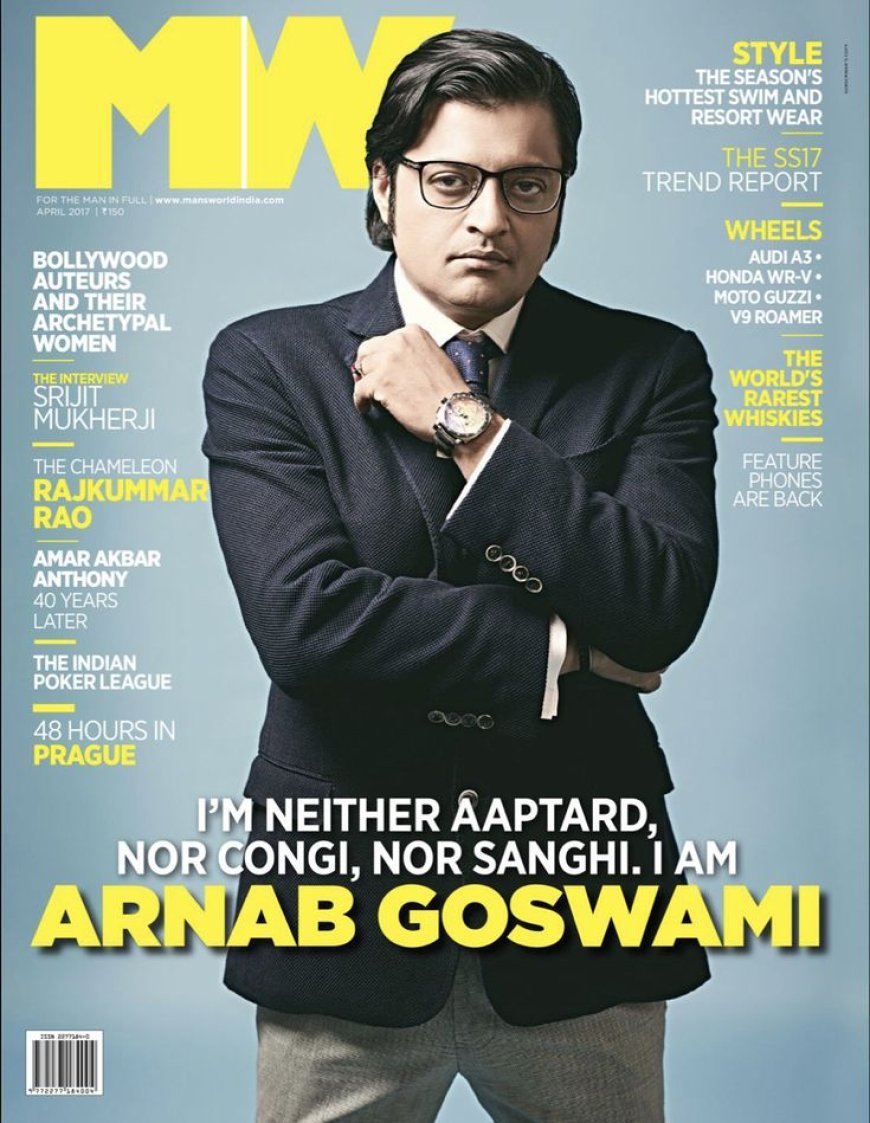
In the cacophonous world of Indian prime-time television, few figures have commanded as much attention—or controversy—as Arnab Goswami. Known for his thunderous debates and unyielding loyalty to the establishment, Goswami has long been the archetype of the "nationalist" anchor. Yet, in recent weeks, something unexpected has unfolded on the screens of Republic TV. The man who once seemed inseparable from the Bharatiya Janata Party (BJP) narrative has begun directing his signature outrage toward the ruling party and the Central government.
From lambasting the toxic smog enveloping Delhi to criticizing the Supreme Court’s stern intervention in the Aravalli Hills deforestation case, and even calling out the ostentatious display of wealth at a BJP leader’s wedding in Madhya Pradesh, Goswami’s tone has shifted markedly. This apparent pivot has sent ripples through media circles, prompting a singular question: Is this a genuine change in direction, and what might be fueling it?
*The Evolution of a Firebrand*
To grasp this potential transformation, it's essential to trace the arc of Goswami's career—a journey that has redefined the boundaries of Indian journalism.
It began in earnest during the dark days following the 26/11 Mumbai terror attacks in 2008. As the nation grappled with grief and fury, Goswami emerged as a beacon for public catharsis. While government officials dithered and intellectuals preached measured responses, he channeled the raw anger of the average Indian. His confrontations with Pakistani guests on air marked the end of the "neutral umpire" era in news anchoring, positioning him as the voice that "gave it back" without apology.
This momentum carried into the 2010–2014 period, where Goswami positioned himself as the relentless auditor of the United Progressive Alliance (UPA) government under Prime Minister Manmohan Singh. Amid a slew of corruption scandals, his interrogative style served as a democratic weapon. Who can forget his iconic quip about "looking out the window" to confirm the rain, rather than relying on official denials? The pinnacle came in 2014 with his infamous interview of Rahul Gandhi, a masterclass in aggressive journalism that exposed the Congress leader's vulnerabilities and cemented Goswami's status as a force of accountability.
The launch of Republic TV in 2017 ushered in what many call the "Republic Era" (2017–2023). Here, Goswami fully embraced the "nationalist" right, aligning with an urban middle-class audience that felt underserved by traditional media's perceived elitism. His support for the BJP wasn't merely ideological; it was a shrewd business move, tapping into a demographic hungry for patriotic fervor and validation.
*Deciphering the "Pivot"*
So, what explains this recent barrage of criticism against the very party he once championed? Analysts point to three plausible motivations, each rooted in the shifting sands of public sentiment and media dynamics.
First, it could reflect a broader middle-class fatigue. While Prime Minister Narendra Modi enjoys enduring personal popularity, there's growing discontent with BJP's local and state-level leadership. Goswami's scathing take on the lavish fireworks at the Madhya Pradesh BJP leader's wedding—amid economic pressures on ordinary citizens—mirrors the urban taxpayer's resentment toward what many see as arrogance and unchecked entitlement. By voicing these frustrations, he's aligning with his audience's evolving grievances.
Second, this might be a case of strategic reinvention. In the cutthroat world of television ratings, repetition is a killer. After years of formulaic "Nationalist vs. Anti-National" debates, viewership may be waning. By turning his fire on the BJP, Goswami injects unpredictability, reclaiming his image as a "fearless" independent. It's a calculated risk to refresh his brand and keep viewers hooked.
Third, there's the "common sense" factor. On pressing issues like environmental degradation and judicial reprimands, defending the indefensible becomes untenable. The Delhi smog crisis and the Aravalli Hills judgment aren't partisan talking points; they're stark realities. Goswami's critiques may simply stem from acknowledging the obvious, even if it means breaking from his established playbook.
*Resonance Over Ideology*
At its core, Arnab Goswami's success has always hinged on resonance rather than rigid ideology. In 2008, he echoed a nation's collective rage. By 2014, he embodied the clamor for systemic change. Today, his apparent pivot could be a survival tactic in an era where audiences demand more than echo chambers.
Media moguls like Goswami thrive on staying relevant, often sensing shifts before they become mainstream. He's dipping a toe into uncharted waters, testing if his viewers are ready for a less binary, more nuanced anchor. The stakes are high: alienating his core base could erode his titan status. Yet, this move feels less like political disloyalty and more like the adaptive maneuvering of a showman intent on leading the narrative.
Whether this evolves into a "Revolutionary Arnab" or merely a more balanced version, one thing is certain—the drama is far from over. In the ever-volatile arena of Indian media, Goswami's next act promises to be as riveting as ever.
Sanjay Pattnayak
Sundargarh