

































The Disappearing Angry Young Man: Why Indian Stories No Longer Speak the Language of Youth Anger


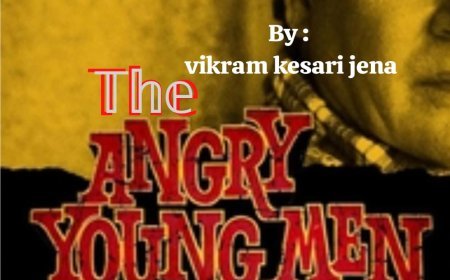
By: vikram keshari jena
In the long and turbulent journey of Indian storytelling, the figure of the “angry young man” once stood at the centre of public imagination. He was not merely a cinematic character or literary archetype; he was a social voice, a moral protest, and a psychological mirror of a generation confronting injustice. During the decades following independence, India’s literature and cinema often portrayed young men wrestling with poverty, corruption, unemployment, and the contradictions of modernity. Their anger was not meaningless rage but a reflection of a society struggling to deliver dignity and opportunity. The archetype found its most powerful expression through the legendary performances of Amitabh Bachchan in films like Deewaar, Zanjeer, and Sholay. These stories captured the emotional turmoil of a generation that felt betrayed by institutions yet refused to surrender its sense of justice. The angry young man symbolized the tension between aspiration and reality, between promises made by the nation and promises broken by its structures of power. Today, however, that powerful narrative has almost vanished from mainstream storytelling. Contemporary films, television series, and digital media rarely explore the raw emotional world of frustrated youth. Instead, they celebrate luxury lifestyles, romantic fantasies, or sanitized versions of success. The disappearance of the angry young man raises a troubling question: has Indian society truly solved the problems that once produced such anger, or has it simply chosen to ignore the voices that express it?
To understand this transformation, one must revisit the historical context that produced the archetype in the first place. The decades of the 1960s and 1970s were marked by economic hardship, unemployment, political instability, and widespread disillusionment among young people. India was a young nation struggling to translate the promises of independence into tangible improvements in everyday life. Cities expanded rapidly, villages remained poor, and millions of educated youth found themselves trapped in a system unable to absorb their aspirations. The cinema of that period responded to this crisis by creating characters who embodied the frustrations of the masses. These characters were not villains; they were rebels against a moral order that seemed fundamentally unjust. Their anger reflected a deeper longing for dignity, justice, and recognition. Stories about poverty, exploitation, and class struggle became powerful cultural narratives that resonated with audiences across the country.
At the heart of these narratives lay the famous slogan “roti, kapda aur makaan” bread, clothing, and shelter. The phrase symbolized the most basic expectations of citizenship in a democratic society. A young man demanded food to survive, clothing to preserve dignity, and a home to establish stability. These were not extravagant dreams but minimal conditions for a meaningful life. The cinematic representation of these demands reached its most explicit expression in the film Roti Kapda Aur Makaan, which portrayed the struggles of an educated youth navigating unemployment and social humiliation. The film resonated deeply with audiences because it spoke to a collective reality. The angry young man was not simply angry; he was hungry, humiliated, and excluded. His rage emerged from the gap between the promises of modern India and the harsh realities of economic inequality.
Fast forward to the present, and the landscape of Indian storytelling appears radically different. Contemporary narratives rarely focus on unemployment or systemic injustice with the same intensity. Instead, popular films often revolve around extravagant weddings, luxurious lifestyles, or heroic fantasies disconnected from the everyday struggles of ordinary people. Digital platforms have introduced new genres and experimental storytelling, yet even there the voices of frustrated youth remain surprisingly muted. The angry young man has been replaced by characters who appear perpetually confident, affluent, and socially integrated. They travel abroad, launch start-ups, and navigate urban life with remarkable ease. In these stories, the problems of “roti, kapda aur makaan” seem to have disappeared entirely, as though the basic struggles of survival no longer exist.
But reality tells a very different story. Across India, millions of young people continue to face unemployment, precarious work, and economic uncertainty. The expansion of higher education has produced a large population of graduates whose expectations exceed the opportunities available in the labour market. The rise of digital technology has created new forms of employment but also new forms of insecurity. Gig workers, contract employees, and temporary staff often live with constant anxiety about their future. Yet these realities rarely appear in mainstream narratives. The silence surrounding youth anger is therefore not evidence of social harmony but an indication of cultural avoidance. Society prefers stories that comfort rather than stories that confront uncomfortable truths.
One reason for this silence lies in the transformation of the entertainment industry itself. The economics of contemporary filmmaking increasingly depend on global markets, corporate sponsorship, and streaming platforms. Producers often avoid themes that might appear politically sensitive or economically risky. Stories about unemployment, corruption, and systemic injustice require a level of social engagement that commercial entertainment sometimes finds inconvenient. It is easier to produce narratives that celebrate aspiration rather than narratives that question the system producing inequality. As a result, the angry young man, once a symbol of resistance, has gradually been replaced by characters who adapt smoothly to the existing order.
Another factor contributing to this disappearance is the changing psychology of youth itself. The generation that grew up during the era of economic liberalization inherited a very different social environment from that of their parents. Consumer culture expanded rapidly, creating new opportunities for mobility and consumption. Shopping malls, smartphones, and global brands became symbols of modern life. In such an environment, anger often takes more subtle forms. Instead of confronting injustice directly, many young people internalize their frustrations as personal failures. They blame themselves for not achieving success rather than questioning the structures that shape their opportunities. This shift from collective anger to individual anxiety has profound cultural consequences. When frustration becomes privatized, it loses the political energy that once fueled the narratives of rebellion.
The disappearance of the angry young man also reflects a deeper crisis in intellectual and cultural discourse. Literature and cinema historically served as platforms for exploring social tensions and moral dilemmas. Writers and filmmakers felt responsible for representing the voices of marginalized communities and dissatisfied youth. Today, however, the boundaries between art, marketing, and corporate entertainment have blurred. Many storytellers operate within systems that reward popularity more than critical engagement. As a result, narratives that challenge the status quo often struggle to find mainstream support. The consequence is a cultural landscape where complex social emotions, including anger are diluted or ignored.
Yet anger itself is not inherently destructive. In many historical moments, anger has been a catalyst for positive change. It has inspired movements against injustice, motivated individuals to challenge corruption, and encouraged societies to rethink their values. The angry young man of earlier narratives represented precisely this constructive dimension of anger. His rebellion was rooted in a moral vision of a more just society. By contrast, the absence of such characters today may reflect a society that has grown uncomfortable with confrontation. Instead of addressing structural problems, it prefers to maintain the illusion that everything is fine.
This illusion becomes particularly fragile when viewed through the lens of the “roti, kapda aur makaan” question. Have the fundamental problems of food, clothing, and housing truly been resolved for all citizens? The answer is clearly no. Despite remarkable economic growth, large sections of the population continue to struggle with basic necessities. Urban housing shortages, rural distress, and rising living costs remain pressing challenges. Yet these issues rarely dominate cultural narratives in the same way they once did. The absence of the angry young man therefore reflects not the disappearance of injustice but the disappearance of storytelling that confronts it.
Reintroducing such narratives would not mean glorifying violence or nihilism. Rather, it would involve acknowledging the emotional realities of a generation facing unprecedented pressures. Young people today navigate a world shaped by technological change, economic competition, and social transformation. Their frustrations may differ from those of earlier generations, but they are no less significant. Stories that explore these emotions with honesty and empathy could revitalize the cultural landscape. They could remind audiences that anger, when directed toward injustice, can be a powerful force for moral reflection.
Ultimately, the disappearance of the angry young man from Indian storytelling reveals more about society than about the characters themselves. It suggests a collective reluctance to confront uncomfortable questions about inequality, unemployment, and social disillusionment. As long as these questions remain unresolved, the spirit of the angry young man will continue to exist, even if it remains invisible on the screen. The challenge for contemporary storytellers is to rediscover the courage that earlier generations possessed: the courage to tell stories that disturb complacency and provoke thought.
For a nation as complex and dynamic as India, the absence of such voices represents a cultural loss. The angry young man once served as a reminder that democracy requires not only celebration but also criticism. His anger forced society to look at its own contradictions and reconsider its priorities. Perhaps the time has come for Indian narratives to rediscover that uncomfortable but necessary voice—the voice that asks, with relentless honesty, whether the promises of roti, kapda aur makaan have truly been fulfilled, or whether the silence surrounding them has merely grown louder.