

































Aging with Dignity: Why We Must Rethink Its View of Older Citizens

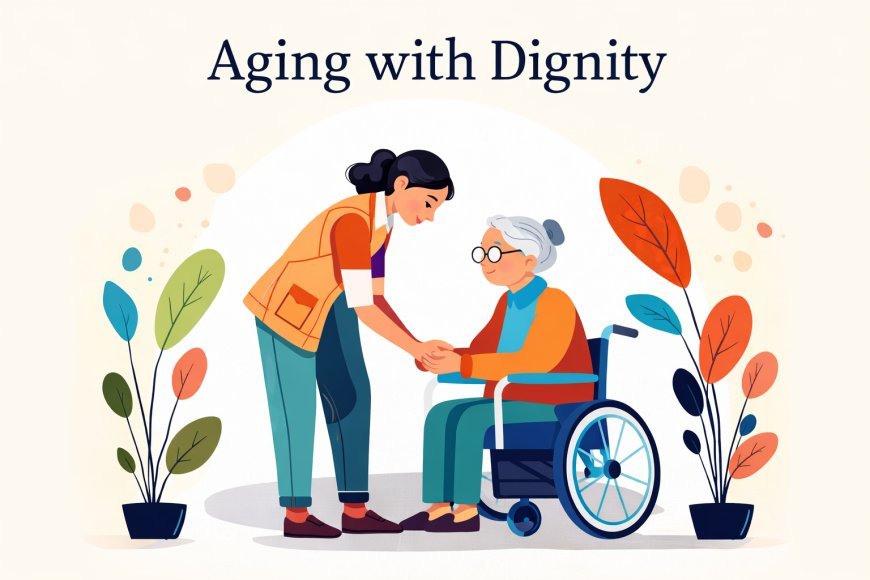
By Dr. Sashi Sekhar Samanta
India is growing older. This is not a metaphor, but a demographic reality. With improved healthcare and increased life expectancy, the population of senior citizens is expanding rapidly. Yet, while India celebrates its youthful energy and demographic dividend, it remains hesitant—often uncomfortable—when confronted with the needs, rights, and dignity of its elderly. Aging in India today is marked less by respect and more by invisibility. It is time the nation rethinks how it views older citizens—not as dependents or burdens, but as individuals with continuing value, voice, and agency.
Traditionally, Indian society placed elders at the moral and social center of family life. Old age was associated with wisdom, authority, and reverence. The joint family system ensured care, companionship, and a sense of belonging. However, this cultural ideal is steadily eroding. Urbanization, migration, nuclear families, and changing work patterns have restructured social life. While these changes are not inherently negative, they have left many older people isolated—emotionally, socially, and sometimes economically.
The most damaging shift has been attitudinal. Aging is increasingly viewed as decline rather than transition. Older citizens are often reduced to stereotypes: fragile, outdated, resistant to change, or incapable of meaningful contribution. This perception affects everything from healthcare decisions to employment opportunities and public participation. Once retirement arrives, society subtly signals withdrawal—step back, make space, become quiet. Dignity is replaced by tolerance.
This marginalization is particularly acute in urban India. Cities, designed around speed, productivity, and youth, rarely accommodate slower bodies or reflective minds. Public infrastructure often ignores accessibility. Digital systems move faster than many seniors can adapt to, and assistance is framed as charity rather than inclusion. As a result, older citizens are pushed to the periphery of civic life, despite having lived through and shaped the very transformations the nation prides itself on.
Economic insecurity compounds the problem. While some retirees enjoy financial stability, a significant number do not. Informal employment, lack of pensions, rising healthcare costs, and dependency on family members leave many seniors vulnerable. Financial dependence often leads to loss of autonomy, making older people hesitant to express needs or dissent, for fear of being labeled ungrateful or demanding. Dignity cannot exist where dependence becomes silence.
Gender deepens this inequality. Elderly women, especially widows, face disproportionate neglect. Many outlive spouses, lack independent income, and confront social exclusion rooted in outdated norms. Their aging is not merely biological; it is social erasure. Respect for elders, often spoken of as an Indian virtue, frequently collapses when age intersects with gender and poverty.
The emotional cost of this neglect is rarely discussed. Loneliness among older citizens is a growing public health issue. Mental health concerns—depression, anxiety, cognitive decline—are often dismissed as “natural” aspects of aging rather than conditions deserving care and empathy. In a culture that avoids conversations about aging and death, the emotional lives of the elderly are quietly ignored.
Yet, aging need not mean withdrawal. Older citizens carry institutional memory, ethical perspective, and lived experience that no textbook can replace. In many societies, seniors continue to work, mentor, volunteer, and participate actively in public life. India, too, has examples of elderly individuals contributing meaningfully—as writers, teachers, caregivers, entrepreneurs, and activists. What they need is not admiration from afar, but structural support and social acceptance.
Rethinking aging requires more than welfare schemes. It demands a shift in mindset. Older citizens must be seen as rights-bearing individuals, not passive recipients of care. Policies should focus on healthcare accessibility, age-friendly infrastructure, lifelong learning, and opportunities for engagement. Retirement should be flexible, not terminal. Public spaces must welcome older bodies and voices.
Families, too, have a role to play—but not through romanticized expectations of sacrifice. Care should be shared, respectful, and consensual. Emotional presence matters as much as physical support. Listening to elders, involving them in decisions, and acknowledging their autonomy is not tradition—it is dignity.
Ultimately, how a society treats its elderly reflects its moral maturity. India cannot aspire to global leadership while allowing a growing segment of its population to age in silence and neglect. Aging with dignity is not about preserving the past; it is about honoring the present lives of those who came before us.
The question is not whether India can afford to care for its older citizens. The real question is whether it can afford not to.