
























“B.A. Pass IAS”

By | Satyabrata Jena |
The Myth, the Market, and the Meaning of Merit
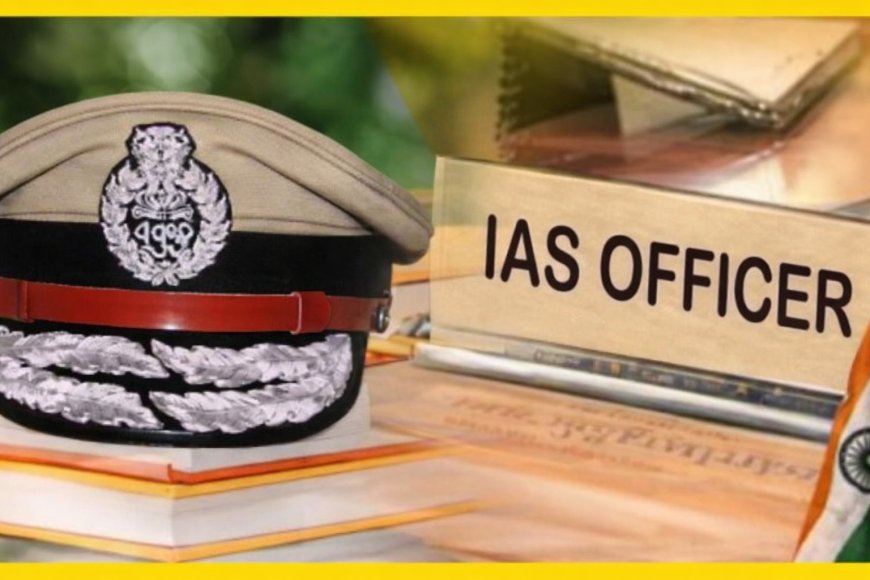
Few phrases circulate in India’s aspirational economy as provocatively as “B.A. Pass IAS.” It appears on posters, YouTube thumbnails, and coaching advertisements—often framed as proof that anyone can crack the Civil Services Examination regardless of academic pedigree. On the surface, the message is democratic and inspiring. Beneath it, however, lies a complicated mix of myth-making, commercial exploitation, and a deeper question about how India understands merit, education, and public service. This editorial is not about questioning the capability of graduates from any discipline. It is about questioning the narrative—and the market—that has grown around a slogan.
The Civil Services Examination was designed to be inclusive. It does not privilege one degree over another. History, literature, political science, economics, and philosophy—core components of many B.A. programmes—are central to the syllabus. In that sense, the idea that a humanities graduate can succeed is not only true; it is logical. The problem begins when this truth is oversimplified into a sales pitch. “B.A. Pass IAS” is often deployed to suggest that academic preparation is secondary, that coaching shortcuts can compensate for years of study, and that success is a matter of technique rather than depth. This narrative reduces a rigorous, multi-stage examination into a motivational slogan.
The Coaching Industry’s Favorite Slogan , Nowhere is the phrase more aggressively marketed than in the coaching ecosystem. Posters proclaim miracles; testimonials spotlight outliers; success stories are edited into bite-sized proof that “anyone can do it.”
What is rarely disclosed: the years of disciplined preparation behind success ,the failure cycles most aspirants endure ,the financial and emotional costs of repeated attempts ,the dropout rates that dwarf success stories. The phrase “B.A. Pass IAS” becomes a hook—pulling in aspirants from small towns and rural areas with the promise that a basic degree plus coaching equals a ticket to power and prestige. When reality doesn’t match the promise, the blame quietly shifts to the student. Hope is legitimate. False certainty is not. Merit Is Not a Degree—But It Isn’t a Shortcut Either. There is an important distinction India often misses: merit is not defined by the name of a degree, but neither is it divorced from learning. A B.A. degree can be intellectually rigorous—or it can be perfunctory. The same is true of any qualification.
Civil services demand: analytical depth , ethical reasoning ,administrative judgment ,communication skills ,historical and constitutional understanding. These cannot be acquired through rote coaching alone. They require reading widely, thinking critically, and engaging with ideas—habits that many humanities programmes cultivate when taught well. The danger of the slogan is that it detaches success from scholarship, encouraging a transactional view of education: get a degree, buy coaching, clear an exam. That is not how governance competence is built.
The Social Pressure Cooker , The “B.A. Pass IAS” narrative also feeds social pressure. Families begin to see a single pathway to mobility. Young people feel compelled to attempt the exam regardless of aptitude or interest. Failure becomes stigma; persistence becomes compulsion.
In many cases: capable graduates delay careers for years , families incur debt to fund coaching ,mental health deteriorates under repeated failure , alternative talents are neglected .The exam becomes not an opportunity among many, but a default destiny—and that is unfair to both aspirants and institutions. What the State and Universities Must Reflect On . The popularity of the slogan exposes gaps elsewhere. Why do so many graduates feel that coaching is more valuable than college? Why does a three-year degree often feel insufficient for employability or confidence?
Universities must: strengthen curricula that build reasoning and writing , emphasise interdisciplinary learning , restore mentorship and reading culture , connect degrees to diverse career pathways ,When higher education is robust, competitive exams become one option—not an obsession. Reframing the Narrative: From Label to Learning .It is time to retire the slogan and replace it with honesty. Yes, graduates from any discipline can succeed. No, there are no shortcuts. Yes, coaching can help. No, it cannot replace thinking.
Success in the civil services should be presented as the outcome of serious study, ethical commitment, and sustained effort—not as a marketing triumph of minimal credentials.
The Larger Question: What Do We Want from Our Administrators? Ultimately, the issue is not who passes the exam, but what kind of administrators the system produces. A democracy needs civil servants who: understand society’s complexity , respect institutions ,communicate clearly , make decisions with empathy and evidence. These qualities are not conferred by slogans. They are cultivated through education—formal and informal—over time.
Dignity in Degrees, Honesty in Dreams , “B.A. Pass IAS” began as a corrective to elitism. It should not end as a tool of illusion. Respect for all disciplines must go hand in hand with respect for learning itself. Aspirations deserve encouragement—but also truth. Degrees deserve dignity—but also substance. India’s civil services will be stronger when ambition is guided by realism, and when education—of every kind—is valued not for its label, but for the thinking it produces.