





















Climate Change: The Poor Pay First

By- Dr.Sashi Sekhar Samanta.
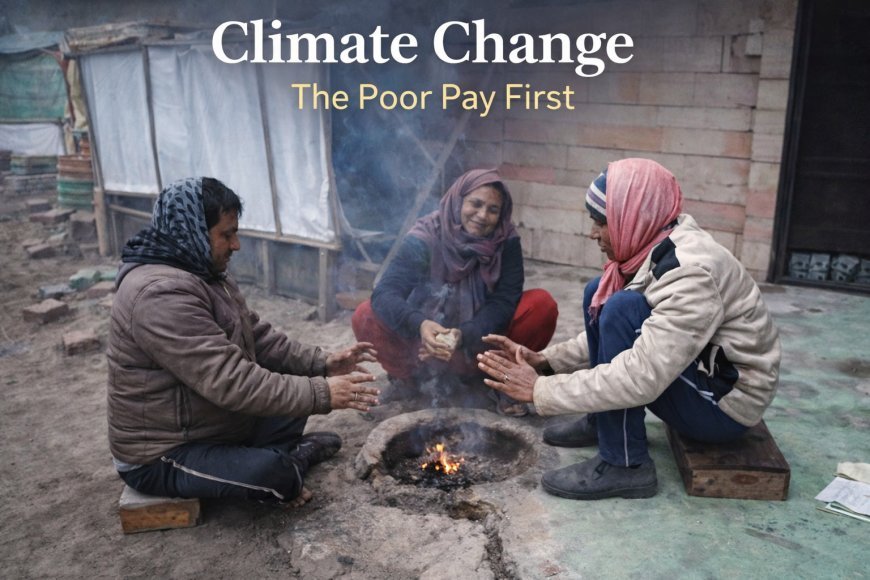
Climate change is often discussed in the language of science—rising temperatures, melting glaciers, extreme weather patterns. But beyond statistics and global conferences lies a harsh social reality: climate change is not an equal-opportunity crisis. It is deeply unjust. Those who contribute the least to environmental degradation are the ones who suffer its consequences first and most severely.
Across the world, and particularly in developing regions like India, climate change has become a poverty multiplier, intensifying existing inequalities and pushing vulnerable communities further to the margins.
An Unequal Burden The poorest communities rely most directly on nature for survival. Farmers depend on predictable rainfall. Fisherfolk rely on stable coastlines and healthy waters. Daily-wage labourers depend on physical strength and outdoor work. When climate patterns shift, their livelihoods collapse instantly. Heatwaves reduce productivity and increase health risks. Floods destroy fragile homes. Droughts wipe out crops. Cyclones erase years of savings overnight. For the poor, there are no safety nets—only survival strategies.
Meanwhile, those with resources insulate themselves through insurance, infrastructure, technology, and mobility.
Climate Change as a Public Health Crisis Extreme heat, polluted air, and water scarcity are no longer future threats; they are present dangers. The poor live in overcrowded settlements, often without ventilation, sanitation, or access to healthcare. Heat-related illnesses, respiratory problems, and waterborne diseases hit these communities first. Climate stress also worsens nutrition. Crop failures raise food prices, pushing nutritious diets beyond reach. Malnutrition, especially among children and women, becomes a silent casualty of environmental instability.
Climate change, therefore, is not only an environmental issue—it is a public health emergency.
Rural Distress and Forced Migration In rural areas, changing rainfall patterns and soil degradation have made agriculture increasingly risky. Small farmers, lacking irrigation or financial buffers, are forced to abandon their land. Climate-induced migration swells urban slums, where migrants face precarious work, poor living conditions, and social exclusion. Cities benefit from cheap labour but fail to provide dignity or security. Climate change thus reshapes demographics while deepening inequality. Migration is not a choice; it is a consequence.
Women and Children: The Hidden Victims Women bear a disproportionate burden during climate crises. They travel longer distances to collect water, manage households under stress, and often sacrifice their own health for family survival. Girls are pulled out of school when resources shrink, reinforcing cycles of poverty. Children exposed to climate shocks face disrupted education, poor health, and psychological trauma. The cost of climate change is carried silently across generations.
Responsibility Without Accountability Historically, industrialised nations and wealthy populations have contributed most to greenhouse gas emissions. Yet climate negotiations often fail to translate responsibility into meaningful action or compensation. Even within countries, urban elites enjoy the benefits of carbon-intensive lifestyles, while rural and informal communities pay the price. Climate injustice operates both globally and locally.
This imbalance raises an ethical question: who should bear the cost of adaptation and recovery?
The Failure of Policy Imagination Governments often respond to climate disasters after they strike, not before. Relief packages arrive late. Rehabilitation is uneven. Long-term adaptation—such as climate-resilient housing, sustainable agriculture, and public health preparedness—remains underfunded. Climate policy must shift from abstract targets to human-centred planning. Protecting the poor requires investing in resilience, not just infrastructure.
What Justice Demands Climate justice means recognising that vulnerability is not natural—it is produced by policy choices. It demands: early warning systems that reach the last mile , affordable insurance for small farmers and workers , climate-resilient public housing , universal access to healthcare and clean water , meaningful participation of affected communities in planning , Without justice, climate action becomes hollow.
Climate change will shape the future of humanity, but its impact will not be evenly distributed. The poor will continue to pay first—through lost livelihoods, damaged health, and shattered security—unless deliberate corrective action is taken. A society that allows its most vulnerable to bear the heaviest burden of a crisis they did not create stands morally compromised.
Climate change is not just about saving the planet. It is about protecting people—especially those with the least power to protect themselves.