

























The Brave Queen of Banki: Rani Sukanya Devi (Sukadei)
The History

Sanjay Bhatt
It was the month of Bhadrava in the year 1686 CE. That day was the sacred Bhagavata Ashtami, during evening hours. Outside the royal palace, heavy rain and strong winds were raging. The oil torches (polanga-oil mashals) burned brightly along the walls of the palace of the king of Badamba fort, Veerabara Balabhadra Dev Mangaraj. At that very moment in Ranihansapur, from the womb of Queen Jayanta Devi, Princess Sukanya (Sukadei) was born-at an auspicious Mahendra muhurta.
Inside his chamber, King Veerabara Balabhadra Dev was walking restlessly in deep thought. At that time, the chief maid Madalasa entered, bowed to the king, and said, “Victory to Your Majesty!”
The king turned around and asked, “What news?”
“Good news, Maharaj. The Maharani has given birth to a beautiful baby girl-just like the divine form of Goddess Lakshmi!”
Hearing the joyful news from Madalasa, maid of Queen Jayanta Devi, King Balabhadra Dev was filled with happiness. From his waist-belt he took out a pearl necklace and gifted it to the maid’s hands. Four years after their blessed marriage, the king finally received the fortune of becoming a father.
The joyous news spread across the entire kingdom of Badamba like lightning. Celebrations continued for 21 days throughout the state, with great splendour.
As the moon waxes into its crescent glory, the infant princess Sukanya Devi (Sukadei) slowly grew up. From her early teenage years, Sukanya Devi showed no interest in palace luxury, comfort, or entertainment. She was deeply drawn toward politics, knowledge and science, philosophy, religious discussions, debate, scriptures, horse riding, and the arts and strategies of warfare.
A short distance away from the Badamba royal fort, near the banks of the great Mahanadi, not far from the temple of Goddess Mahakali “Bhattarika,” there was an open ground where she began her military training. Near that ground lived a middle-aged Kandh woman who not only worshipped Goddess Mahakali Bhattarika but was also highly skilled in warfare. Seeing the princess’s interest, her mother, Queen Jayanta Devi, arranged for her complete martial training under that Kandh woman. The princess continued her training for many years.
Her virtues, beauty, and extraordinary intelligence soon spread across neighbouring kingdoms. She became the dream princess of many young princes. A few years later, Princess Sukanya chose Prince Dhananjaya Srichandan of Banki as her husband through a Swayamvara. In 1702 CE, she was crowned the Queen of Banki - she was only sixteen. At the age of eighteen, she gave birth to Prince Dayanidhi. King Dhananjaya, impressed by her knowledge and strategic skills, frequently sought her advice in state matters. In the royal court of Banki, Queen Sukanya Devi had her own independent throne.
During that period, the mighty ruler of Khordha, Maharaja Gajapati Gopinath Dev, was known for his cruel nature. By manipulating and pleasing the British colonial powers with tricks and force, he maintained his rule over Odisha. His military commander was the beer bikram marddaraj.
Hearing through secret messengers about the beauty, qualities, and brilliance of Queen Sukanya Devi, the drunken and immoral Gajapati became obsessed with the desire to possess her.
In the year 1720, on the day of Akshaya Tritiya, Queen Sukanya Devi, along with King Dhananjaya, visited Jagannath Dham, Puri as honoured guests of the Maharaja of Khordha, Gajapati Gopinath Deva, to have the divine darshan of Lord Jagannath and to witness the Chandan Yatra festival.
During lunch at the Royal Guest House in Puri, in the guise of casual conversation, Gajapati Maharaja Gopinath Deva suddenly made a startling proposal to King Dhananjaya-that he wished to have Queen Sukanya as his queen, in exchange for any wealth or treasure of the king’s choice.
Hearing this, King Dhananjaya trembled with rage but controlled himself. Feeling deeply insulted, he immediately left for Banki with Queen Sukanya and his trusted security guards and soldiers.
The Gajapati, intoxicated by Queen Sukanya’s beauty, grace, and wisdom, was blinded by arrogance and desire. Filled with pride and obsession, he resolved that if he could not have Queen Sukanya, he would seize the entire kingdom of Banki.
Thus, the Gajapati declared an unexpected war on Banki.
The vast Khordha army marched forward, advancing up to Talabasta and Dolanpur. A fierce battle ensued.
One night, while King Dhananjaya Shrichandan was resting inside his camp, he was attacked and killed by enemy soldiers. His son, Prince Dayanidhi, was then only twelve years old.
While Queen Sukanya Devi was worshipping inside the temple of Goddess Charchika, she received the heartbreaking news of her husband’s assassination. Stricken with grief and anguish, she made a firm decision:
“I shall take revenge for the murder of my husband, Dhananjaya, with my own hands.”
The Chief Minister, the royal council, the commander-in-chief and the subjects pleaded with her not to go to the battlefield. But she remained unshaken in her resolve.
When the Khordha army reached the borders of Gopalpur and Ragadi, the Chief Minister again proposed,
“Your Majesty, let us make peace by surrendering half of the Banki kingdom.”
Queen Sukanya’s firm reply was:
“As long as I live, there shall be war. Even if I die, there shall still be war!”
Inspired by the Queen’s determination, the entire Banki kingdom rose in courage.
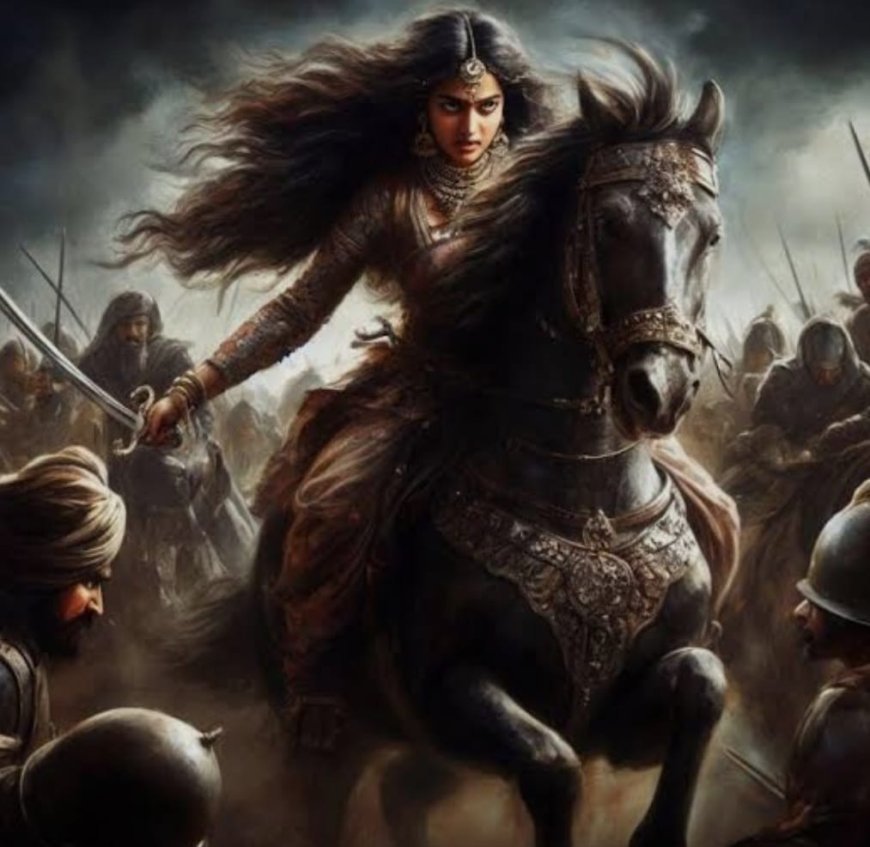
With the resounding cry of “Jai Maa Charchika!”, the army of Banki charged into the battlefield. Blessed by Goddess Charchika and led by the valiant queen, the soldiers fought with extraordinary bravery.
In this war, Queen Sukanya Devi was supported by the armies of Badamba, Narasinghpur, Tigiria, Athagarh, Saranda, and Dampada. After prolonged and intense combat, the Khordha army was defeated and scattered, and Banki emerged victorious.
The Maharaja of Khordha, Gajapati Gopinath Deva, was captured.
To commemorate this victory, Queen Sukadei ordered the construction of the “Munda Deula” at Kushapalla, which stands to this day as a silent witness-a symbol of courage and triumph.
The soldiers and the people demanded the execution of the captured Gajapati. But Queen Sukadei, being the embodiment of compassion and forgiveness, understood the pain of widowhood and spared him. She released him with honour.
Ashamed, Gajapati Gopinath Deva returned to Khordha and restored the Kushapalla region to Banki.
Queen Sukanya Devi ruled for another six years, after which she entrusted the throne to Prince Dayanidhi, becoming the Queen Mother.
Her reign was marked by numerous welfare activities for the people. Finally, on Magha Panchami in 1726, she passed away unexpectedly.
Queen Sukanya Devi of Banki, with her wisdom, bravery, compassion, and forgiveness, remains immortal in the history of Odisha - a living symbol of feminine power.
***
NAYAPALLI, BHUBANESWAR
Mobile phone number - 9437936581