





























Cuttack Bali Yatra: The Timeless Voyage of Odisha’s Maritime Pride

As winter descends gently on Odisha and the full moon of Kartik Purnima rises over the Mahanadi, the millennium city of Cuttack awakens to the rhythm of drums, lights, and celebration. The grand Bali Yatra—literally meaning Voyage to Bali—returns once again, carrying with it the fragrance of heritage, the echoes of the sea, and the memories of Odisha’s glorious maritime past.
Every year, this ancient festival transforms the riverbanks near Barabati Fort into one of the largest open-air fairs in India. Beyond its commercial bustle and cultural festivity, Bali Yatra remains a living symbol of Odisha’s seafaring legacy, a festival that connects history, faith, and community in a uniquely timeless way.
Echoes from the Age of Sail
Centuries ago, when Odisha was known as Kalinga, her brave sailors—called Sadhabas—set sail to faraway lands like Bali, Java, Sumatra, and Sri Lanka. These merchants carried textiles, spices, and crafts, returning with exotic goods, art, and ideas. The exchange was not merely commercial—it was cultural and spiritual, giving rise to deep ties between Kalinga and Southeast Asia that remain evident in language, rituals, and art even today.
Before embarking on their voyages, the Sadhabas and their families performed rituals on the dawn of Kartik Purnima, seeking divine blessings for a safe journey. Their wives, the Sadhabanis, would bid farewell with tears and prayers, singing folk songs that spoke of courage and devotion.
The Bali Yatra of Cuttack keeps this memory alive. It celebrates not only the spirit of trade but also the human yearning for adventure, connection, and prosperity.
A Riverbank Transformed
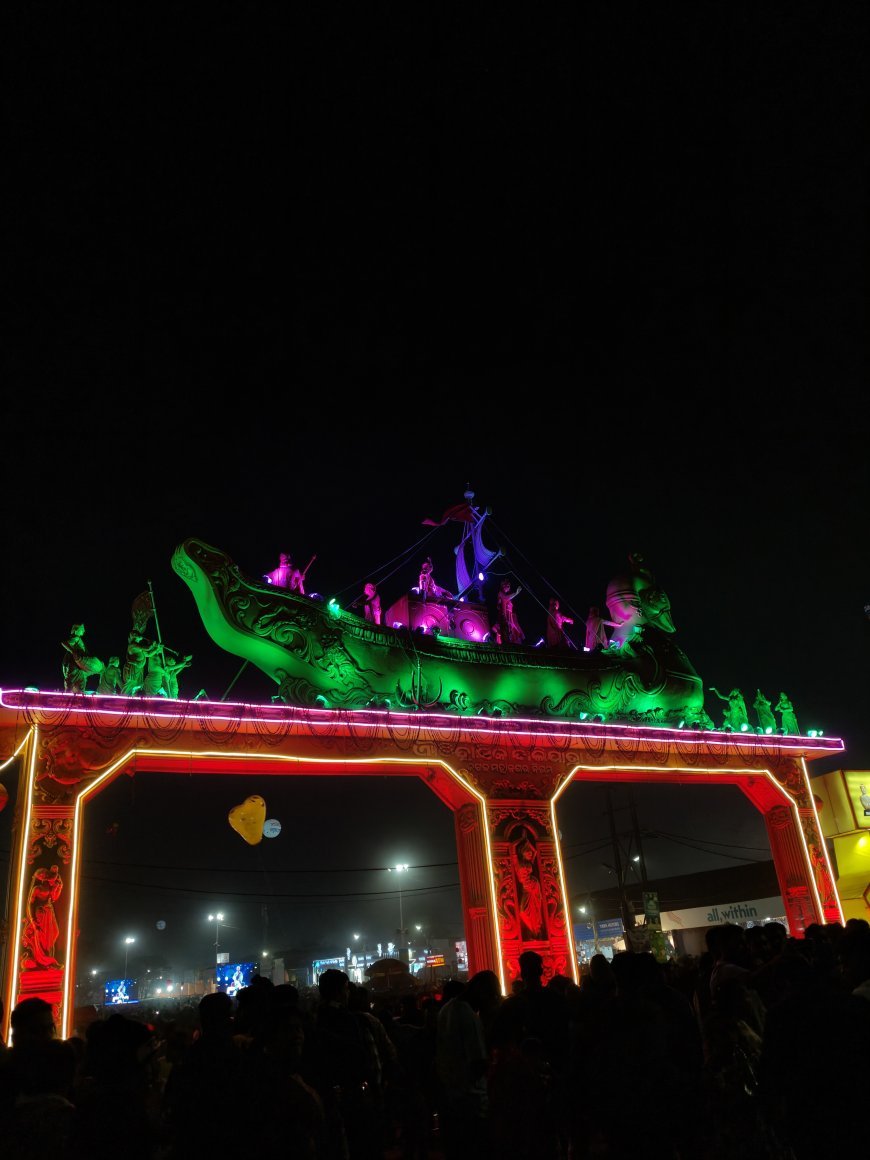
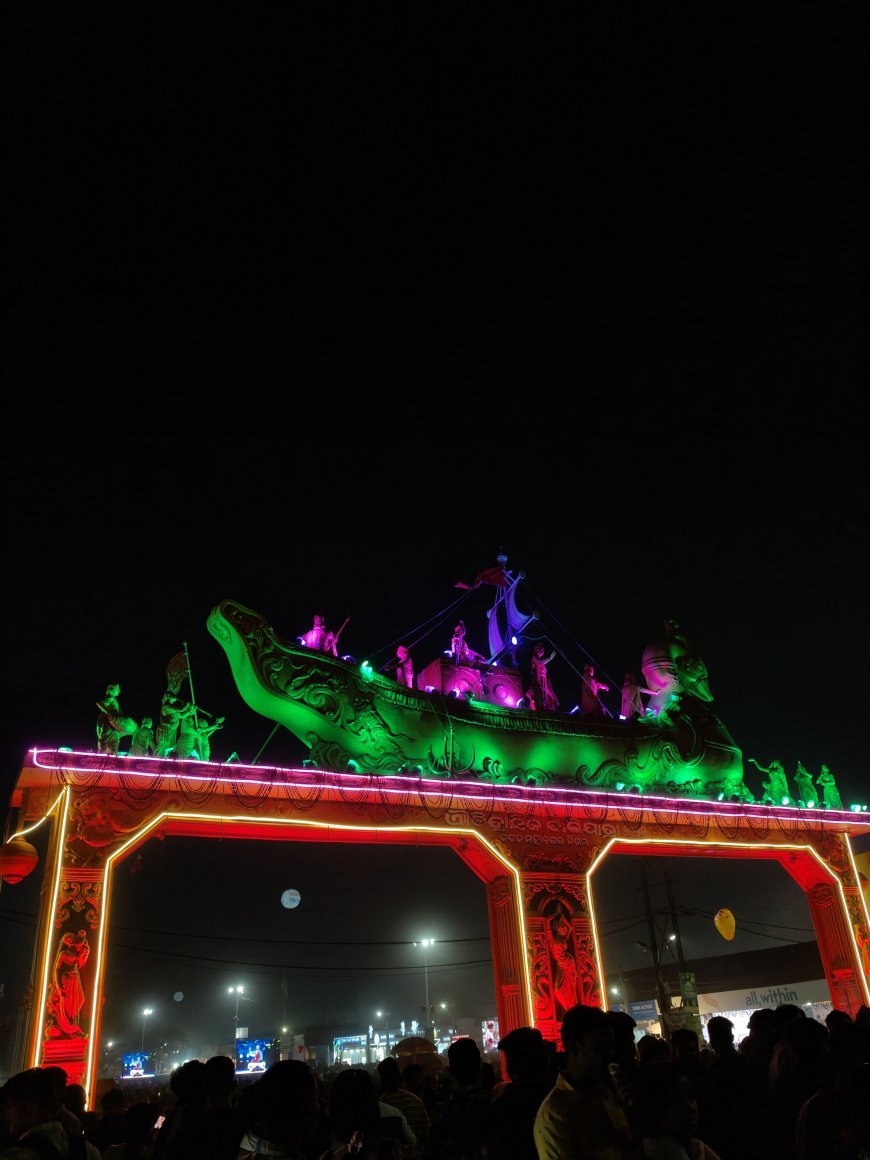
Each year, as the festival begins, Cuttack’s Mahanadi riverfront becomes a sea of light and color. Stretching across nearly 100 acres, the fairground welcomes millions of visitors over a week of celebration. Entry gates decorated with traditional Odia art open into rows of thousands of stalls—selling everything from Pipili appliqué work and Sambalpuri textiles to Cuttack’s famous silver filigree.
Food courts serve mouthwatering local delicacies—Dahibara Aloodum, Chhena Poda, Manda Pitha, and Rasabali—while the air fills with the fragrance of incense, fried sweets, and nostalgia. Evenings come alive with cultural programs, from Odissi dance and folk music to modern performances that draw crowds till late into the night.
Bali Yatra today is not just a fair—it is Odisha’s largest cultural and commercial convergence, where art, tradition, and innovation share the same stage. In recent years, initiatives like Startup Odisha and Mission Shakti stalls have given local entrepreneurs and women’s self-help groups a platform to showcase their products and ideas.
Boita Bandana: The Heart of the Festival
At dawn on Kartik Purnima, the people of Odisha observe the ritual of Boita Bandana, the emotional heart of Bali Yatra. Thousands gather by rivers, tanks, and ponds, floating miniature boats (Boitas) made of banana bark, paper, or thermocol—each carrying a lamp, betel leaf, and flowers. Children sing the ancient lines—
“Aa ka ma boi, pana gua thoi…”
—commemorating the traditional sailing months of the Odia mariners.
This symbolic act pays homage to the Sadhabas who once braved the ocean, and it reminds every Odia of the courage, enterprise, and cultural curiosity that defined their ancestors.
A Festival of Heritage and Progress
Over time, Cuttack’s Bali Yatra has evolved while preserving its soul. The fair now integrates eco-friendly initiatives, digital payments, plastic-free zones, and even drone surveillance for crowd safety. The nearby Odisha Maritime Museum at Jobra complements the celebration, educating visitors about the state’s seafaring history through artifacts, ship models, and interactive exhibits.
For artisans and small traders, Bali Yatra is an economic lifeline, generating significant income and offering exposure to national and international buyers. For locals, it is an emotional homecoming—a week when heritage, business, and festivity unite.
Beyond Cuttack: Patradeep and Bhubaneswar Baliyatra
While Cuttack remains the grand heart of the festival, smaller versions of Bali Yatra are also celebrated elsewhere in the state. At Paradeep, the port city that symbolizes modern Odisha’s gateway to the world, the Patradeep Bali Yatra honors the same maritime tradition in a more compact form. Here, the sea breeze and the harbor serve as living metaphors of continuity—from ancient ships to modern cargo vessels
Bhubaneswar, the capital city, has also begun hosting its own Bali Yatra, blending youthful energy, art, and music with maritime themes. Yet, it is Cuttack’s Yatra that remains the truest custodian of the legacy—the festival where history still breathes in the fragrance of the river and the rhythm of the crowd.
A Voyage That Never Ends
To walk through the fairground of Cuttack’s Bali Yatra is to travel through time. The glimmering lamps on the water mirror the ancient stars that once guided Kalinga’s sailors. The laughter of children floating paper boats echoes the hope that built civilizations.
For Odisha, Bali Yatra is not only a remembrance of its past but also a message for the future: that progress must be anchored in culture, and heritage must sail with time. As the Mahanadi reflects a thousand lights each Kartik Purnima, it whispers a story that has never faded—a story of people who dared to dream beyond the horizon.
Cuttack’s Bali Yatra, thus, remains a living voyage of the Odia spirit, forever sailing between memory and modernity.
— Sashi Sekhar Samanta.