































No Christmas, It’s Tulsi Pujan?

By | Sashi Sekhar Samanta|
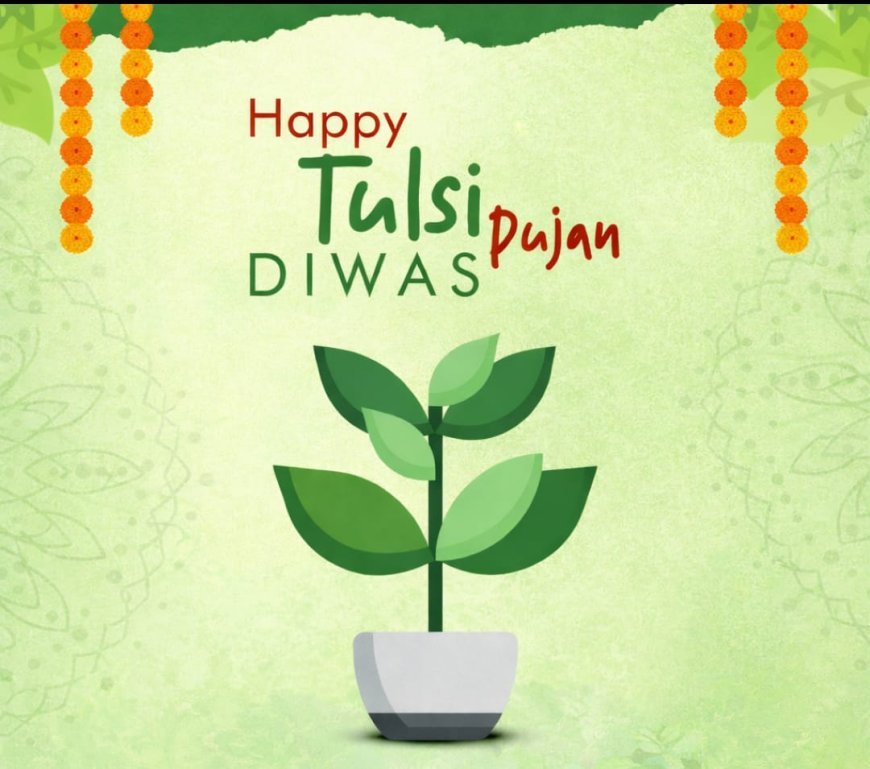
December 25 has long carried multiple meanings in India. For Christians, it is Christmas—a sacred celebration of faith, compassion, and joy. For many Hindus, it is also observed as Tulsi Pujan Diwas, linked to devotional practices centred on the sacred basil plant. In recent years, however, the phrase “No Christmas, it’s Tulsi Pujan” has moved from quiet observance into loud assertion—especially on social media, where Gen Z voices amplify identity with hashtags, reels, and viral slogans.
What was once a personal choice of devotion has increasingly become a public declaration, sometimes framed as a cultural counterstatement. The question is not about the legitimacy of either practice—both are valid within India’s plural traditions. The question is about how celebration is being framed, and what this framing means for a generation raised online, politically alert, and hungry for belonging.
A Generation Shaped by Assertion , Gen Z has grown up in a hyper-connected India—confident, expressive, and deeply aware of identity politics. For many young people, asserting Tulsi Pujan on December 25 is not necessarily about rejecting Christmas, but about reclaiming visibility. It reflects a broader impulse to foreground indigenous traditions in a globalised cultural calendar that often privileges Western festivals. This assertion becomes more pronounced online, where affirmation is rewarded by likes and shares. In this environment, nuance often loses to clarity, and clarity loses to confrontation. What begins as devotion can slide into declaration; what begins as declaration can harden into division.
Faith, Choice, and the Public Square , India’s strength has always been its ability to hold many truths at once. Christmas can be celebrated in churches and homes; Tulsi Pujan can be observed in courtyards and temples. The Constitution does not ask citizens to choose one over the other. It protects the freedom to practice both—individually, peacefully, and without compulsion. The problem arises when observance is framed as exclusion: when one celebration is presented as a negation of another. “No Christmas” is not devotion; it is positioning. And positioning, when amplified by influencers and political cues, risks turning personal faith into a public contest.
Social Media and the Loss of Context , Platforms compress complex traditions into slogans. A reel cannot carry centuries of theology or lived coexistence. As a result, messages flatten into binaries: ours versus theirs, tradition versus modernity, native versus foreign. Gen Z, fluent in this grammar, often participates without malicious intent—yet the cumulative effect can be polarising. This is not censorship territory; it is responsibility territory. Speech has consequences, even when it is expressive rather than abusive. The test of maturity—for individuals and platforms alike—is whether expression deepens understanding or simply sharpens lines.
Away from screens, a quieter India persists. Neighbours exchange sweets; friends attend each other’s festivals; cities glow with multiple calendars. In places like Bhubaneswar, Kochi, Kolkata, and Mumbai, December 25 passes with both church bells and home rituals—without friction. This lived coexistence rarely trends. It does not produce viral clips. But it is the social fabric that has held India together far longer than any hashtag.
Gen Z does not need to choose between confidence and compassion. Celebrating Tulsi Pujan with pride does not require negating Christmas. Cultural self-respect is strongest when it does not depend on denial of the other. A generation that demands mental health awareness, gender equity, and climate action can also model civic grace—the ability to hold difference without hostility. This is not about diluting belief; it is about dignifying choice.
Neutral, Not Noisy , Governments and institutions must remain neutral arbiters, not amplifiers of cultural competition. Official calendars should accommodate diversity without privileging one practice through rhetoric. Public order is maintained not by declaring winners among festivals, but by protecting the right to celebrate peacefully.
December 25 does not need to be a battleground. It can be a day where different Indians honour different meanings—side by side. Gen Z, with its energy and reach, has the power to redefine celebration as affirmation without cancellation. Faith thrives in sincerity, not in slogans. Culture grows through confidence, not confrontation. India’s future will be stronger if its youngest citizens learn that identity does not require erasure—only understanding.
Celebrate what you believe in. Protect the right of others to do the same. That, too, is a tradition worth keeping.