





























PRAHAR flags deepening jobs crisis in Western Odisha, calls for fast-tracking of stalled projects

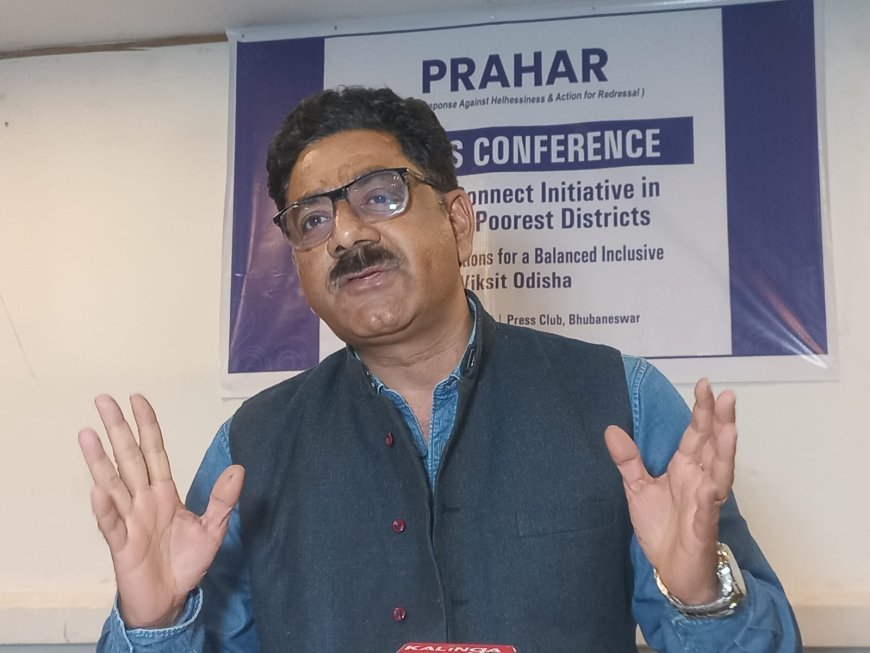
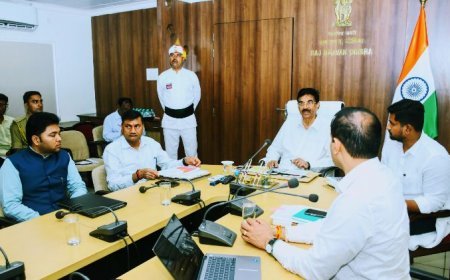
Bhubaneswar(By Abhishek Mohanty): Public Response Against Helplessness and Action for Redressal (PRAHAR), a policy-focused development organisation working on employment, livelihoods, and regional equity on Thursday presented the findings of its Ground Connect Initiative in the KBK region comprising Kalahandi, Balangir, Koraput, Nuapada, Rayagada, Nabarangpur and adjoining areas, highlighting deep structural gaps in employment and livelihoods across Odisha’s poorest districts.
Based on extensive village-level fieldwork, community consultations and expert discussions, PRAHAR warned that while Coastal Odisha has emerged as the visible face of growth, large parts of Western and South-Western Odisha remain trapped in low incomes, distress migration and the absence of formal sector jobs.
Explaining the situation, Abhay Raj Mishra, President & National Convenor, PRAHAR said, “Families in Western Odisha today rely heavily on migration to make their ends meet. People are leaving because there are no stable, formal jobs at home. Welfare schemes help families survive, but they do not create dignity, security or a future for the youth. There is an immediate need to re-think the developmental strategy and focus on fast-tracking projects which have high employment elasticity to reverse the trend”
“We are not asking the government to invent new ideas. We are asking to implement what is already approved. Jobs can be created now not five years later if stalled big ticket projects are unlocked now which are heavily invested and ready to operate.”, he added.
PRAHAR’s findings show that per capita income in districts like Kalahandi is around Rs 32,000, compared to the state average of nearly Rs 1.8 lakh, underscoring the scale of regional inequality. Agriculture continues to employ nearly 80% of the local workforce, mostly as marginal and seasonal workers, while non-farm employment options remain extremely limited.
According to PRAHAR, distress migration has become the default survival strategy, with non-official estimates suggesting up to 60,000 seasonal migrants from Kalahandi alone, and over 28.16 lakh migrant workers across Odisha. Recent reports of abuse and torture of migrant workers in Tamil Nadu have once again exposed the human cost of this employment deficit.
Jobs are possible—if implementation is prioritised.
PRAHAR’s analysis highlights that the employment crisis in Western Odisha is not due to lack of projects or investment intent, but due to delays in implementation and under-utilisation of existing assets.
As per PRAHAR estimates, if due priority is given to implementation, it is possible to create nearly 35,000 jobs in Western Odisha, of which 25,000 jobs can be generated immediately within the current year itself, primarily by unlocking stalled industrial and mining-linked activities. Government has recently announced Rs 4,111 crore worth of new projects which have the potential to create 9,924 jobs. However, these projects are expected to take four to five years to translate from announcements into actual employment on the ground. Several mining projects have already received approvals but remain stuck in implementation, and if these approved mining projects are operationalised, they can immediately generate 20,000–25,000 direct and indirect jobs, cutting distress migration sharply and reviving local economies.