
























A Man with a Different Vision, As if He Came from a Different Planet Remembering the Life and Legacy of Debendra Pradhan

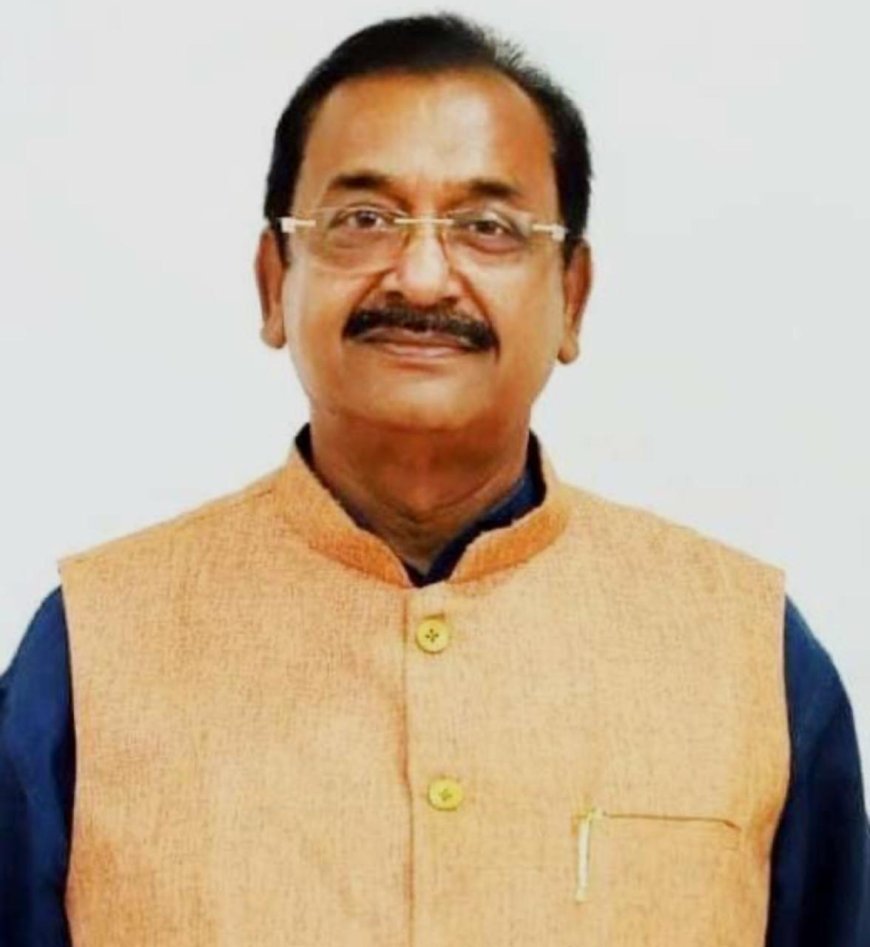
By Sameer Mohanty, Former President, Bharatiya Janata Party, Odisha
There are certain figures in public life whose presence cannot be measured merely by the positions they held or the offices they occupied. Their influence lies in the ideas they planted, the institutions they nurtured, and the generations they inspired. In the political history of Odisha, Dr. Debendra Pradhan stands as one such rare figure. To many of us who observed him closely, he appeared like a person with an extraordinary vision, someone whose approach to politics seemed almost otherworldly, principled, calm, and deeply devoted to the people.
During the formative years of the Bharatiya Janata Party in Odisha, the party’s organisational strength was fragile and its political space limited. The state’s political arena was dominated by towering personalities like Biju Patnaik and Janaki Ballabh Patnaik, leaders whose influence shaped the direction of Odisha’s governance for decades. In such an environment, establishing a new political movement required patience, resilience, and a rare belief in ideological politics. Dr. Pradhan possessed all three.
He did not build the BJP through dramatic speeches or grand spectacles. Instead, he travelled relentlessly across Odisha, meeting people in villages, interacting with students, farmers, labourers, and tribal communities. His method was simple yet powerful: build trust first, then build organisation. Through countless conversations and community engagements, he gradually cultivated a network of committed workers who believed in the party’s ideals.
Those journeys across the districts revealed another side of his personality. Dr. Pradhan believed that politics must be rooted in the realities of everyday life. He encouraged party workers to understand local issues deeply, agriculture, rural infrastructure, tribal welfare, and economic opportunities. In his view, a political organisation that remains disconnected from society eventually loses its purpose.
When he later assumed responsibilities in the Union government under the leadership of Atal Bihari Vajpayee, he carried this grassroots perspective with him. As a Union Minister associated with important portfolios including surface transport and agriculture, he sought to translate the aspirations of Odisha’s people into tangible development initiatives.
Among his most significant contributions was the expansion of road infrastructure in the state. At a time when many regions of Odisha remained geographically isolated, he recognised that connectivity was essential for economic progress. During his tenure, the network of centrally supported roads expanded dramatically, nearly doubling in length. For remote districts and tribal regions, these roads became gateways to new opportunities, markets for agricultural produce, access to healthcare facilities, and improved educational connectivity.
Dr. Pradhan often described infrastructure as the foundation of inclusive development. Without roads, he argued, the benefits of national policies would never reach the villages where they were needed most. His focus therefore remained on linking rural areas with larger economic networks.
One notable initiative during his tenure involved the improvement of the Bhubaneswar–Puri corridor, a route of great cultural and religious significance. Pilgrims travelling to the sacred Jagannath Temple benefited from enhanced connectivity, making the journey safer and more accessible. For Dr. Pradhan, development was never separated from cultural heritage. He believed that infrastructure should strengthen both economic life and civilisational identity.
His engagement with agricultural policy was equally important. Recognising that a large portion of Odisha’s population depended on farming, he emphasised programmes that supported rural livelihoods. He advocated measures that would improve irrigation, facilitate market access, and strengthen institutional support for farmers. His particular concern was for tribal communities whose agricultural practices often remained marginalised within broader economic frameworks.
In his interactions with farmers, he listened carefully to their concerns about land productivity, market fluctuations, and infrastructural challenges. These conversations informed his approach to policymaking, ensuring that rural voices found representation in national discussions.
Dr. Pradhan’s leadership also became visible during moments of crisis. The devastating 1999 Odisha Super Cyclone left vast areas of the state in ruins, testing the resilience of governance systems and public institutions. During those difficult days, he worked tirelessly to ensure that assistance from the central government reached affected regions quickly.
He maintained constant coordination with national leaders, including Lal Krishna Advani, facilitating the mobilisation of relief teams, medical support, and emergency supplies. Those who accompanied him during visits to disaster-stricken areas recall his deep emotional response to the suffering of the people. His commitment during that period reinforced the perception that he viewed public service not as a political duty but as a moral responsibility.
Despite his growing stature in national politics, eventually serving as a vice-president of the BJP, Dr. Pradhan remained remarkably grounded. He maintained close relationships with grassroots workers and continued to guide young leaders with patience and encouragement. His approach to mentorship was personal and thoughtful. Rather than imposing authority, he preferred to inspire confidence and self-discipline among emerging activists.
For many of us who had the opportunity to interact with him regularly, these conversations became invaluable lessons in political ethics. He often emphasised that leadership must combine ideological clarity with humility. Power, he reminded us, is temporary, but the respect earned through service endures.
His role in expanding the BJP’s presence in Odisha cannot be understood only through electoral outcomes. What he created was a culture of organisational dedication that encouraged workers to engage with society in meaningful ways. The victories achieved in various constituencies during the 1990s reflected the gradual acceptance of this approach among voters.
Yet Dr. Pradhan never viewed political competition as a personal rivalry. He maintained respectful relationships with leaders from other parties and believed that democratic politics should encourage dialogue rather than hostility. This attitude earned him admiration across ideological boundaries.
Looking back today, it becomes clear that his political philosophy was shaped by a larger vision of public life. He believed that governance must address the needs of those who remain at the margins, tribal communities, small farmers, and rural labourers. Development, in his understanding, meant creating opportunities that allowed every citizen to participate in the nation’s progress.
In many ways, his ideas anticipated contemporary discussions about inclusive growth and regional development. The emphasis he placed on connectivity, agricultural empowerment, and grassroots leadership continues to influence policy debates today.
For those of us who worked within the BJP in Odisha, Dr. Debendra Pradhan represented a guiding force during a period of organisational transformation. His calm determination helped stabilise the party during challenging phases and inspired workers to remain committed to long-term goals.
The description often used to portray him a man with a different vision who seemed to belong to another planet captures the essence of his character. In a political environment frequently shaped by expediency and short-term calculations, he remained steadfast in his belief that principles must guide public action.
Such individuals leave behind more than memories. They leave behind standards against which future leadership is measured. Dr. Pradhan’s life continues to remind us that politics, when practised with integrity and purpose, can serve as a powerful instrument for social change.
Today, as Odisha’s political landscape continues to evolve, the foundations laid by pioneers like Dr. Debendra Pradhan remain visible. The institutions he strengthened, the workers he mentored, and the developmental initiatives he championed continue to shape the state’s journey.
For me personally, remembering him is not merely an act of nostalgia. It is a reaffirmation of the values that must guide public life commitment to society, respect for democratic institutions, and the courage to pursue long-term vision even in the face of immediate challenges.
Dr. Debendra Pradhan belonged to a generation of leaders who believed that politics could still be guided by ideals. His life demonstrated that humility and determination can coexist with effective governance.
In the years to come, historians will undoubtedly evaluate his contributions within the broader narrative of Odisha’s political development. Yet for those of us who witnessed his work closely, his legacy is already clear. He was not merely a leader who held important offices. He was an architect of a political movement, a mentor to countless workers, and a statesman who believed deeply in the promise of democratic service.
And perhaps that is why many of us felt that he carried a vision different from the ordinary. In a world often shaped by calculation, he chose conviction. In an era of noise, he preferred quiet determination. That difference made all the difference.