






















Remembering a Rajarshi of Public Life: The Death Anniversary Reflections on the Life and Legacy of Debendra Pradhan


By Kalandi Samal
Noted writer and political activist
The death anniversary of a public figure is never merely a ritual of remembrance; it is an opportunity to revisit a life that shaped institutions, inspired people, and left behind a moral compass for the generations that follow. For many of us in Odisha’s political and social life, remembering Dr. Debendra Pradhan is not simply recalling a leader of the Bharatiya Janata Party. It is remembering a statesman whose life represented discipline, sacrifice, humility, and an unwavering devotion to the people of Odisha.
For those of us who had the privilege of walking beside him in the early years of struggle, he was not merely a political leader but a guiding elder, a Mausa whose affection and direction shaped the lives of many young workers like me. I, Kalandi Samal, coming from the soil of Talcher, witnessed firsthand how his life was devoted not to the pursuit of power but to the cultivation of public service and ideological commitment. In many ways, the story of Dr. Pradhan is the story of how the BJP found its roots in Odisha.
A Builder of Ideology in Difficult Times
The Odisha of the 1980s and early 1990s was politically dominated by towering personalities like Biju Patnaik and Janaki Ballabh Patnaik. Their influence was vast, and their political identities were deeply embedded in the consciousness of the people. In that era, building an alternative political platform required courage and conviction.
Dr. Debendra Pradhan emerged as one of the central architects of the BJP’s organisational foundation in Odisha. The party at that time had limited resources but an abundance of dedicated workers who believed in ideological politics. It was often said by Kushabhau Thakre that Odisha’s BJP had “gentlemen with empty pockets but immense commitment.” That remark perfectly described the environment in which Dr. Pradhan worked tirelessly to nurture a disciplined cadre-based political organisation.
He travelled across villages, tribal regions, and remote districts where politics had rarely reached with ideological clarity. For him, politics was not an urban spectacle but a grassroots engagement with the aspirations of ordinary people.
The Rajarshi Janaka of Odisha BJP
Many political observers and colleagues described him as the Rajarshi Janaka of the Odisha BJP, a wise patriarch whose authority came not from command but from moral stature. His leadership style was calm, reflective, and deeply ethical. He believed that political power must always remain secondary to public service.
For younger workers like me, he was both a mentor and a moral compass. He never encouraged shortcuts in politics. Instead, he insisted that leaders must emerge from social service, grassroots mobilisation, and ideological clarity.
In the villages of Angul, Talcher, Deogarh, and beyond, people still recall how he patiently listened to the grievances of farmers, labourers, and tribal communities. He had an extraordinary ability to make ordinary citizens feel that their voices mattered in the democratic process.
A Central Minister with Vision
When Dr. Debendra Pradhan entered the Union government during the tenure of Atal Bihari Vajpayee, he carried with him the hopes of Odisha’s rural and tribal regions. As Union Minister of State associated with portfolios including agriculture and surface transport, he viewed his role not as a ceremonial position but as an opportunity to bring development to neglected areas.
One of his most remarkable achievements was the expansion of road infrastructure in Odisha. During his tenure, the network of roads under central programmes grew dramatically—from nearly 1600 kilometres to more than 3200 kilometres within a short span of time. This expansion was not merely about asphalt and concrete. For the villages of Odisha, roads meant connectivity, access to markets, education, healthcare, and dignity.
For tribal belts that had long remained isolated from economic opportunities, the new roads became pathways of transformation. Farmers could transport their produce to markets, students could reach schools more easily, and medical services could reach remote communities.
Roads as the Arteries of Development
Dr. Pradhan often said that roads are the arteries of a nation’s development. Without connectivity, rural economies remain trapped in cycles of poverty and isolation. His approach to infrastructure development was therefore deeply rooted in social justice.
One of the significant initiatives during his tenure was the strengthening of the Bhubaneswar–Puri road corridor. The declaration of this route as a National Highway was not merely an administrative decision. It recognised the cultural and spiritual importance of Puri as the sacred abode of Lord Jagannath. Millions of pilgrims travel to Jagannath Temple every year, and improved connectivity helped ensure safer and more efficient travel.
For Dr. Pradhan, development was always intertwined with culture and identity. He believed that infrastructure must serve both economic progress and civilisational continuity.
Agriculture and the Rural Economy
Equally significant were his contributions to agriculture. Coming from a state where a large proportion of the population depends on farming, he understood the vulnerabilities of rural livelihoods. His policies and initiatives emphasised irrigation support, market access, and institutional assistance for farmers.
He often emphasised that tribal and rural communities must not be treated as peripheral to the nation’s development. Instead, they should be at the centre of policy planning. Many development schemes during his tenure were designed with the intention of bringing government support closer to villages.
For the Adivasi regions of Odisha, where geography often becomes a barrier to development, his vision of rural connectivity and agricultural empowerment created long-term possibilities for economic growth.
A Leader During Crisis
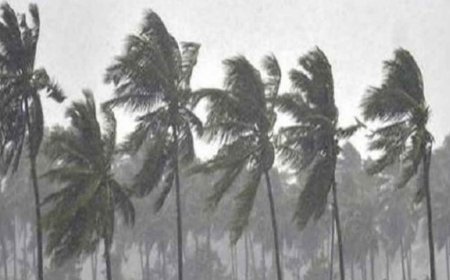
Another defining moment in his public life came during the devastating 1999 Odisha Super Cyclone. When large parts of coastal Odisha were devastated and administrative systems struggled to respond, Dr. Pradhan acted with urgency and compassion.
He maintained constant communication with Lal Krishna Advani and Prime Minister Vajpayee, ensuring that central assistance reached Odisha swiftly. Relief materials, paramilitary forces, medical teams, and emergency supplies were mobilised to assist the affected population.
For those who witnessed those days, it was clear that his leadership transcended political boundaries. He was seen travelling through devastated areas, speaking with survivors, and coordinating relief efforts. Many people recall that he was deeply moved by the suffering of the victims, often expressing the pain of Odisha as if it were his own personal loss.
Personal Mentorship and Political Culture
Beyond his public achievements, what truly distinguished Dr. Debendra Pradhan was his personal relationship with younger activists. For many of us, he was more than a political leader. He was a guardian who nurtured the growth of young workers within the party.
From my childhood days in Talcher, he treated me with the affection of a family member. His advice was always simple but profound: remain rooted among the people, never lose humility, and always remember that politics is ultimately about service.
Many leaders who today occupy important positions in Odisha’s political landscape trace their early training to the guidance of Dr. Pradhan.
Electoral Milestones and Political Courage
The by-election victories in Malkangiri in 1991 and again in 1996 represented crucial milestones for the BJP in Odisha. These victories occurred during periods when the state’s political environment was dominated by established parties and leaders.
Yet Dr. Pradhan believed that democratic politics thrives on ideological diversity and organisational strength. As president of the BJP in Odisha during those years, he played a decisive role in expanding the party’s grassroots presence.
Those victories demonstrated that even in regions traditionally distant from national political movements, the message of alternative governance and grassroots participation could resonate with people.
A Legacy Beyond Politics
Today, when we look back at his life, we realise that Dr. Debendra Pradhan’s legacy extends far beyond electoral achievements or ministerial positions. His life represents a model of political ethics that is increasingly rare in contemporary public life.
He showed that leadership does not require loud declarations or dramatic gestures. Instead, it emerges from patience, humility, and an unwavering commitment to the welfare of the people.
A Life That Continues to Inspire
On this solemn anniversary of his passing, the people of Odisha remember Dr. Debendra Pradhan not only as a central minister or a political strategist but as a Rajarshi, a wise and compassionate guardian of democratic values.
For those of us who had the privilege of learning from him, his absence is deeply felt. Yet his teachings remain alive in our actions, our ideals, and our commitment to public service.
As I reflect on his life, I realise that the greatest tribute we can offer him is to continue the work he began—to serve society with integrity, to stand with the marginalised, and to ensure that politics remains a vehicle for collective progress.
Dr. Debendra Pradhan may no longer be physically present among us, but his spirit continues to guide the path of countless workers who carry forward the mission he so lovingly nurtured. For Odisha, he will forever remain not merely a leader, but a symbol of dedication, humility, and unwavering devotion to the people.