


























Beyond the Third Floor: Odisha at the Crossroads of Conscience and Capital

By : vikram jena
Odisha stands today at a decisive moral crossroads. The question before us is not merely whether there will be “another mining scam,” nor whether one regime resembles another. The deeper question is whether we, as a society, have learned to distinguish development from dispossession, governance from patronage, and silence from complicity.
The people of Odisha have lived through eras of promises. Under Naveen Patnaik, the narrative of stability and administrative continuity was celebrated nationally. Now, under Mohan Majhi, a new chapter has begun, filled with expectation, hope, and a hunger for moral clarity. Yet, beneath the slogans and press briefings lies an unresolved anxiety: will the architecture of extraction continue to dominate the destiny of Odisha?
No More “Pravakaran Raj” on the Third Floor
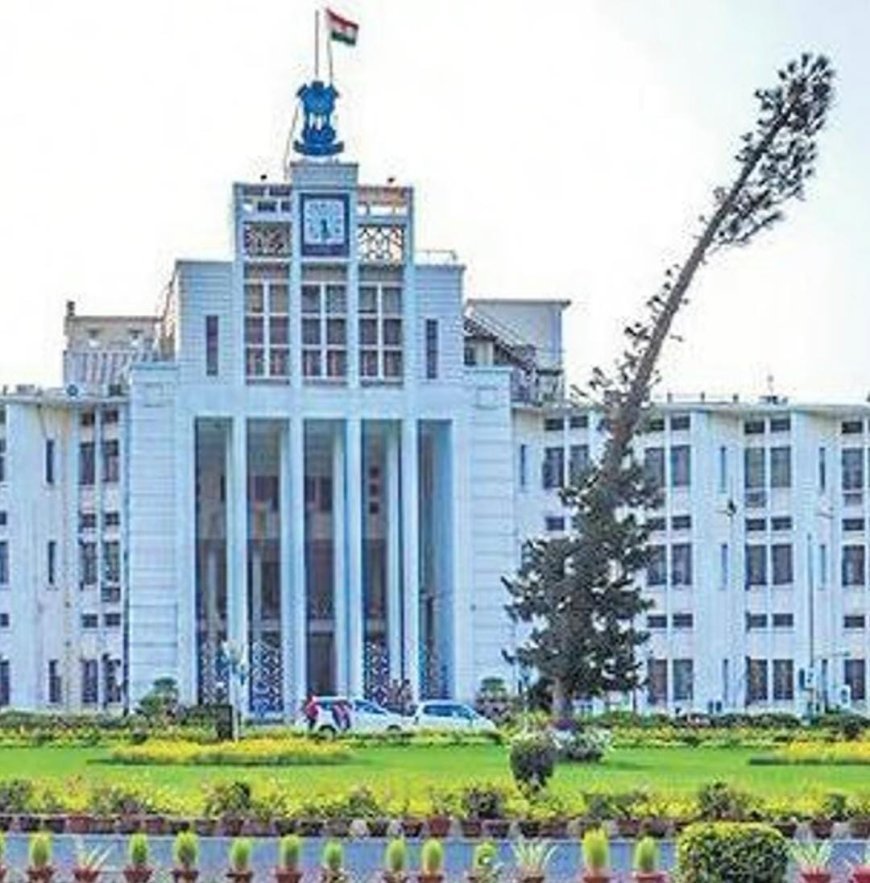
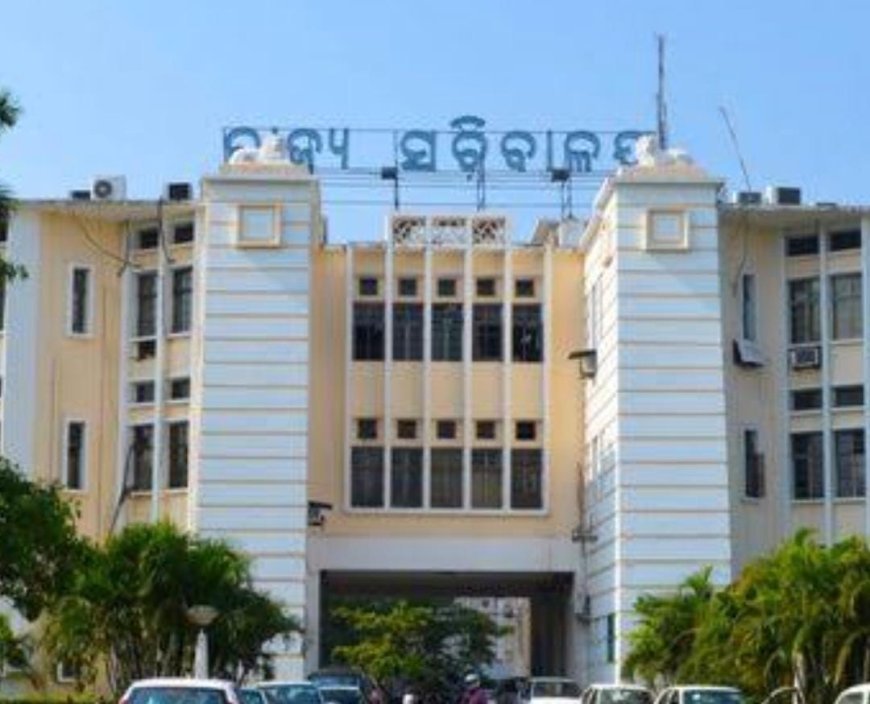
For years, political folklore in Odisha has whispered about power concentrated on the “third floor” a metaphor for bureaucratic insulation and centralized authority. Governance became a corridor of whispers rather than a platform of dialogue. Decisions were taken far from the red soil of Keonjhar, the iron hills of Sundargarh, and the trembling banks of the Baitarani.
If a new regime truly represents change, then it must mean the dismantling of invisible citadels of power. The people did not vote for a change of faces; they voted for a change of ethos. They did not reject one silence to embrace another.
The Baitarani Question: Development or Desecration?
The alleged diversion and ecological manipulation of the Baitarani River in the name of industrial expansion stands as one of the gravest moral questions of our time. A river is not merely water; it is memory, culture, and cosmology. To alter its natural course for corporate appetite is not just an environmental decision, it is civilizational violence.
When corporations like Tata Group and Jindal Steel and Power expand their footprints in mineral-rich zones, the discourse is always framed as “national growth” and “employment generation.” Yet, who measures the loss of ancestral lands? Who calculates the erosion of tribal identity? Who compensates for forests that were once universities of indigenous knowledge?
And if any company such as BRPL has enjoyed proximity to power corridors in the past, the question is not about personalities; it is about systemic entanglement. When the current Railway Minister, Ashwini Vaishnaw, once held a leadership role in BRPL, public scrutiny becomes a democratic obligation not an act of hostility, but of accountability.
Democracy demands transparency not because it distrusts individuals, but because it respects institutions.
The Betrayal of the Adivasi Soul
The adivasi communities of Odisha have been the first citizens of these forests and the last beneficiaries of their exploitation. They have witnessed hills disappear, rivers darken, and promises evaporate. Compensation packages may look impressive in government files, but displacement carries a psychological cost that no monetary figure can capture. For decades, adivasis have been told they are “partners in development.” Yet, partnership without consent is coercion. Consultation without empowerment is cosmetic.
The tragedy deepens when leaders once celebrated as whistleblowers against mining irregularities fall silent in power. If Mohan Majhi once earned admiration for exposing mining controversies during the tenure of Naveen Patnaik, then the moral consistency of that courage must now be tested in office.
History does not judge leaders by their speeches in opposition; it judges them by their silence in power.
The Myth of CSR: Charity Without Justice
Corporate Social Responsibility (CSR) has become the new moral perfume of industrial expansion. A school building here, a health camp there, a few water tanks, some scholarships, and suddenly the narrative shifts from extraction to benevolence.
But CSR cannot substitute structural justice. It cannot replace environmental safeguards. It cannot compensate for irreversible ecological damage. A hospital funded by a corporation does not absolve it from contaminating groundwater. A sports tournament cannot erase forced displacement.

If one visits the interior belts of mineral districts, the reality of CSR often reveals itself as cosmetic compliance rather than transformative intervention. Reports glow; villages groan.
CSR, when detached from accountability, becomes a spectacle a theatre of goodwill masking the economics of extraction.
The Silence of Media: Advertisement Over Accountability?
Why has mainstream media not sustained rigorous investigation into these questions? Why does environmental devastation receive less airtime than celebrity controversies?
Is it coincidence — or commerce?
When corporate houses are also among the largest advertisers, editorial independence becomes fragile. The fourth pillar of democracy risks becoming a decorative column in the corporate mansion. Yet, the media cannot selectively awaken. Journalism is not activism for convenience; it is vigilance for the public good. When rivers are altered and forests fall, neutrality is complicity.
Where Are the Researchers?
Odisha’s universities produce theses on development studies, political economy, and governance models. Conferences are organized; papers are presented. Yet, how many action-based research projects confront the ground realities of mining belts? How many scholars spend sustained time in displaced villages, documenting the lived experience of “growth”?
Intellectual property is not merely patents; it is moral courage. A university that does not interrogate injustice becomes an examination centre, not a centre of knowledge.
Silence may secure promotions and retirement benefits, but it erodes the soul of scholarship. The role of academia is not to echo power but to question it respectfully, rigorously, relentlessly.
Civil Society and the Odia Dream
Civil society in Odisha has oscillated between activism and fragmentation. Some groups speak truth to power; others align with ideological camps. But the Odia dream of dignity, equity, and sustainable prosperity, demands unity beyond factional lines.
Mahatma Gandhi once spoke of poverty as the greatest form of violence. Decades later, Prime Minister Narendra Modi acknowledged that poverty remains a painful truth of India’s developmental journey. If both historical and contemporary leaders recognize this reality, then why do poverty alleviation schemes often stagnate at the level of paperwork?
Implementation falters not only due to corruption but due to bureaucratic indifference. The “invisible action” of files moving without impact has become a hallmark of governance. Certifications are issued; lives remain unchanged. The poor Odia does not need symbolic empathy; he needs systemic transformation.
Development as a Buzzword
“Model of development” has become a fashionable phrase in political debates. Infrastructure, industrial corridors, investment summits, these are showcased as evidence of progress. But development without distributive justice deepens inequality.
The moral measure of development is not GDP growth; it is the reduction of suffering. It is the empowerment of the weakest. It is the preservation of ecological balance.
When politicians debate models while citizens debate survival, democracy fractures.
Who Are the Culprits?
The temptation is to identify villains a minister, a corporate house, a bureaucrat, a journalist. But systemic crises rarely emerge from isolated actors. They emerge from networks of convenience. The nexus between politics, bureaucracy, and corporate capital is sustained not merely by corruption but by normalization. When questionable decisions become routine, outrage fades.
The greater danger is not scandal; it is habituation.
A Call for Moral Reorientation
Odisha does not need another era of mining scandals. It does not need a repetition of concentrated power. It does not need ecological adventurism disguised as modernization. It needs transparency. It needs decentralization. It needs participatory governance.
If Mohan Majhi truly represents a break from the past, then his administration must institutionalize independent audits of mining operations, ensure transparent allocation of mineral revenues, and protect rivers like the Baitarani River from reckless alteration.
It must ensure that companies such as Tata Group and Jindal Steel and Power operate under stringent ecological and social scrutiny, not because they are enemies of the state, but because they are powerful stakeholders in a fragile ecosystem.
True governance is not anti-industry; it is pro-justice.
The Emotional Intelligence of Governance
Political leadership requires more than administrative skill; it requires emotional intelligence. It requires the ability to feel the pulse of the marginalized, to listen beyond applause, to sense the quiet despair of displaced families. A river altered is not just a hydrological event; it is a psychological rupture. A forest cleared is not just a land-use change; it is a cultural extinction. Governance must move from extraction to empathy.
Conclusion: The Soul of Odisha
Odisha’s identity is not confined to mineral wealth. It resides in its rivers, temples, tribal songs, coastal winds, and resilient people. To reduce the state to a quarry is to diminish its civilizational depth. Justice may be slow, but it educates. It teaches societies to confront their mistakes and recalibrate their futures. If the present moment becomes another chapter of silence, history will record it not as continuity but as collective failure.
The time has come for introspection not only by politicians, but by media, academia, civil society, and citizens. The question is not whether mining should stop; the question is whether morality will start. Odisha deserves development, but not at the cost of dignity. It deserves investment, but not invisibility. It deserves leadership, but not opacity.
Above all, it deserves courage, the courage to say: no more scams, no more silent rivers, no more ornamental CSR, no more insulated corridors of power.
Because the soul of Odisha is not for sale.