























Merit in Democracy: Time to Raise the Bar for Our Lawmakers

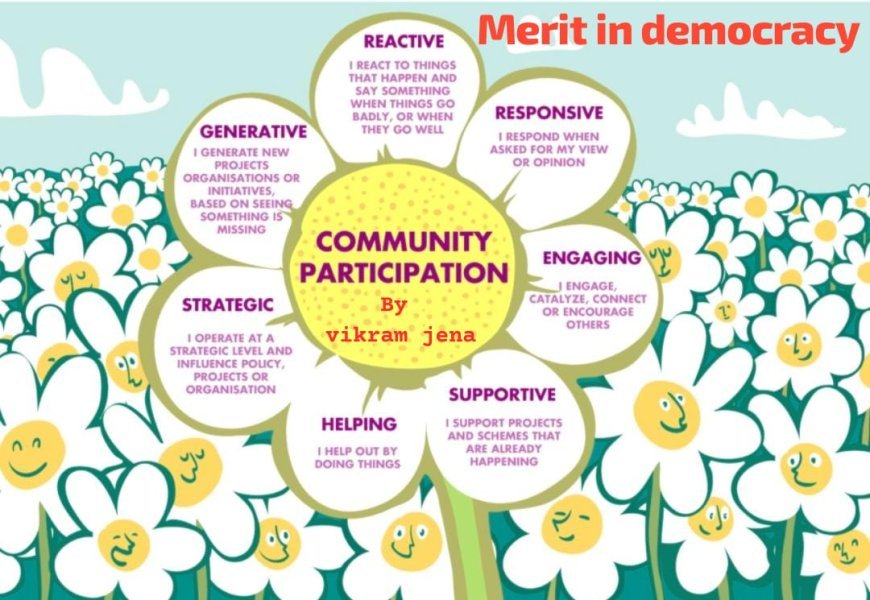
By : vikram jena
India calls itself the world’s largest democracy, and rightly so. From the first general election in 1951–52 to the digital scale of today’s polls, our democratic experiment has endured, expanded, and inspired. The authority of institutions such as the Election Commission of India has been central to this achievement. Yet a difficult question must now be asked with sobriety, not sensationalism: Should those who legislate for 1.4 billion people be held to minimum standards of knowledge and competence?
Across many States, a candidate for Sarpanch has, at different times, faced educational criteria such as clearing Class V. But for a Member of Parliament or a Member of Legislative Assembly, the Constitution prescribes age, citizenship, and certain disqualifications, no educational threshold. The paradox is striking. At the village level, we sometimes expect basic literacy; at the national level, where laws shape macroeconomics, cybersecurity, climate strategy, and constitutional rights, we require none.
This is not an argument against democracy; it is an argument for deepening it.
The Complexity of Modern Governance
India of 2026 is not India of 1952. Public policy now demands engagement with artificial intelligence regulation, carbon markets, biotechnology ethics, global trade treaties, data protection, and national security architectures. Parliamentary debates reference fiscal deficit trajectories, WTO compliance, semiconductor ecosystems, and quantum computing. The legislative load placed before the Parliament of India and State Assemblies has multiplied in complexity.
To suggest that legislators need no structured preparation is to ignore the evolving nature of governance. Doctors clear medical entrance examinations; civil servants clear the Union Public Service Commission process; engineers pass national tests; even schoolteachers undergo eligibility examinations. Yet those who frame the laws under which all these professionals operate face no minimum academic benchmark.Democracy must remain inclusive, but inclusivity cannot mean indifference to competence.
A Proposal: Joint Parliamentary and Assembly Entrance Tests
It is time to consider the introduction of a Joint Parliamentary Entrance Test (JPET) for aspiring Members of Parliament and a Joint Assembly Test (JAT) for prospective MLAs.
These would not be elitist barriers; rather, they would be qualifying examinations assessing:
Constitutional literacy
Basic economics and public finance
Understanding of federalism and governance structures
Ethics in public life
Policy analysis and critical reasoning
Passing such an examination would not guarantee election; voters would still decide. But it would ensure that candidates possess foundational knowledge of the system they seek to shape. Critics will argue that such tests undermine the spirit of representative democracy. Yet representation and competence are not mutually exclusive. A farmer-leader, trade unionist, entrepreneur, or social activist can clear a structured test if the syllabus is transparent and the process accessible. Indeed, this reform may empower grassroots leaders who combine lived experience with institutional understanding. India is no longer a “baby democracy.” It is a mature republic with global responsibilities. The standards of leadership must evolve accordingly.
Educational Qualification: A Sensitive Balance
Mandating formal degrees risks excluding capable leaders from disadvantaged backgrounds. Therefore, the focus should not be on degrees but on demonstrated civic knowledge. A standardized qualifying examination, offered in multiple languages and conducted transparently, would level the playing field rather than distort it. Moreover, elected representatives should undergo compulsory orientation courses upon election-structured programs in legislative drafting, financial oversight, and ethics. Continuous professional development is standard in most professions; why should public lawmaking be exempt?
Electoral Reform: 100% Voting as a Democratic Imperative
Raising standards for candidates must be matched by raising standards for participation. India’s voter turnout, while impressive in scale, rarely touches 100 percent. If democracy is sovereignty of the people, then universal participation should be a moral objective.The Election Commission of India could pilot a framework where voting is treated as a civic duty akin to jury service in other democracies. Incentivized participation, through modest tax rebates, public recognition certificates, or digital civic credits, may encourage full turnout without coercion.A democracy is strongest when every citizen votes, not selectively, not sporadically, but consistently.
Rethinking Campaign Culture
Modern Indian elections often stretch over weeks, consuming enormous public funds, administrative resources, and social energy. Extended campaigns amplify rhetoric, deepen polarization, and escalate expenditure. In an era of digital communication, is such prolonged mobilization necessary? A bold reform would limit official campaign periods to two focused days before polling. Prior to that, candidates could rely primarily on policy documents, televised debates, and regulated social media engagement. This would:
Reduce campaign expenditure
Curb hate speech and inflammatory mobilization
Minimize administrative diversion
Lower environmental impact
Digital platforms, under transparent oversight, can host structured debates and manifestos accessible to all voters. Social media, often criticised for misinformation, can instead become a monitored, verified space for policy discourse.
Combating Malpractice Through Technology
India has pioneered electronic voting machines and voter-verifiable audit trails. The next frontier is integrating real-time expenditure tracking, AI-assisted detection of hate speech, and transparent digital reporting dashboards accessible to citizens. Technology must serve integrity, not manipulation.
Public funding of elections, strict caps on digital advertising, and open-data transparency portals can collectively shrink the space for malpractice. A shorter campaign window would further reduce the opportunity for inducements and illicit spending.
The Ethical Argument
Ultimately, this debate is not about elitism versus populism. It is about ethical responsibility. Lawmakers draft bills affecting farmers’ incomes, minority rights, data privacy, national defense, and environmental futures. Should such responsibility not demand at least a certified understanding of constitutional principles?
The framers of the Constitution placed immense faith in citizens. That faith must now extend to a collective willingness to refine the system in light of experience.
India’s democratic practices are observed worldwide. From village panchayats to national elections, the scale is unmatched. If the world’s largest democracy pioneers a model where candidates demonstrate civic competence, participation approaches universality, and campaigns become lean and policy-focused, it will once again redefine democratic innovation.
A Call to Political Consensus
No reform of this magnitude can succeed without bipartisan consensus. Political parties must recognize that elevating the standard of public office enhances institutional credibility for all. Civil society, academia, and youth organizations should initiate a national conversation on merit, participation, and integrity in public life.
Democracy is not weakened by reform; it is strengthened by self-correction.
India has shown the courage to attempt bold structural changes in economics, technology, and governance. Electoral reform-anchored in competence and universal participation, should be the next frontier.The time has come to move from procedural democracy to professional democracy. Let us not fear higher standards. Let us demand them, for the dignity of Parliament, for the credibility of Assemblies, and for the future of the Republic.