





































The Thinker for All Times

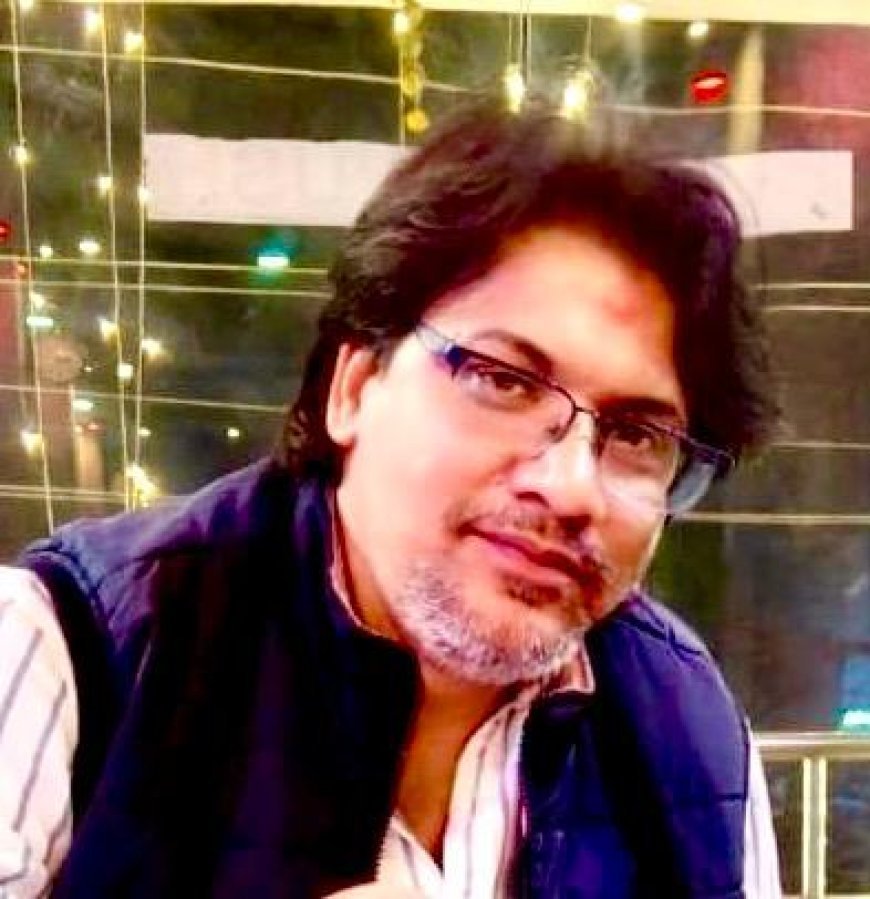
By: vikram keshari jena
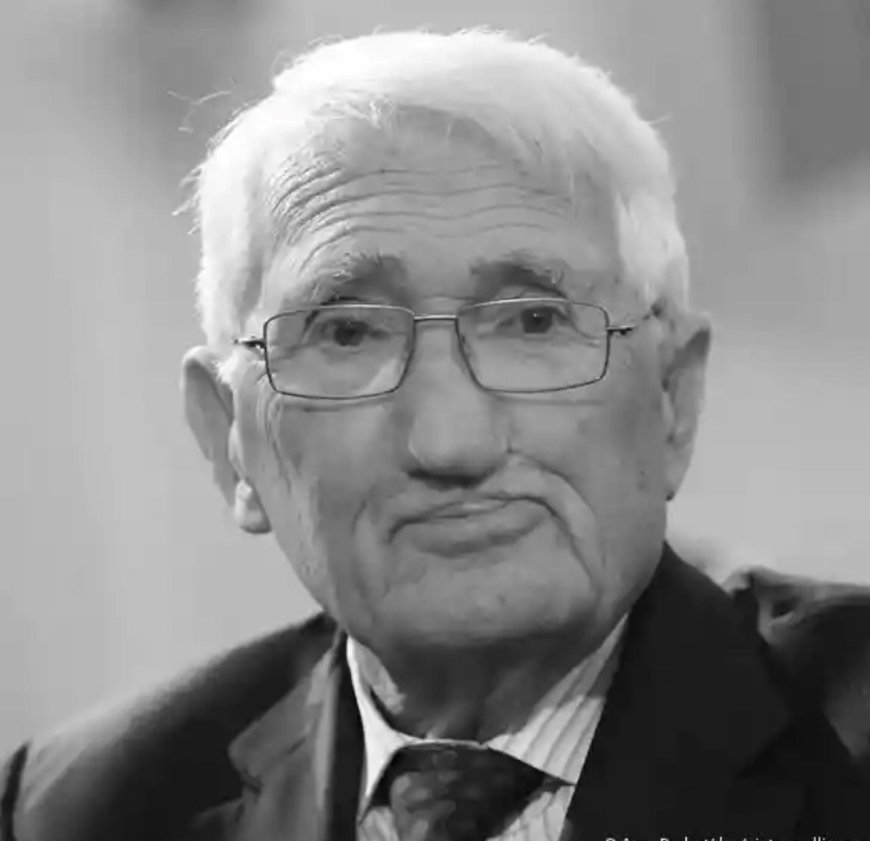
The passing of Jürgen Habermas at the age of 96 marks not merely the end of a life but the quiet closing of one of the most powerful intellectual chapters of modern philosophy. Born in 1929 and passing away in Starnberg, Germany, Habermas stood for decades as one of the most influential public intellectuals in the world, shaping debates on democracy, communication, ethics, and the fragile architecture of modern society. 
Some thinkers produce theories. Others create traditions. But a very rare few reshape the language through which societies understand themselves. Habermas belonged to that rare category. With his profound reflections on communication and democratic life, he helped humanity rediscover a simple yet radical truth: democracy begins not with power, but with conversation.
Habermas’s intellectual journey was born from the ashes of history. As a young German growing up during the collapse of Nazi Germany, he belonged to a generation forced to confront the deepest moral failures of modern civilization. This confrontation shaped his lifelong philosophical project. He asked a question that haunted postwar Europe: How can a society rebuild moral legitimacy after witnessing the catastrophic abuse of power?
The answer he developed over decades of work was both philosophical and profoundly human. Democracy, he argued, must be rooted in what he called communicative rationality, the idea that human beings can reach understanding through reasoned dialogue rather than coercion.
His famous concept of the Public Sphere became one of the most influential ideas in political philosophy. Habermas reminded us that the health of a democracy depends not only on institutions like courts or parliaments but on the quality of public debate among citizens. Cafés, newspapers, universities, and now digital networks, these are the living arenas where democracy breathes.
For Habermas, the public sphere was more than a theoretical space. It was a moral commitment. It represented the belief that ordinary citizens, through discussion and argument, could challenge authority and shape the destiny of their societies.
In an age where propaganda, media manipulation, and political polarization threaten the integrity of public discourse, Habermas’s insights feel more urgent than ever. He warned repeatedly that modern societies face the danger of what he called the “colonization of the lifeworld.” Economic systems, corporate media, and bureaucratic institutions can slowly invade the spaces where free dialogue should exist. When communication becomes controlled by power, democracy loses its soul.
What made Habermas extraordinary was not simply the depth of his theoretical work but his willingness to participate actively in public debate. Unlike many philosophers who remain within academic institutions, Habermas engaged continuously with political controversies, speaking out on German history, European integration, globalization, and the ethical responsibilities of democratic societies.
He belonged to the intellectual tradition of the Frankfurt School, following thinkers such as Theodor W. Adorno and Max Horkheimer. Yet he transformed that tradition by introducing a more optimistic vision of modernity. While earlier critical theorists often emphasized domination and ideological manipulation, Habermas insisted that modern societies still contained the possibility of rational dialogue and democratic renewal.
His monumental work The Theory of Communicative Action became one of the most influential philosophical texts of the late twentieth century. In it, he developed the idea that communication is not merely the exchange of information but the foundation of social cooperation. Language itself carries ethical expectations, truthfulness, sincerity, and mutual respect.
This insight gave his philosophy a remarkable emotional dimension. Habermas believed that human beings are not condemned to live within systems of domination. Through communication, they can create communities based on understanding rather than fear.
For scholars and thinkers across the world, Habermas’s work opened new intellectual horizons. Political scientists used his theories to rethink democratic legitimacy. Sociologists explored his ideas about social integration. Media scholars applied his concept of the public sphere to analyze journalism and digital communication.
For many of us in the world of ideas, Habermas was more than a philosopher. He was a guide for thinking about the future of knowledge itself.
In reflecting on his legacy, one might consider a framework that increasingly shapes contemporary intellectual life: the relationship between community, content, and context. Habermas’s work navigated these dimensions with remarkable clarity.
Community represented the democratic collective, the citizens who participate in public debate. Habermas believed that knowledge becomes meaningful only when it enters public conversation.
Content represented ideas themselves, the philosophical arguments and theoretical frameworks that shape intellectual discourse.
Context represented the historical and institutional conditions that influence communication.
Yet our contemporary knowledge world demands an expanded framework, one that moves beyond three dimensions toward five: community, content, context, culture, and communication.
Culture shapes the symbolic world through which societies interpret meaning. Communication structures, especially media corporations and digital platforms, shape the way ideas circulate.
Habermas anticipated many of these challenges long before they became visible in the digital age. He understood that democracy depends not only on free speech but on the social conditions that make genuine dialogue possible.
In the era of algorithmic media and fragmented public discourse, his warnings resonate with almost prophetic clarity.
To write history for contemporary society is therefore also to write within the intellectual landscape Habermas helped create. Universities, journalists, scholars, and citizens all inhabit the communicative world he described. His work reminds us that knowledge cannot flourish in isolation. It must remain part of a living public conversation.
The emotional dimension of Habermas’s legacy lies precisely here. He believed in the moral potential of human communication. Even in times of crisis, he refused to abandon the Enlightenment belief that reason, dialogue, and democratic participation could guide societies toward greater justice.
This belief was not naive optimism. It was a disciplined philosophical commitment grounded in historical experience. Now, as the world reflects on his passing, one is reminded that intellectual lives do not truly end with death. The books remain. The ideas circulate. The debates continue.
Future generations will still open the pages of his writings to ask the same questions he once asked: How can societies preserve freedom in the face of power? How can democracy survive the distortions of media and markets? How can human beings learn to listen to one another in a world of difference?
The answers may change with time. But the questions Habermas gave us will remain. And perhaps that is the ultimate measure of a philosopher’s life. Not the fame he achieved, nor the institutions he influenced, but the conversations he makes possible long after he is gone.Jürgen Habermas was not merely a philosopher of modernity. He was a guardian of dialogue itself. For that reason, even in death, his voice will continue to echo wherever human beings gather to speak, argue, and search together for truth.