
























Primary Education in Odisha: A Silent Collapse at the Foundation of Civilization

By : vikram jena
Civilizations do not collapse suddenly; they decay quietly at their foundations. In Odisha today, that foundation, primary education, is weakening with alarming silence. A primary school is not merely a place where children learn alphabets and numbers; it is where the architecture of human consciousness is first designed. It is where curiosity is born, where discipline is learned, and where society reproduces its moral and intellectual future. When primary education weakens, the consequences do not remain confined to classrooms; they spread into universities, governance, industry, and the ethical fabric of society itself. Yet across Odisha, one can see schools that function as structures without intellectual life, buildings without libraries, classrooms without learning environments, and systems without philosophical commitment. The bell rings, attendance is marked, and textbooks are distributed, but the deeper purpose of education, the cultivation of thinking mindsremains neglected. This is not merely an administrative lapse. It is a civilizational neglect, because no nation can rise above the intellectual strength of its primary schools.

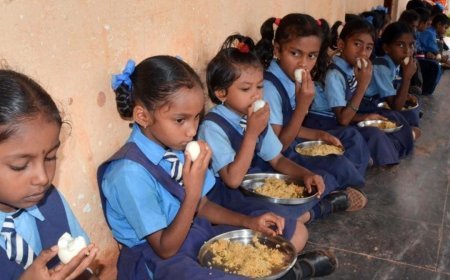
The most visible symptom of this crisis is infrastructural fragility, but the deeper crisis is intellectual. Infrastructure is not just about walls and roofs; it is about creating environments where the mind feels invited to explore. Many primary schools in rural and tribal regions lack functional libraries, reading corners, and basic learning resources. A school without books beyond prescribed textbooks is like a mind without imagination. Clean drinking water, usable toilets, proper seating, and safe classrooms are not luxuries, they are prerequisites for dignity in learning. When these are absent, education becomes symbolic rather than transformative. Children attend but do not connect. They memorize but do not understand. They remain physically present but intellectually distant. This creates a dangerous illusion of progress: enrollment increases, but enlightenment does not. The system measures success through numbers, but civilization measures success through thinking citizens. Without foundational infrastructure that respects the dignity of the learner, primary education becomes a ritual rather than a revolution.
However, the deepest crisis lies not in buildings but in the erosion of intellectual investment in teaching itself. A primary school teacher is not merely an instructor but the first philosopher a child encounters. It is the teacher who introduces the child to language, to logic, to imagination, and to society. Yet the system often treats teachers as administrative functionaries rather than intellectual nation-builders. Training programs frequently emphasize compliance and procedure rather than pedagogy and intellectual growth. Continuous exposure to new teaching methods, child psychology, and interdisciplinary thinking remains limited. As a result, classrooms often become spaces of repetition rather than inquiry. Memorization replaces curiosity. Fear replaces exploration. The child learns to obey rather than to think. This intellectual suffocation at the earliest stage produces generations that may possess certificates but lack confidence, creativity, and critical reasoning. When the teacher’s intellectual life weakens, the student’s intellectual future weakens. And when millions of such futures weaken, the society itself loses its capacity for innovation and moral leadership.
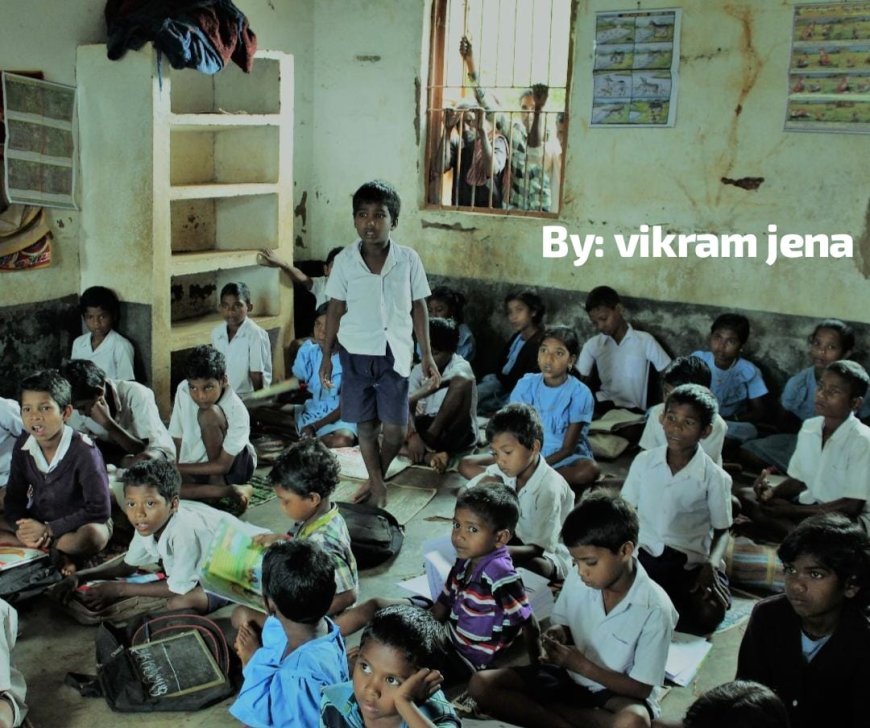
The consequences of this silent collapse extend beyond education into the structure of inequality and the future of democracy. When public primary education weakens, those with financial resources escape into private schooling, while the poor remain trapped in under-resourced institutions. Education, which should act as the greatest equalizer, becomes a mechanism of division. Children from disadvantaged backgrounds lose not only opportunities but confidence. They enter higher education carrying invisible intellectual wounds inflicted by weak foundations. Many withdraw psychologically long before they withdraw physically. This is particularly devastating in tribal and rural regions, where education represents the only bridge between marginalization and participation. If that bridge is weak, entire communities remain excluded from the intellectual and economic life of the state. The tragedy is not merely individual; it is collective. A society that fails to educate its children equally cannot sustain justice, innovation, or stability. Economic growth may occur, but intellectual sovereignty will remain fragile.
Ultimately, the crisis of primary education in Odisha is not about infrastructure alone, nor about teachers alone, nor about policy alone it is about vision. What does society believe education is for? If education is seen merely as a bureaucratic obligation, it will produce bureaucratic outcomes. But if education is seen as the sacred process through which civilization renews itself, it will receive the attention it deserves. Primary schools must be reimagined as the intellectual temples of the republic, where the poorest child receives not the poorest education but the strongest foundation. This requires investment not only in buildings but in minds in teacher training, intellectual culture, libraries, and community participation. The future of Odisha will not be decided in corporate boardrooms or political assemblies alone. It will be decided in the silent classrooms of its primary schools. If those classrooms are alive with curiosity, dignity, and intellectual courage, the state’s future will be secure. But if they remain neglected, the consequences will echo across generations. The collapse of primary education is the collapse of possibility itself and its revival is the first duty of any society that wishes to survive with dignity.