































Nandini Sahu Delivers Keynote at National Education and Leadership Conclave–2026

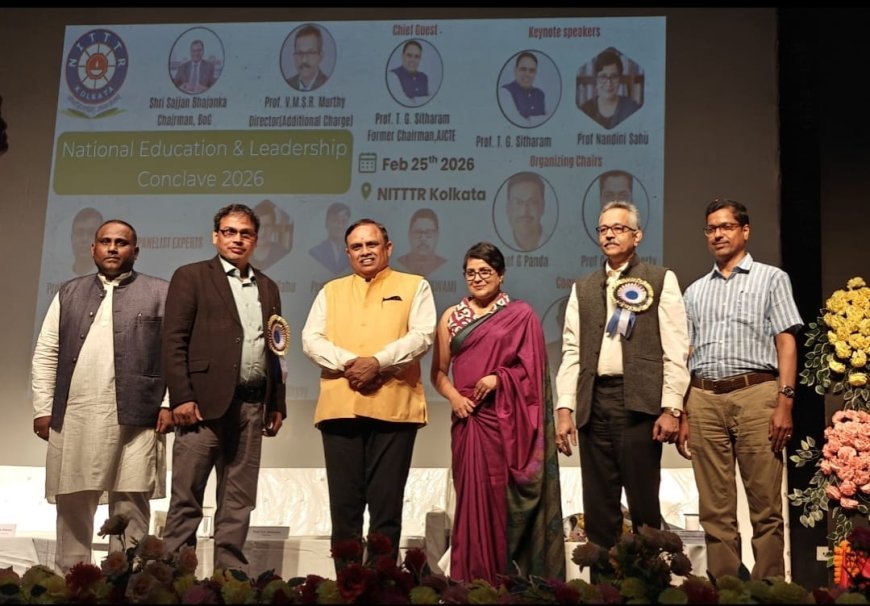
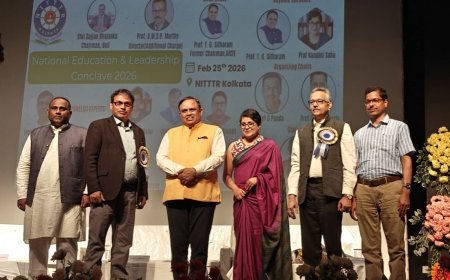
Balasore, 26/2 (Krushna Kumar Mohanty): Professor Nandini Sahu, Vice Chancellor of Hindi University, West Bengal, delivered the keynote address at the National Education and Leadership Conclave–2026 organized by National Institute of Technical Teachers Training and Research, Kolkata.
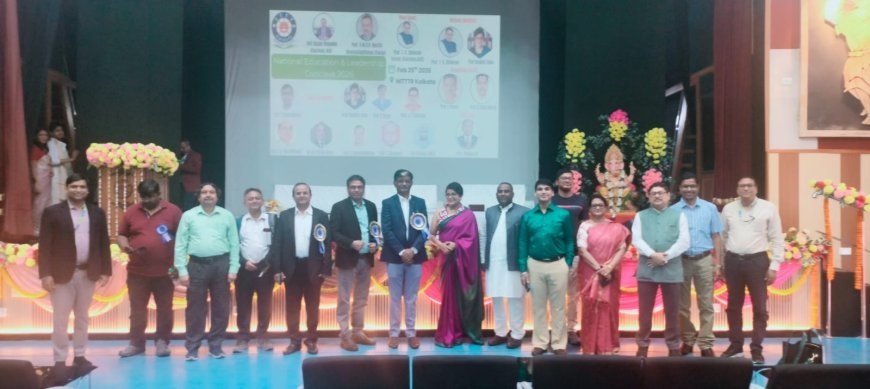
The conclave, held in Kolkata on 25 February, brought together academicians, policymakers, education leaders and researchers to deliberate on the future of education in India.
Speaking on the theme “Harnessing Digital Innovation to Build Future-Ready Education Systems,” Professor Sahu highlighted the need to align education with rapid technological transformation and emerging global challenges. She stressed the importance of structured skill enhancement programmes that combine disciplinary knowledge with 21st-century competencies.
Emphasizing entrepreneurship as a pathway for youth empowerment, she advocated academic systems that encourage innovation, start-up culture, training of trainers and self-reliance. She underlined that marginalized communities must become active stakeholders in the digital future.
Referring to the growing relevance of Artificial Intelligence, she explained its potential in widening access to education, personalizing learning and supporting students from socially and economically disadvantaged backgrounds.
Professor Sahu also called for curriculum reforms, interdisciplinary approaches and digitally competent faculty to guide learners in a fast-changing knowledge economy. She spoke about policy measures required to address the aspirations of both youth and senior citizens, ensuring lifelong learning, reskilling and social equity.
The session was interactive, with participants engaging in discussion and raising questions on various aspects of digital transformation in education. Her address was widely appreciated for its clarity and forward-looking perspective. She also pointed out the contribution of Hindi University, West Bengal, in imparting quality education in the state and promoting ICT-based learning through active involvement of faculty and students.