





































Understanding Macaulay: Why Nehru and Ambedkar Saw Him Differently from Modi

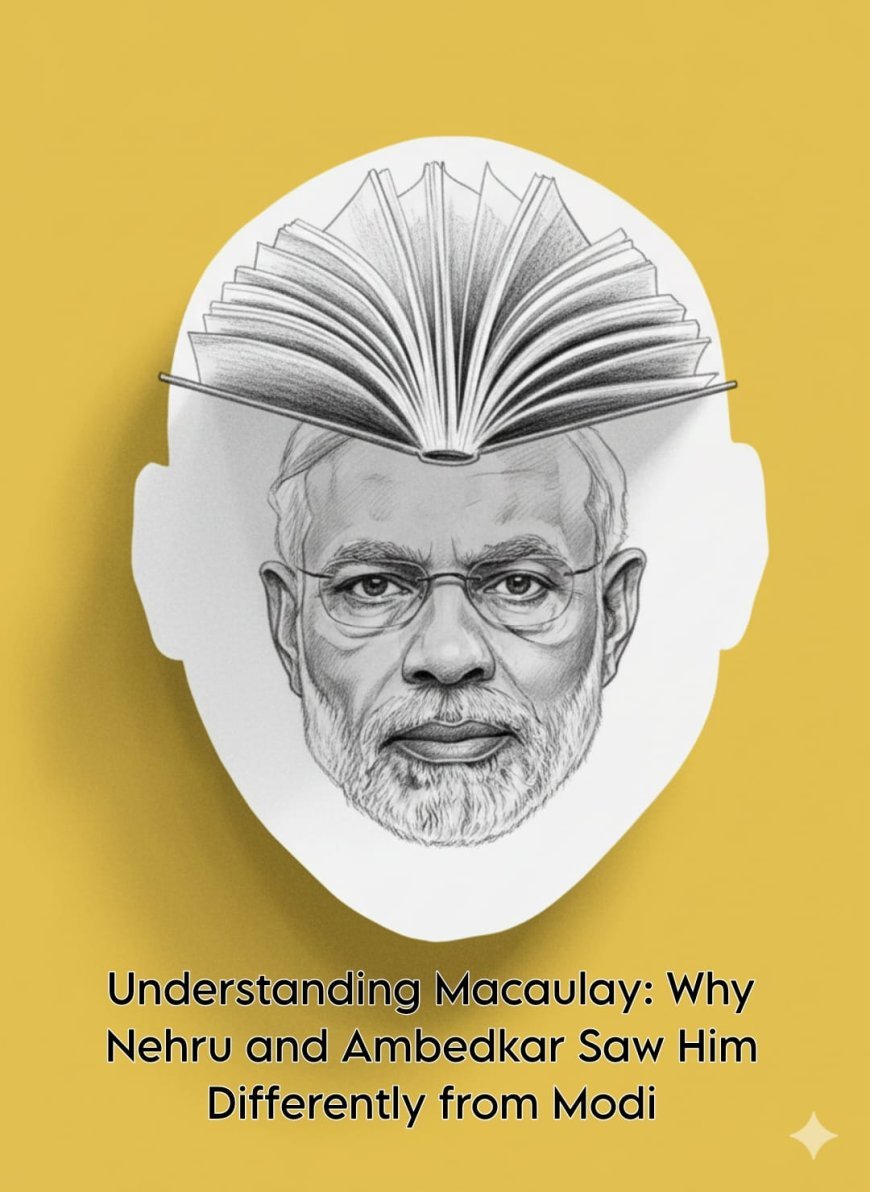
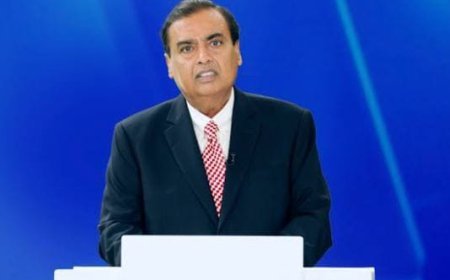
Prime Minister Narendra Modi, in his Ramnath Goenka Lecture on 18 November 2023, once again attacked what he calls the “Macaulay mindset”. He described Thomas Babington Macaulay’s 1835 Minute on Education as the root cause of India’s cultural uprooting, claiming it produced a class of Indians who looked Indian but thought like Englishmen. According to Modi, Macaulay destroyed a glorious indigenous education system that combined skill, pride in culture, and holistic learning, replacing it with a slavish admiration for everything Western. This, he argued, made Indians discard Gandhi’s Swadeshi philosophy and treat imported ideas, goods, and governance models as inherently superior.
The charge is dramatic, politically potent, and widely cheered in certain quarters. Yet it collapses the moment one turns to what two of modern India’s greatest intellectuals – Jawaharlal Nehru and B.R. Ambedkar – actually wrote about Macaulay. Far from treating him as a cultural vandal, both saw his interventions as complex, often progressive, and sometimes even liberating.
Nehru: English Education as a Window, Not a Prison
In The Discovery of India (1946), Nehru provides vital historical context that Modi’s narrative ignores. Until the early 19th century, the East India Company’s official policy was actively hostile to teaching English to Indians. As Nehru notes:
“Ram Mohan Roy and others studied English privately. There were no English schools or colleges outside Calcutta and the government’s policy was definitely opposed to the teaching of English to Indians.”
Missionary schools offered English sporadically, but the government resisted. It was only in 1835 – after intense lobbying by Indian reformers and liberal British officials – that Macaulay’s famous Minute tipped the balance in favour of English-medium higher education financed by the state.
Nehru does not portray this as cultural genocide. Instead, he shows how English became the medium through which young Indians encountered Burke’s eloquence, Mill’s liberalism, Byron’s poetry, and the revolutionary ideas of 19th-century Europe. In his unforgettable phrase:
“Their days and nights were eloquent with the stately declamations of Burke, with Macaulay’s long-rolling sentences… and above all upon the large-hearted liberalism of the nineteenth-century English politics.”
It was precisely this exposure – made possible by Macaulay’s policy – that produced the intellectual ferment behind the freedom movement. Mahatma Gandhi himself, the high priest of Swadeshi, never read the Bhagavad Gita in Sanskrit; he was transformed by Edwin Arnold’s English translation, The Song Celestial. Gandhi wrote Hind Swaraj and countless articles in English before translating them into Gujarati and Hindi. The tool Macaulay gave India was turned into a weapon against British rule itself.
Nehru also points out an irony Modi never mentions: while the British government dragged its feet on teaching English to Indians, orthodox Brahmins were equally ferocious in preventing Englishmen from learning Sanskrit. It took Sir William Jones years of pleading – and the help of a non-Brahmin vaidya who taught him under bizarre conditions – before Europe discovered Kalidasa, Bhavabhuti, and the riches of Sanskrit drama. In Nehru’s view, both sides – colonial caution and Brahminical exclusivism – had to be overcome for genuine cultural exchange to occur.
Ambedkar: Macaulay as the Architect of Legal Equality
B.R. Ambedkar, architect of India’s Constitution and a fierce critic of whatever he found unjust, had an equally nuanced take. In Pakistan or the Partition of India (1945), he credits Macaulay with one of modern India’s most revolutionary steps:
“The first thing the British did was to displace gradually the Muslim Criminal Law by another of their making, until the process was finally completed by the enactment of Macaulay’s Penal Code.”
The Indian Penal Code of 1860 – drafted single-handedly by Macaulay in the 1830s – replaced a patchwork of Muslim criminal law, Hindu legal customs, and regional practices with a single, secular, uniform criminal code for all Indians irrespective of religion, caste, or community. Today, when the BJP speaks of a Uniform Civil Code, it is standing on the foundation Macaulay laid for criminal law more than 160 years ago.
In 1955, while discussing the liberation of Portuguese Goa, Ambedkar again invoked Macaulay positively. In a resolution of the Scheduled Castes Federation, he reminded his colleagues that as early as 1833 – two years before Queen Victoria’s Proclamation – Macaulay had declared in the British Parliament:
“...that the Indians were not barbarians. The Indians have a distinct civilisation and culture of their own. They, therefore, should be given the right to govern themselves.”
For Ambedkar, Macaulay was an early enunciator of the principle of self-government – a principle the Portuguese in Goa refused to accept.
Throwing the Baby Out with the Bathwater
Neither Nehru nor Ambedkar was blind to the arrogance in Macaulay’s Minute (the infamous line about “a single shelf of a good European library” being worth the whole of Sanskrit and Arabic literature combined). Both recognised the colonial context. Yet both refused to reduce Macaulay’s legacy to that one sentence.
English education produced not just brown sahibs but Dadabhai Naoroji, Gokhale, Tilak, Lajpat Rai, Subhas Bose, Nehru himself, and Ambedkar – the very leaders who dismantled the British Empire. The Indian Penal Code became the bedrock of legal equality in a society fractured by caste and religion.
To call this entire legacy a “mindset” that must be “uprooted” in the next ten years is to ignore history written by the tallest leaders of the freedom movement and the Constitution. It is one thing to promote Indian languages and cultural pride – a goal every Indian can share. It is quite another to rewrite history by turning a complex, ambivalent figure like Macaulay into a cartoon villain.
Nehru and Ambedkar teach us that nations grow not by denying their layered past but by fearlessly claiming every tool – indigenous or foreign – that helps them become freer, more equal, and more enlightened. That, perhaps, is the real antidote to any lingering colonial mindset.
Sanjay Pattnayak
Sundargarh