




























India’s Inequality Crisis: Governance Failures, Stagnant Social Policy, and the Urgent Need for Structural Reform

India stands today at a historic juncture. It is celebrated as the world’s fastest-growing major economy, a digital powerhouse, and an emerging geopolitical force. Yet behind the confident rhetoric lies a disquieting truth: inequality in India is widening at a pace that threatens social cohesion and democratic stability. Reports by organizations such as Oxfam have repeatedly underlined the staggering concentration of wealth at the top, with a tiny elite controlling a disproportionate share of national assets while millions struggle for basic dignity. This is not merely an economic imbalance; it is a governance failure. Across several Indian states, systemic weaknesses in public service delivery, human capital investment, and institutional accountability have deepened structural divides. At the same time, the reservation system, conceived as a historic instrument of justice risks becoming a static political tool rather than a dynamic engine of empowerment.
The numbers tell a sobering story. Multidimensional poverty has declined over the past decade, but deprivation remains heavily concentrated among Scheduled Castes (SCs) and Scheduled Tribes (STs). Data from policy institutions such as NITI Aayog show that tribal and Dalit communities continue to rank lower across key indicators nutrition, years of schooling, access to sanitation, and quality housing. Income inequality has surged even as GDP has grown. The top percentile’s wealth has multiplied, while informal workers, agricultural laborers, and landless households face stagnant wages and precarious employment. Growth without equitable distribution has produced islands of prosperity in oceans of vulnerability.
Regional disparity further compounds the crisis. States such as Maharashtra and Karnataka have leveraged industrialization, services expansion, and urban infrastructure to achieve higher per capita incomes and stronger social indicators. Meanwhile, states like Bihar and Uttar Pradesh continue to grapple with low industrial bases, weaker schooling outcomes, and fragile healthcare systems. The divergence is not inevitable; it reflects differences in governance quality, fiscal management, and policy implementation. Where institutions function transparently and efficiently, poverty recedes. Where corruption, administrative inertia, and politicized welfare dominate, inequality festers.

At the heart of the social justice debate lies the reservation system one of independent India’s most ambitious experiments in affirmative action. Conceived under the moral and constitutional vision of B. R. Ambedkar, reservations were designed as a corrective mechanism for centuries of caste oppression and exclusion. They opened doors to education, public employment, and political representation for historically marginalized communities. For many families, reservations have meant the first government job, the first university degree, the first step into the middle class. These gains must not be trivialized.
Yet, over time, reservation policy has become politically sacralized and administratively rigid. It often functions as the primary, and sometimes sole, instrument of social justice discourse. Expansion of quotas has frequently replaced deeper conversations about quality schooling, healthcare access, land reform, or job creation. Electoral politics has incentivized competitive populism around reservation categories rather than structural reform. Even the Supreme Court of India has repeatedly emphasized the need to balance affirmative action with merit and administrative efficiency, underscoring that reservation cannot be a substitute for comprehensive socio-economic transformation.
The reality confronting Dalit communities across states is stark. Despite legal safeguards, caste discrimination persists in subtle and overt forms — from housing segregation to labor market exclusion. Land ownership among Dalits remains disproportionately low. Many continue to depend on informal, low-wage occupations with minimal security. Dropout rates among Dalit students, though improved, remain concerning in several districts. Access to quality private education and competitive exam coaching — gateways to upward mobility in contemporary India — remains heavily skewed toward economically secure groups. Reservation may guarantee seats, but it does not guarantee preparedness in an unequal schooling ecosystem. Without foundational reform in public education, affirmative action alone cannot equalize opportunity.
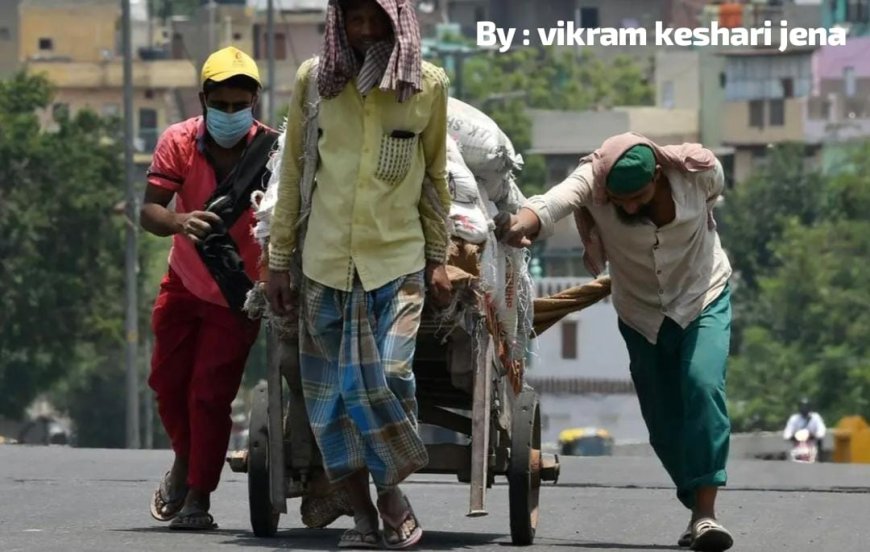
The condition of Adivasi communities is even more alarming. Concentrated in mineral-rich belts of Jharkhand, Chhattisgarh, Odisha and Madhya Pradesh, tribal populations face a paradox: they inhabit resource-abundant lands yet remain among the poorest citizens. Displacement due to mining, dams, and infrastructure projects has disrupted traditional livelihoods and cultural ecosystems. Malnutrition rates among tribal children remain significantly above national averages in several districts. Healthcare facilities in remote tribal regions are understaffed and under-equipped. While legislative frameworks recognize forest and community rights, implementation gaps and bureaucratic delays undermine their promise. Development, for many Adivasi communities, has meant extraction without empowerment.
Governance failure amplifies these vulnerabilities. Welfare schemes are frequently announced with fanfare but executed unevenly. Leakages in public distribution systems, teacher absenteeism in rural schools, delayed wage payments under employment programs, and inadequate grievance redressal mechanisms weaken trust in institutions. In states where governance reforms — digitization, direct benefit transfers, transparent procurement, have been rigorously implemented, leakages have declined and outcomes have improved. But reform momentum remains inconsistent across the federation. Inequality accelerates when state capacity falters.
The solution does not lie in dismantling affirmative action, nor in clinging to it as a singular solution. Rather, India must reframe social justice through a broader, future-oriented lens. First, foundational education must become the non-negotiable priority. Equal access to high-quality early childhood education, teacher training, and digital infrastructure is the most powerful equalizer. Second, public health investment must increase substantially, particularly in tribal and Dalit-dominated districts where preventable diseases and malnutrition persist. Third, land rights and community consent mechanisms in tribal areas must be strengthened and transparently enforced. Fourth, targeted entrepreneurship support affordable credit, market linkages, incubation hubs must empower marginalized youth to become job creators, not merely job seekers.
Crucially, policy targeting must evolve from static caste enumeration to dynamic deprivation mapping. Socio-economic data should identify households facing multidimensional poverty irrespective of political salience ensuring that the most vulnerable receive priority support. Reservation should function as part of an integrated mobility framework that includes mentoring, preparatory support, skill development, and career counseling. The objective must be empowerment, not perpetual categorization.
India’s constitutional promise was not merely representation but transformation the dismantling of hierarchies that deny dignity and equal opportunity. Inequality at its current scale is not compatible with that promise. A nation aspiring to global leadership cannot afford internal fractures that leave millions behind. Governance reform, institutional accountability, and human capital investment must replace symbolic politics as the central pillars of development strategy.
The path forward demands political courage. It requires acknowledging that growth without equity is unsustainable, that social justice cannot be reduced to quota arithmetic, and that marginalized communities deserve more than rhetorical solidarity. If India is to truly realize its demographic dividend and democratic ideals, it must confront inequality not as an abstract statistic but as a lived reality in Dalit hamlets, Adivasi villages, and impoverished urban settlements.
Economic expansion has given India global stature. Only equitable inclusion will give it moral authority. The time to act, decisively, structurally, and inclusively is now.