























National Webinar on 'Mental Health & Well-Being: Ensuring a Safe Learning Environment for Children' organised

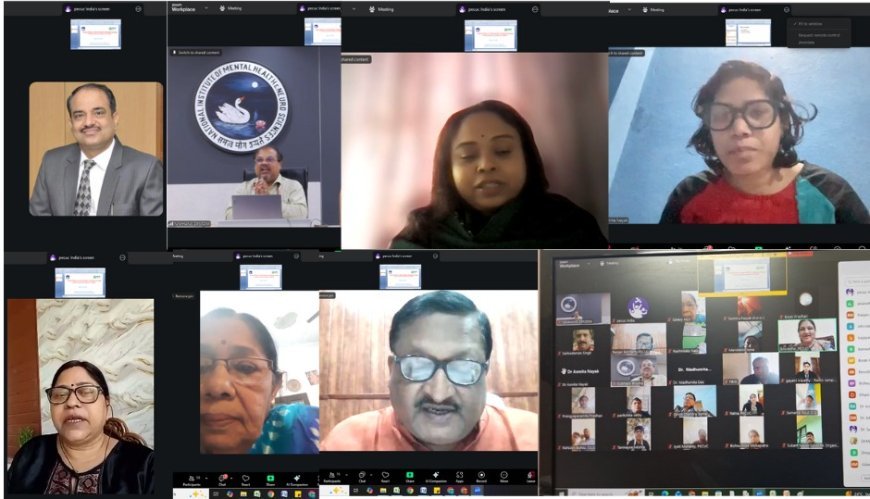
Bhubaneswar (By Abhishek Mohanty): A national webinar on “Mental Health & Well-Being: Ensuring a Safe Learning Environment for Children” organised on 29th December 2025 by People’s Cultural Centre [PECUC] in collaboration with AEIN to facilitate a focused dialogue among CSOs, teachers, and academic experts to identify strategies for improving mental health and psychological safety in schools.
Ensuring mental health and well-being in education has become urgent as students today face academic pressure, social challenges, emotional stress, and the added impact of continuous disasters and climate change, which increase anxiety and insecurity.
As safe, inclusive learning environments are essential for every child’s development, this webinar opened up dialogue to create a positive and safe environment for children.
This online webinar brought together Civil Society Organisations (CSOs), teachers, and academic experts to discuss mental health in educational settings, share effective practices, and explore collaborative solutions to strengthen psychological safety in schools.
Ranjan Kumar Mohanty, Secretary, PECUC, gave the welcome address and shared the purpose of this webinar.
Mental health and wellbeing of children is essential to protect them from the complex environment they are facing today.
So it is necessary we all should understand importance of mental health, its impacts on children and also work for creating a healthy environment for children.
Dr Madhumita Das, Clinical Psychologist and Secretary General, Indian council of Child Welfare moderated the session and said mental health is an integral part of overall health and well-being and also should be addressed accordingly.
Joining this webinar Prof Vinod Kumar Shanwal, In charge, Manodarpan Cell, NCERT, Ministry of Education, Government of India spoke about Teacher Led Mental health support: Building positive, Stress-free learning environment for childrenspoke about Teacher Led Mental health support: Building positive, Stress-free learning environment for children and also spoke about “Monodarpan” facilities available. and also spoke about “Monodarpan” facilities available.
Dr Sunayana Swain, Assistant Professor, School of Public Policy and Governance, Tata Institute of Social Sciences, Hyderabad spoke about mental health and academic performance, and said mental health should be the outcome of the learning.
Dr Subhasis Bhadra, Professor of Psychiatric Social, Work Head, Dept of Psychosocial support in Disaster spoke about Impact of disaster on children’s mental health: the role of schools healing and support and Dr Asmita Nayak, M.Phil Clinical Psychology, Former clinical psychologist of NIMHANS, Bengaluru spoke about Digital Well-being and Family Support: Helping Children Manage Stress in the Online Age.
Madhumita Das, Clinical Psychologist and Secretary General, Indian council of Child Welfare moderated the session.
Dr.Minakhi Panda, Chairperson, PECUC chaired the session and spoke about providing training to teachers and appointing clinical psychologist will help for creating a supportive environment at school.
Anuradha Mohanty, Executive Director, PECUC gave the vote of thanks.
The experts gave wide range of suggestions such as peer learning, tailor made framework for different setting, harnessing positive mindset among children, accessing the schemes, programmes, and facilities provided by the government, providing training to teachers, parents, children, appointing psychologist at school, adopting whole school approach, forming school wellness team, mapping at risk children and monitoring their behaviour, early reporting, creating empathetic and inclusive classroom, creating positive environment at school, creating a safe and positive environment at school, healthy use of technology, maintaining digital hygiene etc.
More than 100 participants including academicians, District Child Protection Unit, CSOs, Psychologists, Counsellor, teachers, youth joined this webinar.