


























The Man Who Planted a Political Faith: Remembering Debendra Pradhan on His First Death Anniversary.

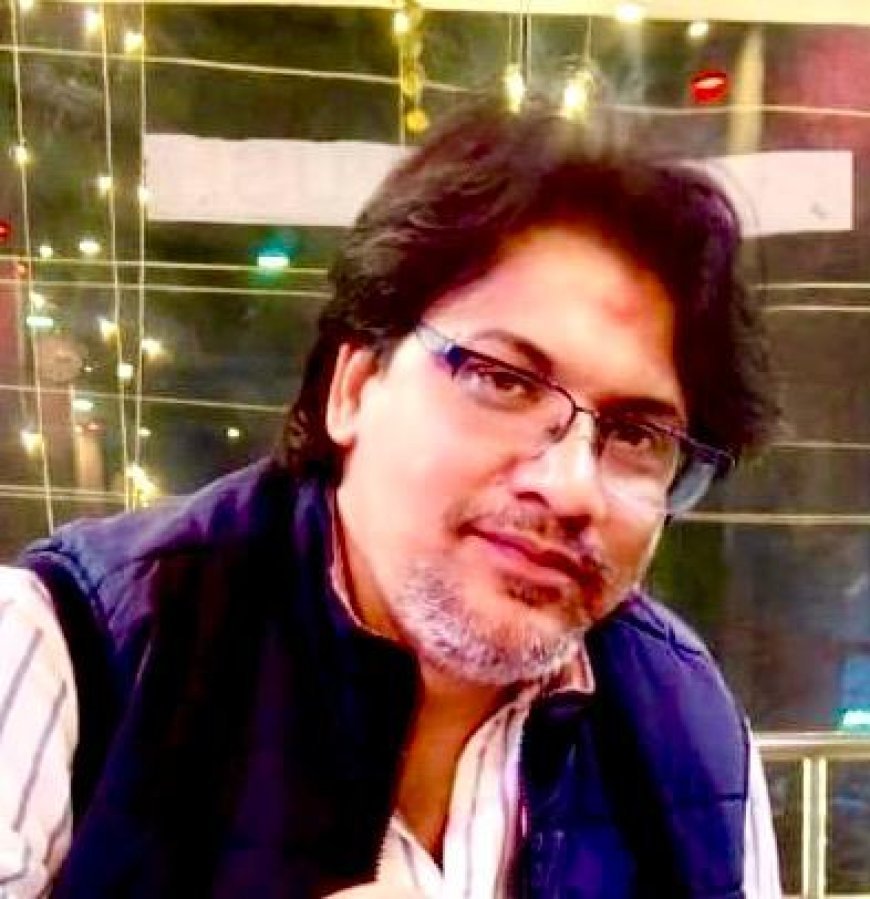
Vikram Kesari Jena
Director, CARD, Odisha
Memory is often the most honest historian. Before archives write their versions of events and before political analysts interpret the rise of parties and leaders, the earliest stories of history live quietly in homes, in conversations between generations, and in the reflections of ordinary people. My own earliest understanding of Dr. Debendra Pradhan did not come from newspapers or political debates. It came from my grandmother.
She belonged to the village of Mridanga in the district of Dhenkanal, a region where politics was not often discussed in theoretical terms but in stories about people. During the late 1989s, when I was a child studying in Class III, she would occasionally speak about a man who had left the comfort of a secure professional (doctor) life to dedicate himself entirely to building a political movement that few believed could succeed in Odisha.
At that time, the Bharatiya Janata Party was not the formidable organisation that we see today. In Odisha, it was a fragile idea struggling to take root in a political landscape already dominated by powerful personalities and established political traditions. My grandmother described the party symbol in a simple yet profound way. She said it carried the blessings of both Lord Vishnu and Goddess Lakshmi, a metaphor for balance, faith, and prosperity. She often said, “That man, Debendra, has left his job and his comfort to build something new.” As a child I did not fully understand the significance of those words, but years later I realised that she was describing the courage required to create an alternative political imagination in a society where established forces seemed unshakeable. In the late 1984s and early 1990s, the BJP in Odisha did not have large resources or a powerful political base. What it had instead was a small group of young individuals who possessed enthusiasm but very little experience in politics. Many of them came from ordinary backgrounds and had almost no public identity. Yet they believed in the ideological framework that Dr. Debendra Pradhan represented. Politics, in those days, was less about immediate victories and more about patient organisation. Dr. Pradhan approached the challenge with remarkable clarity. He believed that political power must grow organically from society rather than being imposed through temporary alliances or opportunistic calculations.
He travelled extensively across Odisha, visiting villages, tribal regions, small towns, and urban neighbourhoods. In each place he tried to cultivate a sense of belonging among workers who had never before imagined themselves as part of a political movement. These early volunteers were not professional politicians. They were students, social activists, teachers, and small traders who felt inspired by the sincerity of his leadership. Among those early companions were figures who would later become important in the party’s growth. Pradeepta Ray, who served as the president of the youth wing in Odisha during that time, energised the younger generation with remarkable enthusiasm. Sameer Mohanty, working from Bhubaneswar, built strong organisational networks that gradually expanded the party’s influence in urban centres.
Another important presence in those early years was Bagartee Chatterjee, one of the few women leaders in the party during that period. Her participation symbolised the inclusive spirit of the organisation that Dr. Pradhan was trying to cultivate. In a political culture that was often dominated by male leadership, her presence carried both symbolic and practical significance. Together, these individuals formed a small but determined circle of workers who believed that Odisha needed a new political narrative. They were not driven by personal ambition; most of them were motivated by the conviction that politics should be guided by ideology and public service. The remarkable aspect of Dr. Pradhan’s leadership was his ability to transform youthful enthusiasm into disciplined organisation. He constantly reminded young activists that political movements are sustained not by slogans but by patience and dedication. He emphasised ideological clarity, respect for democratic institutions, and unwavering commitment to the people. At that time, many observers doubted whether the BJP could ever establish itself meaningfully in Odisha. Yet Dr. Pradhan remained optimistic. He believed that the state’s political culture was ready for a new chapter, one that would encourage participation from a broader spectrum of society.
Looking back today, the transformation is extraordinary. The political landscape of Odisha has changed dramatically, and the BJP has emerged as a major force in the state’s governance and democratic discourse. The seeds planted in those early years by leaders like Dr. Debendra Pradhan have grown into a powerful organisational tree. Yet what made his leadership unique was not merely the success of the party. It was the moral tone he brought to politics. Even his critics acknowledged his personal integrity and humility. He treated colleagues with respect, listened carefully to workers, and maintained a rare balance between ideological conviction and practical governance.
His role in national politics further strengthened his reputation. During the government led by Atal Bihari Vajpayee, he served as a Union Minister and contributed significantly to developmental initiatives, particularly in the fields of infrastructure and rural development. His policies reflected a deep concern for regions like Odisha that had long remained on the margins of national planning. Many young leaders who interacted with him during that period remember his calm and reflective personality. Among them was Rajnath Singh, who today serves as the Union Defence Minister of India and who had worked alongside him during the Vajpayee era. Rajnath Singh has often spoken about Dr. Pradhan’s quiet dedication and his extraordinary ability to inspire loyalty among party workers.
It is therefore deeply symbolic that the first death anniversary of Dr. Debendra Pradhan on 17 March will be marked by the presence of Rajnath Singh. Such recognition reflects the national importance of a leader whose contributions were rooted in Odisha but whose influence extended far beyond the state. The commemorations will also include reflections on the writings and memories shared by several individuals who had close associations with him. The editorial perspectives of Sameer Mohanty, Kalandi Samal, Ajit Kumar Das, and Suresh Kumar Sahoo together create a mosaic of experiences that illuminate different aspects of his life.
Some remember him as the architect of the BJP’s organisational structure in Odisha. Others recall his warmth and personal affection in everyday interactions. Many describe him as a mentor who encouraged young activists to think beyond immediate political gains. Taken together, these recollections reveal a personality that cannot easily be reduced to a single description. Dr. Debendra Pradhan was at once a political strategist, a grassroots organiser, a national leader, and a compassionate mentor.
Perhaps the most striking feature of his life was his willingness to take risks for the sake of a larger vision. Leaving a stable career to build a political movement in uncertain circumstances requires a rare combination of courage and faith. In retrospect, that decision appears almost prophetic, as if he had already glimpsed the future trajectory of the organisation he was nurturing. The story my grandmother told me years ago now feels like a metaphor for that prophetic vision. When she said that the party’s symbol carried the blessings of Vishnu and Lakshmi, she was expressing a deeper belief, that politics guided by moral conviction and social responsibility can bring both stability and prosperity.
As we approach the first anniversary of Dr. Debendra Pradhan’s passing, it is important to remember not only his achievements but also the spirit that defined his journey. He demonstrated that politics, when practised with integrity, can become a powerful instrument for social transformation. The young activists who once gathered around him with little experience and almost no public identity have today become leaders in their own right. The organisation they helped build now plays a central role in shaping the political future of Odisha.
Yet the true measure of Dr. Pradhan’s legacy lies beyond electoral success or institutional expansion. It lies in the values he embodied, humility, discipline, ideological clarity, and unwavering dedication to the people.
For many of us who grew up hearing stories about him long before we fully understood politics, those values remain the most enduring part of his memory. History will continue to analyse the rise of the BJP in Odisha through data, elections, and political strategies. But somewhere in a small village in Dhenkanal, an old grandmother’s words still echo: a man left his job and his comfort to build a political faith. That faith, today, has become a living chapter of Odisha’s democratic history.