



































War, Terror, and the Marketplace of Weapons: Lessons the World Refuses to Learn


Vikram Kesari Jena
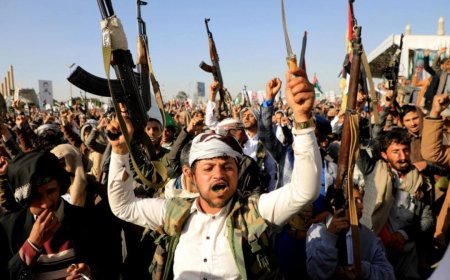
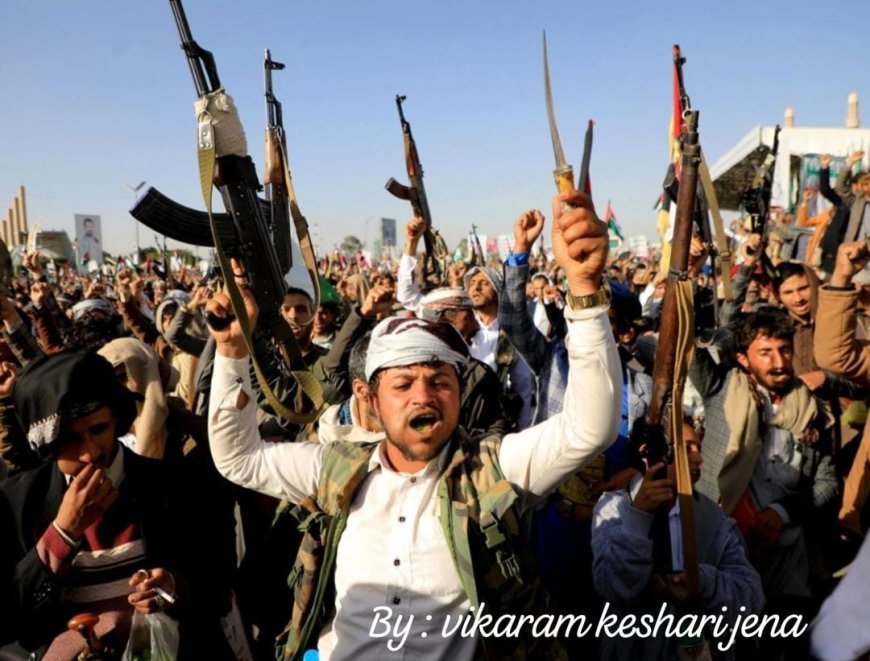
The twenty–first century was once imagined as an era of human enlightenment, an age when scientific progress, international institutions, and global cooperation would make war a relic of history. Yet the reality unfolding before our eyes tells a different story. War has not disappeared; it has merely changed its costume. In the modern geopolitical theatre, conflict is no longer only about ideology, territorial sovereignty, or civilizational rivalry. It has increasingly become a strategic instrument in the global marketplace of weapons. Behind the rhetoric of national security, humanitarian intervention, and counter-terrorism lies a powerful and profitable ecosystem: the global arms industry. War and terror today function not merely as tragedies but as commodities, events that fuel an economy of weapons manufacturing, strategic alliances, and geopolitical influence. The world that once vowed “Never Again” after the devastation of the twentieth century now seems trapped in a cycle where instability itself has become profitable.
The devastation of the twentieth century particularly the catastrophic World War I and World War II should have served as the ultimate warning to humanity. These wars destroyed cities, uprooted civilizations, and consumed tens of millions of lives. When the ashes settled in 1945, the international community promised to build institutions that would prevent such disasters from ever occurring again. Out of this aspiration emerged the United Nations, envisioned as a moral and diplomatic forum where disputes would be resolved through dialogue rather than violence. Alongside it came agreements like the Yalta Conference, the Potsdam Conference, and later the North Atlantic Treaty, which shaped the geopolitical architecture of the post-war world. These treaties were meant to ensure collective security and international stability. Yet the promise of a peaceful order soon collided with the realities of power politics, economic interests, and ideological competition. What emerged was not a world free from war but a world where war became institutionalized in new forms.
The Cold War era illustrated this contradiction vividly. While direct conflict between nuclear superpowers was avoided, proxy wars spread across continents, from Korea and Vietnam to Afghanistan and Latin America. During this period, arms manufacturing reached unprecedented levels, transforming military technology into one of the most profitable industries on earth. Governments justified enormous defense budgets in the name of deterrence, while corporations perfected the art of weapon innovation. This alliance between state power and private arms industries created a self-sustaining cycle: geopolitical tensions generated demand for weapons, and the existence of weapons intensified the logic of conflict. The collapse of the Soviet Union in 1991 was expected to usher in a “peace dividend,” yet the global arms market did not shrink. Instead, it diversified and expanded, integrating private contractors, security firms, and multinational defense companies into a complex network that thrives on global instability.
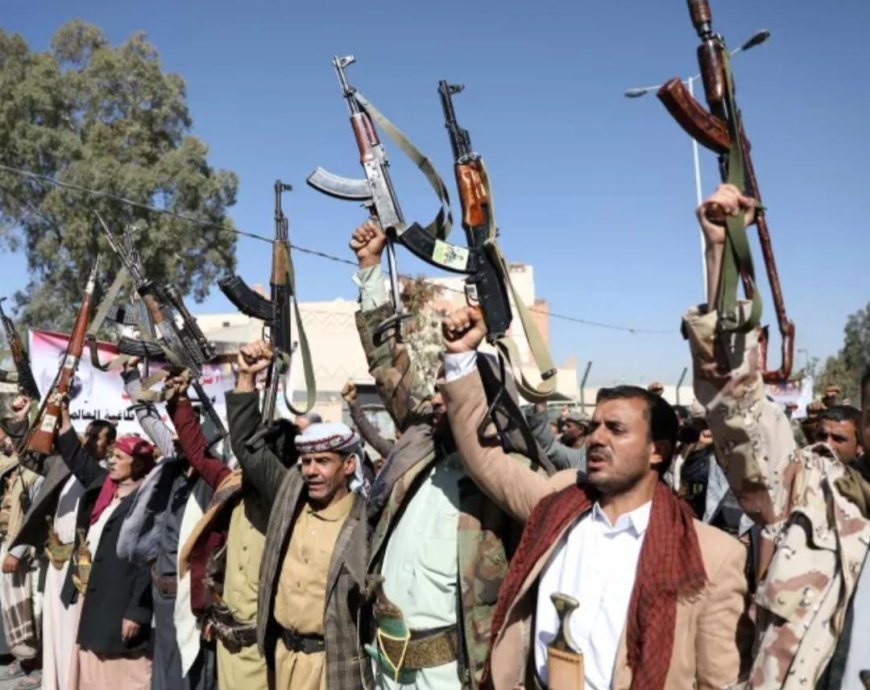
In the twenty–first century, this system has evolved further. War is now often accompanied by a parallel narrative of counter-terrorism. Terrorism itself has become a powerful justification for military expansion. Since the attacks of September 11 attacks, governments across the world have invested billions in surveillance technologies, drones, missile systems, and cyber warfare capabilities. While the threat of terrorism is real and devastating, it has also been instrumentalized to sustain the economics of security. The lines between defense, commerce, and geopolitics have blurred. Nations that speak of peace frequently remain the largest exporters of weapons, selling arms to regions already plagued by conflict. The paradox is striking: those who publicly condemn violence often profit from its continuation.
Within this context, the role of the United Nations deserves serious scrutiny. Established with the noble objective of maintaining international peace and security, the institution has often struggled to fulfill its mandate. The structure of the UN itself, particularly the veto power of the permanent members of the Security Council, reflects the geopolitical realities of 1945 rather than the complexities of the modern world. When powerful nations disagree, the UN frequently becomes paralyzed, unable to act decisively in the face of humanitarian crises or escalating conflicts. Critics argue that the organization has gradually transformed from a guardian of global peace into a diplomatic arena where major powers negotiate their interests while smaller nations remain spectators to decisions that shape their destinies.
Among these major powers, the role of the United States has been particularly controversial. As the most powerful military and economic force in the post-World War II era, the United States has played a central role in shaping global security policies. Supporters argue that American military presence has deterred aggression and protected democratic values across many regions. Critics, however, point to interventions in countries such as Iraq and Afghanistan as examples of how strategic interests, economic considerations, and security narratives can converge in ways that perpetuate conflict rather than resolve it. The debate surrounding these interventions reflects a broader question: can a world order dominated by military power truly guarantee peace, or does it merely manage the conditions of perpetual war?
The commercialization of warfare has also transformed the technological landscape of conflict. Modern wars are no longer fought solely by soldiers on battlefields. They involve satellites, cyber networks, artificial intelligence, and autonomous weapons systems. Private military contractors operate alongside national armies, blurring the distinction between public responsibility and corporate profit. Defense companies invest heavily in research and development, often lobbying governments to adopt new technologies and expand military procurement. In this environment, peace becomes economically inconvenient for industries that depend on continuous demand for weapons. The result is a disturbing reality: the global economy increasingly accommodates war as a normal and predictable component of international relations.
Yet history repeatedly warns us about the dangers of such complacency. The architects of peace after World War II understood that unchecked militarization could eventually lead to catastrophe. The development of nuclear weapons during the Manhattan Project introduced the possibility of total human annihilation. Treaties such as the Treaty on the Non-Proliferation of Nuclear Weapons attempted to limit this threat, but the global nuclear arsenal remains enormous. If a major conflict were to escalate into a nuclear exchange, the consequences would be irreversible. Climate, agriculture, human health, and civilization itself could be devastated. The specter of World War III therefore looms not as an abstract concept but as a real possibility that humanity must strive to prevent.
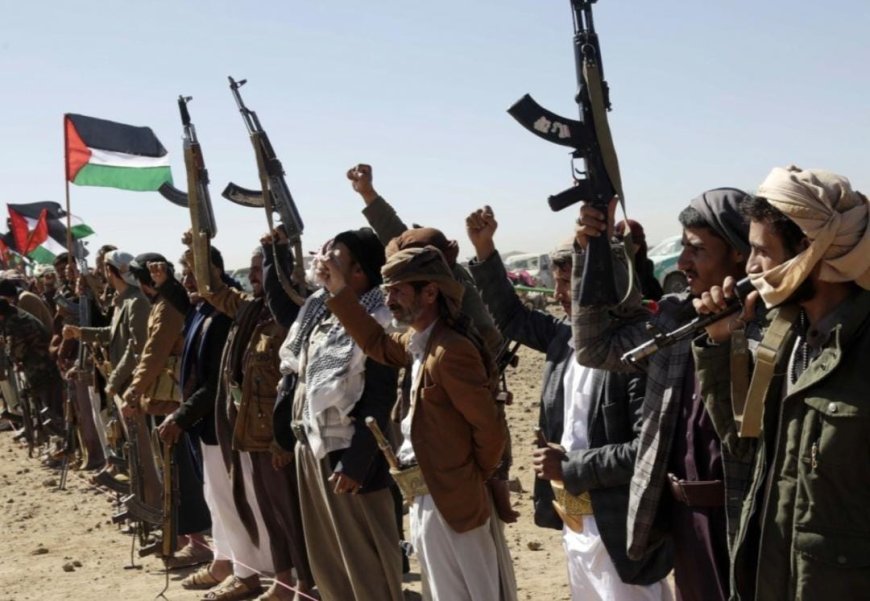
This is why historical memory and research remain indispensable for every nation and every generation. History is not merely a collection of dates and battles; it is a repository of human experience. By studying the origins and consequences of past conflicts, societies can understand the patterns that lead to war and the conditions necessary for peace. Universities, research institutions, and historians play a crucial role in preserving this knowledge. When societies neglect historical inquiry, they risk repeating the mistakes of the past. The lessons of the twentieth century must be taught not only in textbooks but also in public discourse, political decision-making, and civic education.
Students, in particular, bear a significant responsibility in this intellectual process. They are the future policymakers, journalists, scholars, and citizens who will shape the world of tomorrow. Without critical thinking and historical awareness, they may become passive consumers of propaganda rather than informed participants in democracy. Research enables them to question official narratives, examine evidence, and understand the complex interplay between economics, politics, and ideology. In a world where information spreads rapidly but truth often becomes obscured, the discipline of historical scholarship serves as a safeguard against manipulation.
Ultimately, the challenge confronting humanity is not merely technological or politica, it is moral and philosophical. War continues because societies have not fully confronted the structures that make violence profitable and politically convenient. The global arms trade, the strategic ambitions of powerful states, and the limitations of international institutions all contribute to a system where conflict persists despite universal declarations of peace. If the twenty–first century is to avoid repeating the tragedies of the twentieth, nations must rethink the relationship between security and profit, between power and responsibility. The dream that inspired the creation of the United Nations, a world where diplomacy triumphs over destruction must be revitalized with courage and sincerity.
Human civilization stands at a crossroads. One path leads toward escalating militarization, technological warfare, and the possibility of global catastrophe. The other path demands humility, historical wisdom, and collective commitment to peace. The choice between these paths will determine whether future generations inherit a planet scarred by endless conflict or a world that finally learned from its own past. History has already given humanity enough warnings. The question now is whether the world will listen.